Beginner's Guide to Understanding Blockchain Technology
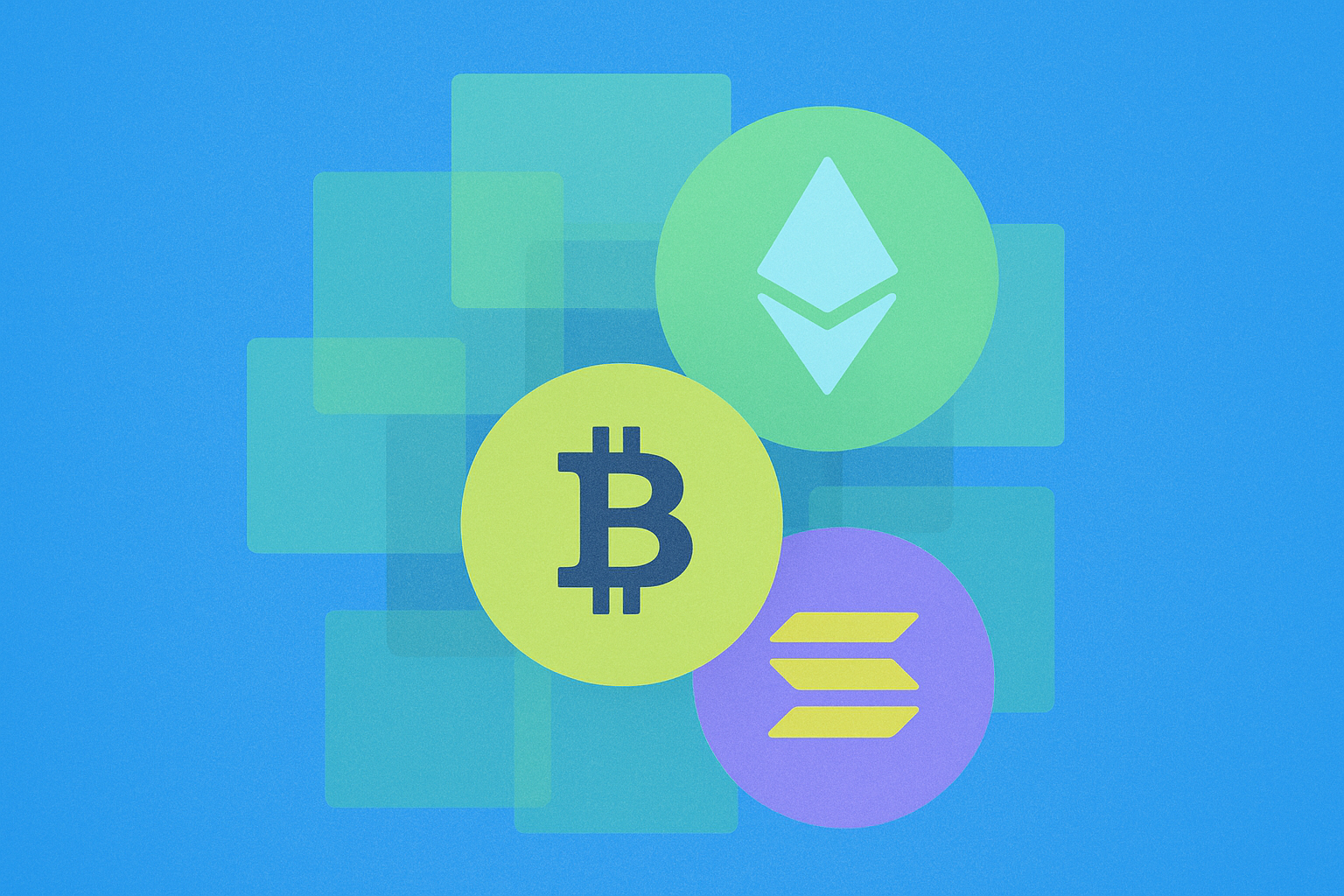
What is Blockchain? A Beginner's Guide to How It Works and Real Applications
What is Blockchain?
Blockchain is a secure digital ledger of records that anyone can view, but no one can alter. Instead of a single person or company tracking information, copies of this record book exist on many computers, making it exceptionally difficult for anyone to commit fraud or hack the system.
Blockchain is a decentralized digital ledger that records transactions across a network of computers. Think of it as a special type of database where information is stored in blocks linked together in a chain. Unlike traditional databases controlled by a single entity, blockchain distributes identical copies of this ledger across multiple computers (called nodes) in the network.
Blockchain technology works by collecting transactions into blocks, which are then cryptographically linked to previous blocks, creating an immutable chain of data. Each block contains transaction data, timestamps, and a unique cryptographic code called a hash, which links it to the previous block. What makes blockchain truly revolutionary is that it enables secure, transparent transactions without needing a trusted third party, such as a bank or government, to verify them.
History and Evolution of Blockchain
The history of blockchain technology begins with the publication of the Bitcoin whitepaper in 2008 by an anonymous person or group using the pseudonym Satoshi Nakamoto. A key moment in blockchain history occurred on January 3, 2009, when the first block of Bitcoin's blockchain, known as the genesis block, was mined.
The evolution continued with Ethereum, whose blockchain officially launched when the first block of Ethereum's blockchain was mined on July 30, 2015. The addition of programmable smart contracts expanded blockchain beyond simple transactions to complex applications.
Blockchain technology found its first application in government registries in 2016, when the Republic of Georgia implemented a blockchain-based system for land registration. This milestone demonstrated the technology's potential beyond financial transactions. Since then, blockchain technology has undergone continuous development and refinement across multiple sectors.
How Blockchain Works
To understand how blockchain works, imagine a digital ledger duplicated thousands of times across a network of computers. The process operates through these key steps:
Step 1: Recording Transactions - When someone initiates a transaction, it is broadcast to the network of computers (nodes). This ensures all participants are aware of the transaction immediately.
Step 2: Confirmation - Network participants validate the transaction using established algorithms. Multiple nodes must agree that the transaction is legitimate before it can proceed.
Step 3: Block Creation - Validated transactions are combined into a block. Each block contains multiple transactions, a timestamp, and a reference to the previous block, creating continuity in the chain.
Step 4: Adding to the Chain - The new block is then cryptographically linked to the existing blockchain through a process requiring consensus among network participants. This ensures all nodes have identical copies.
Step 5: Immutability - Once added to the blockchain, information becomes permanent and extraordinarily difficult to change. Any attempt to alter past records would require changing every subsequent block, which is computationally unfeasible.
Types of Blockchain Networks
Public Blockchains
Public blockchains are open networks where anyone can join and participate. Major cryptocurrency networks and emerging blockchain platforms are the most well-known examples. These networks operate on a permissionless basis, meaning anyone can access the network, perform transactions, and help maintain the blockchain.
Private Blockchains
Private blockchains restrict access to a specific group of participants. Unlike public blockchains, a single organization controls who can join the network and what rights they possess.
Permissioned Blockchains
Permissioned blockchains combine elements of both public and private blockchains. While anyone can view the blockchain, only authorized participants can add new blocks.
Consortium Blockchains
Consortium blockchains are governed by a group of organizations rather than a single entity. These pre-selected organizations jointly maintain the blockchain, making them ideal for industry collaborations.
Key Blockchain Platforms
Bitcoin Blockchain
The Bitcoin blockchain was the first and remains the most recognized blockchain network. Created in 2009, it primarily functions as a peer-to-peer electronic cash system, enabling direct transactions between users without intermediaries.
Ethereum Blockchain
The Ethereum blockchain revolutionized blockchain technology when it launched in 2015 by introducing programmable smart contracts. Unlike Bitcoin's focus on currency, Ethereum's blockchain serves as a platform for developing decentralized applications (dApps), enabling complex financial instruments and automated systems.
Solana Blockchain
The Solana blockchain has gained popularity for its fast transaction processing and low fees. It uses a unique consensus mechanism called Proof of History, allowing it to process thousands of transactions per second.
Polygon Blockchain
The Polygon blockchain functions as a "Layer 2" scaling solution for Ethereum, helping to address network congestion and high transaction costs that have affected Ethereum users.
Cardano Blockchain
The Cardano blockchain implements a research-driven approach, emphasizing peer-reviewed development and formalized verification methods, ensuring high security and reliability standards.
TON Blockchain
The TON blockchain attracted attention as a major messaging platform integrated blockchain infrastructure, providing decentralized infrastructure for communication applications.
Tron Blockchain
The Tron blockchain focuses on content sharing and entertainment applications, enabling creators to monetize their content directly.
Base Blockchain
The Base blockchain is a Layer 2 solution on Ethereum, aiming to provide faster and cheaper transactions for users.
Sui Blockchain
The Sui blockchain is designed for asset-oriented applications with high transaction throughput, enabling complex financial and digital asset systems.
Key Characteristics and Advantages of Blockchain
Enhanced Security
Blockchain uses advanced cryptography to protect data. Its decentralized nature means there is no single point of failure. Each block is linked to the previous one through cryptographic hashes, making it nearly impossible for attackers to alter historical data without detection.
Transparency and Traceability
Every transaction in blockchain is recorded in a distributed ledger shared across the network. This creates an unshakeable audit trail. Users can track any transaction from its origin to its destination, ensuring accountability and reducing fraud.
Improved Efficiency and Cost Reduction
By eliminating intermediaries and automating processes through smart contracts, transactions can be completed faster and with lower administrative costs. Organizations can significantly reduce operational expenses while improving transaction speed.
Trust Without Intermediaries
Consensus mechanisms that validate transactions ensure all parties can trust the information in the blockchain. This eliminates the need for expensive middlemen and reduces counterparty risk.
Data Integrity
Once data is recorded in blockchain, it cannot be easily changed or deleted. This immutability is crucial for maintaining accurate records in sensitive applications such as medical records, legal documents, and financial transactions.
Blockchain versus Cryptocurrency
Many people confuse blockchain with cryptocurrency, but it is important to understand the distinction. Blockchain is the underlying technology that enables digital currencies to exist, while cryptocurrencies are just one application of blockchain technology.
Blockchain is a distributed ledger technology that securely records transactions in a decentralized network. It is the foundational infrastructure.
Cryptocurrency is a digital or virtual currency that uses cryptography for security and operates on blockchain networks. Various digital currencies are examples of cryptocurrencies built on blockchain technology.
The relationship between blockchain and digital currencies can be complex. While early blockchain implementations focused on currency applications, today's blockchain ecosystem includes thousands of projects with different objectives. Modern blockchain platforms brought programmable smart contracts, enabling complex applications beyond simple value transfer. Smart contracts are self-executing agreements with conditions written directly into code, automatically enforcing terms when predetermined conditions are met.
Real Applications of Blockchain
Finance and Banking
Banks and financial institutions are exploring blockchain to improve back-office settlement systems, accelerate transaction confirmation, and reduce costs. Blockchain enables faster cross-border payments, reduces settlement times from days to minutes, and lowers transaction fees by eliminating intermediaries.
Supply Chain Management
Major companies have implemented blockchain for tracking products from source to consumer. This enables rapid tracing during contamination outbreaks, verification of product authenticity, and reduction of counterfeiting. Each step in the supply chain is recorded immutably, providing complete visibility.
Healthcare
Blockchain provides secure patient data management, facilitating the sharing of medical records between providers while maintaining privacy and security. Patients can control their own health records and grant access to healthcare providers as needed, improving care coordination and reducing duplicate testing.
Real Estate
Blockchain can simplify property transactions by securely storing property records, verifying ownership, reducing fraud, and accelerating property transfer processes. Smart contracts can automate escrow services and title transfers, reducing paperwork and transaction times.
Voting Systems
Electronic voting systems built on blockchain can increase security and prevent fraud. Each vote is recorded as a transaction on the blockchain, making vote manipulation virtually impossible while maintaining voter privacy.
Identity Management
Blockchain provides secure, self-sovereign digital identities that individuals can control independently. This is particularly valuable in developing nations where centralized identity systems may not exist, enabling access to financial services and government benefits.
Challenges of Blockchain Technology
Scalability Issues
Most blockchain networks process transactions more slowly than traditional payment systems. Leading blockchain networks process significantly fewer transactions per second compared to traditional systems. This limitation restricts blockchain adoption for high-volume applications.
Energy Consumption
Proof-of-Work consensus mechanisms require enormous computational power and energy. This environmental concern has led to criticism and regulatory scrutiny, particularly as climate awareness increases.
Regulatory Uncertainty
The lack of clear regulatory frameworks creates uncertainty for businesses and investors. Different countries have varying approaches to blockchain regulation, making it challenging for organizations to operate globally.
Technical Complexity
For many potential users, blockchain remains difficult to understand and use. The technical requirements for running nodes, managing private keys, and interacting with decentralized applications create barriers to mainstream adoption.
Integration Challenges
Implementing blockchain often requires significant changes to existing systems and processes. Organizations must retrain staff, redesign workflows, and ensure compatibility with legacy systems.
Interoperability Issues
Different blockchain networks often cannot easily communicate with each other. This fragmentation limits the utility of blockchain ecosystems and creates isolated silos of users and assets.
Future of Blockchain Technology
Increased Interoperability
Emerging projects focus on connecting different blockchain networks, allowing them to communicate and share data seamlessly. Cross-chain bridges and inter-blockchain communication protocols are being developed to create a more connected ecosystem.
Integration with Other Technologies
Combining blockchain with artificial intelligence, Internet of Things (IoT), and machine learning creates powerful new applications. For example, blockchain can verify the authenticity of data collected by IoT devices, while AI can analyze this verified data.
Scalability Solutions
Innovations such as Layer 2 solutions, sharding, and new consensus mechanisms are increasing transaction speeds and reducing network congestion. These improvements will enable blockchain to handle mainstream transaction volumes.
Enterprise Adoption
Major corporations from various industries are moving beyond experimental blockchain pilot programs toward full implementation. This mainstream adoption will drive standardization and maturity of blockchain platforms.
Regulatory Evolution
As blockchain advances, clear regulatory frameworks are emerging globally. Governments are developing comprehensive policies that balance innovation with consumer protection and financial stability.
Focus on Sustainability
Environmental concerns are driving a shift toward more energy-efficient consensus mechanisms. Proof-of-Stake and other sustainable alternatives to Proof-of-Work are becoming increasingly popular.
Conclusion
Blockchain technology represents one of the most significant innovations of our time, transforming the way we establish trust in the digital world. From its origins with early cryptocurrency networks to its expansion into finance, supply chains, healthcare, and beyond, blockchain's security, transparency, and efficiency are revolutionizing how we record and verify information.
While challenges such as scalability and energy consumption persist, rapid innovation continues to address these limitations. As regulatory frameworks become clearer, enterprise adoption accelerates, and interoperability improves, blockchain is poised to become a fundamental infrastructure technology supporting numerous industries and applications. The future of blockchain is promising, with the potential to create a more transparent, secure, and efficient digital economy.
FAQ
What is blockchain? What are its basic principles?
Blockchain is a distributed ledger technology that links data blocks using cryptographic hashes. Each block contains a unique hash and references the previous block's hash, creating an immutable chain structure. This ensures data integrity and transparency without requiring a central authority.
What is the difference between blockchain and traditional databases?
Blockchain is decentralized and controlled by a network of participants, while traditional databases are centralized and controlled by administrators. Blockchain data is immutable and transparent, whereas traditional databases prioritize performance and flexibility. Blockchain ensures security through cryptography, but traditional databases offer faster query speeds.
Why is blockchain called an 'immutable' technology?
Blockchain is immutable because each block is cryptographically linked to the previous one through hash functions. Any attempt to alter data breaks the chain's integrity, making tampering virtually impossible. Once data is recorded, it cannot be changed.
What are the practical application scenarios of blockchain?
Blockchain is applied in financial transactions, supply chain management, identity authentication, and smart contracts. It ensures data security, transparency, and immutability across decentralized networks.
What does 'mining' mean in blockchain?
Mining is the process of validating and recording transactions on the blockchain by solving complex mathematical problems. Successful miners earn rewards, typically in cryptocurrency, ensuring data integrity and network security.
What is a smart contract? What is its role in blockchain?
Smart contracts are self-executing code on blockchain that automatically trigger when preset conditions are met, eliminating intermediaries. They enhance transaction efficiency, security, and transparency while reducing costs through immutable, tamper-proof execution.
Is blockchain technology secure? What risks exist?
Blockchain offers strong security through decentralization and cryptography, but isn't completely risk-free. Potential risks include smart contract vulnerabilities, node attacks, and user error. The technology's immutability provides protection against tampering, though proper security practices remain essential.
What are the differences between public chains, private chains, and consortium chains?
Public chains are open and decentralized, allowing anyone to participate. Private chains are closed networks controlled by specific entities. Consortium chains are semi-decentralized, governed by multiple organizations collaboratively.
How does blockchain achieve decentralization?
Blockchain achieves decentralization through distributed ledger technology and consensus mechanisms. Multiple nodes maintain identical copies of the ledger, eliminating single points of control. Consensus protocols ensure all participants agree on transaction validity, enabling transparent and secure peer-to-peer transactions without intermediaries.
What are the future development prospects of blockchain?
Blockchain will revolutionize finance, supply chain, and data security. With institutional adoption accelerating, transaction volumes surging, and layer-2 solutions scaling rapidly, blockchain infrastructure will become mainstream. Smart contracts and decentralized applications will drive exponential growth across industries through 2030.
Effortless Cross-Chain Bridging with Avalanche's Secure Solution
Efficient Cross-Chain Asset Transfers with Blockchain Bridges

Understanding Automated Market Makers: How They Work Explained
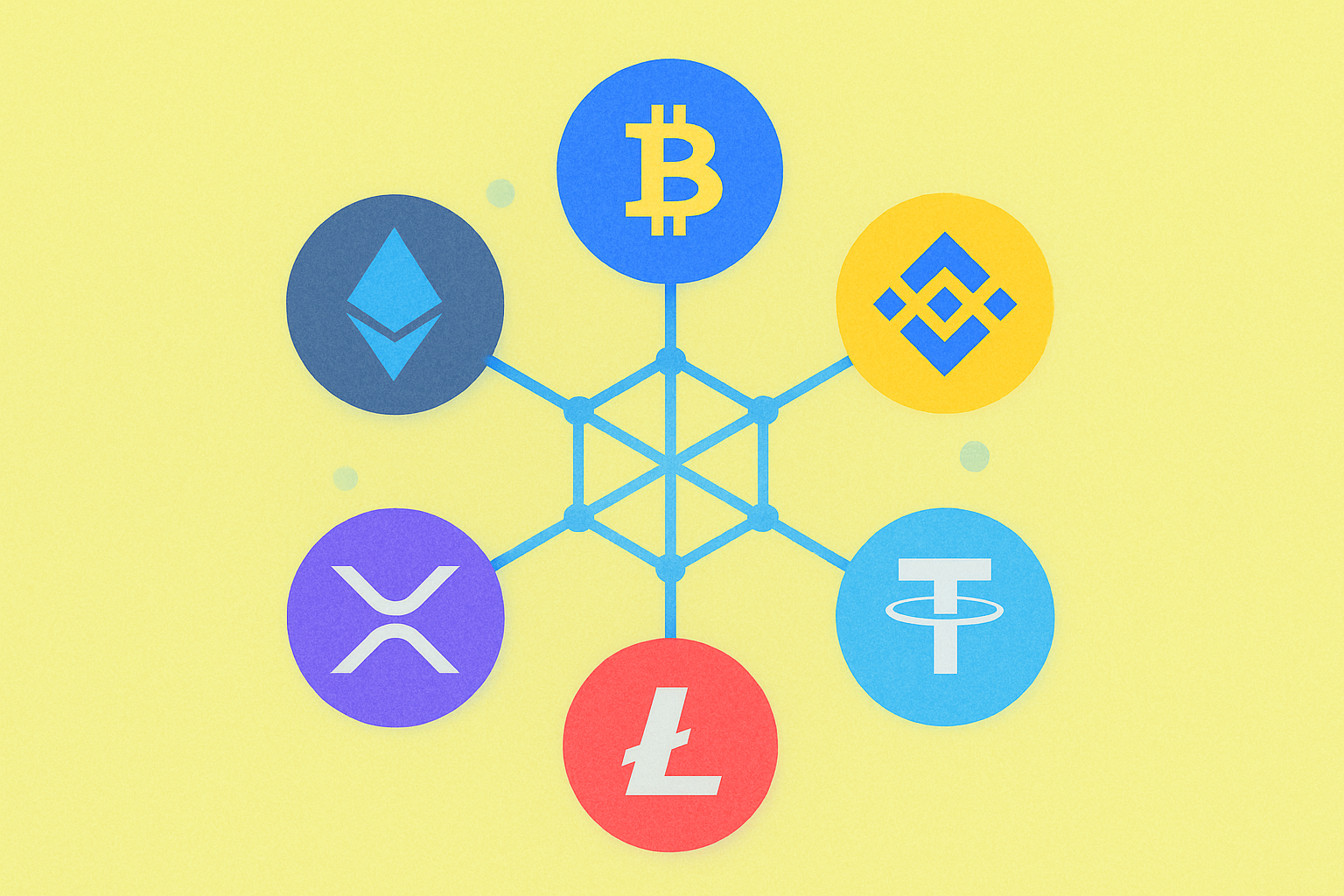
Comprehensive Tutorial for Cross-Chain Trading on Blockchain Networks
Optimizing Gas Fees on Avalanche: Tips and Techniques

Strategies to Minimize Blockchain Transaction Costs

GetGas: Simplifying Gas Fees in Web3

How to measure crypto community engagement and ecosystem activity metrics
What Is BDC Coin (BDC)? Solana's Pump.fun Meme Token With $4.5M Market Cap
What is crypto holding and fund flow analysis: exchange inflows, concentration, staking rates, and on-chain locked value explained

What is on-chain data analysis and how do active addresses, whale movements, and transaction fees predict crypto market trends