Solana Ecosystem Map: Visual Guide to Projects, Sectors, and Trends
What Is the Solana Ecosystem Map?
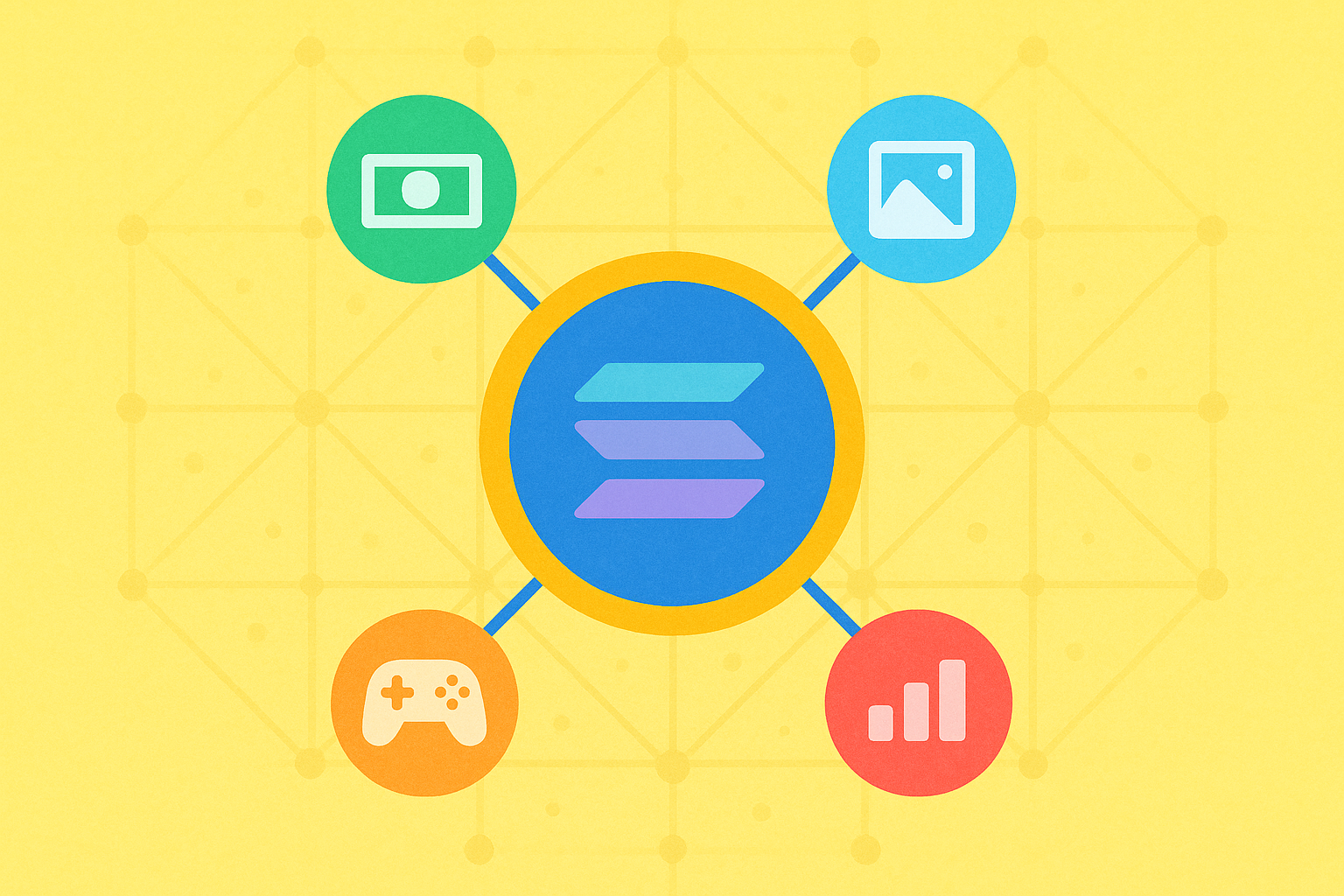
A crypto ecosystem map is a structured, visual representation categorizing the major projects, tools, tokens, and development activity within a blockchain ecosystem. For Solana, the ecosystem map spotlights leading protocols, key innovations, and how projects connect across popular sectors. These comprehensive visualization tools are typically organized as charts, diagrams, or interactive tables, featuring sectors such as DeFi, NFTs, gaming, infrastructure, and emerging technologies. The map allows stakeholders to see the broad scope and interconnections of Solana's ecosystem at a glance.
Investors leverage the Solana ecosystem map to identify growth sectors and spot trending projects before they reach mainstream adoption. Beginners benefit significantly by using these maps to navigate the complex landscape, discovering which tools and decentralized applications (dApps) have established reputations and strong community support. For developers and builders, ecosystem maps serve a critical function by clarifying market gaps, revealing integration opportunities, and highlighting potential collaboration partners across different protocol layers.
Solana at a Glance: Network Fundamentals
Solana is a high-performance, open-source blockchain engineered for speed, scalability, and affordability. Unlike traditional blockchains such as Ethereum and Bitcoin, Solana leverages an innovative Proof of History consensus mechanism combined with a parallel processing engine. This unique architecture enables rapid block confirmation and exceptional throughput—averaging over 65,000 transactions per second (TPS) with near-instant finality. Transaction fees on the Solana blockchain remain extremely low, often just a fraction of a cent, making it accessible for both high-frequency trading applications and everyday user interactions.
The native SOL token powers the entire network ecosystem by securing transactions through staking, paying for computational fees, and facilitating on-chain governance decisions. As one of the top cryptocurrencies by market capitalization, SOL has become essential infrastructure for DeFi protocols, NFT marketplaces, gaming platforms, and broader ecosystem participation. The token's utility extends beyond simple transactions, serving as collateral in lending protocols and governance rights in decentralized autonomous organizations (DAOs).
Interactive Solana Ecosystem Map by Sector
The heart of the Solana ecosystem map is a dynamic sector breakdown showing leading categories and project concentrations across the network. Each sector comprises dozens, sometimes hundreds, of active projects, reflecting Solana's remarkable diversity and accelerated growth trajectory. The ecosystem has expanded significantly in recent years, with new categories emerging to address evolving market demands and technological capabilities.
Here's a comprehensive overview of core sectors:
| Sector | No. of Projects | Key Examples | Most Active Projects |
|---|---|---|---|
| DeFi | 350+ | Orca, Jupiter, Raydium | Orca, Drift, Marginfi |
| NFT & Gaming | 400+ | Magic Eden, Tensor, Star Atlas | Magic Eden, STEPN, Famous Fox Federation |
| AI & DePIN | 120+ | Nosana, Render, io.net | io.net, Nosana |
| Infrastructure | 180+ | Helium, Wormhole, Pyth | Helium, Wormhole |
| Analytics/Dev | 90+ | Solscan, Helius, Clockwork | Solscan, Helius |
| Stablecoins/Payments | 70+ | USDC (Solana), ParclPay | USDC, ParclPay |
Sectors like NFT & Gaming and AI/DePIN have experienced the highest year-over-year growth rates, spotlighting Solana's expanding influence in cutting-edge blockchain applications. The infrastructure sector continues to mature, providing essential services that support the entire ecosystem's scalability and reliability.
DeFi Projects in the Solana Ecosystem
DeFi (Decentralized Finance) on Solana encompasses a comprehensive spectrum of protocols—decentralized exchanges (DEXs), lending platforms, yield aggregators, liquidity pools, and derivatives markets—all built to leverage the blockchain's fast, inexpensive transaction capabilities. Solana DeFi projects have demonstrated robust growth patterns, with total value locked (TVL) surging above $3 billion during recent periods. This explosive expansion is fueled by innovative platforms like Orca (known for user-friendly swaps and concentrated liquidity), Raydium (automated market maker with deep liquidity integration), and Jupiter (leading cross-exchange swap aggregator), among numerous others.
The DeFi sector on Solana distinguishes itself through several key advantages. Projects benefit from on-chain order books that enable sophisticated trading strategies, instant settlement that eliminates waiting periods common on other chains, and deep composability that allows protocols to seamlessly integrate with each other. Leading DeFi platforms include Orca, which prioritizes intuitive user interfaces and low-fee trading; Jupiter, which aggregates liquidity across multiple DEXs to ensure optimal trade execution; Drift, a high-speed decentralized derivatives exchange offering perpetual futures and leveraged trading; and Marginfi, a lending and leverage platform that enables users to maximize capital efficiency.
These innovative features have attracted both emerging protocols and established DeFi players migrating from other ecosystems. Investor interest remains strong, particularly in ecosystem projects launching new governance tokens, implementing novel yield mechanisms, and developing advanced financial instruments that minimize costs while maximizing returns. The sector continues to evolve with cross-chain bridges, algorithmic stablecoins, and institutional-grade DeFi products.
💡 Pro Tip: Always verify project smart contract audits from reputable security firms and enable two-factor authentication before interacting with new DeFi protocols to protect your assets.
NFT & Gaming on Solana: Next-Gen Creative Projects
Solana's NFT market has experienced remarkable growth, boasting over $1.7 billion in secondary trading volume and hosting thousands of unique collections across diverse artistic and utility-focused categories. The ecosystem supports a vibrant creator economy with platforms that offer streamlined trading, minting capabilities, and robust community engagement tools. Major marketplaces like Magic Eden and Tensor provide comprehensive infrastructure for collectors, creators, and traders.
The gaming sector represents one of Solana's most dynamic growth areas, with projects pushing blockchain gaming forward through play-to-earn models, player-owned economies, and immersive metaverse integration. Leading platforms and games include Magic Eden, which serves as the largest Solana NFT marketplace with support for multiple blockchain standards; Tensor, a fast-rising NFT exchange featuring professional trading tools, real-time analytics, and advanced filtering options; Star Atlas, an ambitious space-themed blockchain MMO (massively multiplayer online game) that combines high-fidelity graphics with decentralized gameplay mechanics; and STEPN, a pioneering move-to-earn fitness application that rewards users with tokens for physical activity while leveraging NFT-based digital sneakers.
New entrants and emerging trends continue to reshape the landscape. Dynamic NFTs that change based on on-chain or real-world events, in-game asset exchanges that enable true player ownership and cross-game interoperability, and augmented reality integrations are growing rapidly within the Solana ecosystem. The low transaction costs make it economically viable for games to process frequent microtransactions and asset transfers, enabling gameplay mechanics impossible on higher-fee blockchains.
💡 Pro Tip: Research NFT project teams' backgrounds and track records, monitor on-chain activity metrics for signs of genuine development progress, and watch for new collection drops or game updates that signal active community engagement.
AI, DePIN & Emerging Trends on Solana
DePIN (Decentralized Physical Infrastructure Networks) represents a major innovation trend within the Solana ecosystem. This emerging category refers to projects that coordinate real-world physical resources—such as computing power, wireless bandwidth, storage capacity, or IoT devices—using blockchain-based incentive mechanisms and tokenomics. The sector has grown substantially, attracting significant investment and developer attention.
Prominent examples demonstrate the diversity of DePIN applications. Helium operates decentralized wireless networks where individuals deploy hotspots to provide coverage and earn rewards. Nosana creates a decentralized cloud computing marketplace connecting GPU providers with users needing computational resources. The io.net platform facilitates AI compute sharing, allowing machine learning researchers and developers to access distributed GPU clusters at competitive rates.
Artificial intelligence integration further strengthens the ecosystem's technological foundation. The Render Network tokenizes GPU rendering power, enabling artists and developers to access high-performance computing for graphics rendering and AI workloads through a decentralized marketplace. New "AI agent" protocols are emerging that facilitate autonomous on-chain operations, self-executing bots, and complex automation workflows that can respond to market conditions or execute sophisticated strategies without human intervention.
These expansions foster a more robust, utility-driven Solana ecosystem that extends blockchain benefits beyond purely digital assets. The combination of low fees, high throughput, and programmability makes Solana particularly well-suited for DePIN applications that require frequent microtransactions and real-time coordination between physical infrastructure and blockchain state.
Infrastructure & Cross-Chain: Building Solana's Backbone
A healthy, sustainable blockchain ecosystem rests on robust infrastructure: reliable RPC and node providers, accurate price oracles, secure cross-chain bridges, comprehensive analytics tools, and developer resources. Solana's infrastructure layer has matured significantly, with professional-grade services supporting both individual developers and enterprise applications.
The network benefits from major node operators and RPC providers like Helius and QuickNode, which offer high-performance API access, websocket connections, and specialized developer tools. These services ensure that applications can reliably interact with the blockchain, query historical data, and receive real-time transaction updates.
Cross-chain interoperability has become increasingly important as the blockchain industry matures. Solana connects to other ecosystems through bridges such as Wormhole, which enables asset transfers between Solana and chains like Ethereum, Binance Smart Chain, and others, and Allbridge, which specializes in stablecoin transfers and provides liquidity pools for efficient cross-chain swaps. These bridges expand Solana's reach, allowing users to move assets between ecosystems and enabling developers to build truly multi-chain applications.
Data providers and analytics platforms unlock critical value for developers, traders, and power users. Solscan serves as a comprehensive blockchain explorer, offering transaction tracking, wallet analytics, and token information. Additional infrastructure includes oracle networks that provide reliable off-chain data feeds, development toolkits with SDKs and APIs in multiple programming languages, and analytics dashboards that visualize network health, protocol metrics, and ecosystem trends.
This comprehensive infrastructure layer enables easier project launches, seamless integrations between protocols, and professional-grade applications that can compete with traditional centralized services in terms of reliability and user experience.
Asset Overview: Top Tokens and Token Types
The Solana (SOL) token serves as the network's native asset, playing essential roles in transaction fees, network security through staking, and governance participation. Beyond SOL, the ecosystem encompasses a diverse array of token types, each serving distinct purposes within the broader network economy.
The token landscape includes utility tokens that provide in-application advantages and access to protocol features, such as RAY (Raydium's governance and fee-sharing token); governance tokens that grant holders voting rights on protocol parameters, upgrades, and treasury allocation decisions, exemplified by SRM and other DAO tokens; stablecoins that provide price stability and serve as trading pairs and liquidity base layers, with USDC on Solana being the dominant stablecoin; and meme coins alongside speculative new launches, including tokens like BONK that have captured community attention and trading volume.
The ecosystem has witnessed a surge in notable token launches across all categories, with projects increasingly adopting fair launch mechanisms, liquidity bootstrapping pools, and community-driven distribution models. The low transaction costs on Solana enable innovative tokenomics designs that would be prohibitively expensive on other chains, including frequent airdrops, microtransaction rewards, and dynamic token burns based on protocol usage.
Token diversity reflects the ecosystem's maturity, with assets serving functions ranging from simple value transfer to complex DeFi mechanics, governance participation, and real-world asset representation. The variety of token types supports a rich, interconnected economy where different protocols and applications can interoperate through shared liquidity and composable token standards.
Ecosystem Growth: Stats, Major Trends, and Activity
Solana's ecosystem has experienced remarkable expansion, with project counts more than doubling over an 18-month period. This growth spans multiple sectors, with DeFi, NFT, and AI/DePIN categories leading the expansion in both project numbers and total value locked. The network's ability to support high-frequency applications at low cost has attracted diverse builders ranging from individual developers to well-funded teams and established companies exploring blockchain integration.
Recent ecosystem studies reveal that 65-75% of launched projects remain actively developed and maintained, representing a significantly higher retention rate compared to many competing blockchain ecosystems. This sustainability metric indicates genuine product-market fit and long-term viability rather than purely speculative activity.
The DeFi sector has demonstrated particularly strong momentum, with protocols collectively growing total value locked (TVL) by over 200% during the past year. This capital influx reflects increasing user confidence, improved protocol security through audits and time-tested operations, and innovative yield opportunities that attract both retail and institutional participants.
NFT trading activity on Solana has reached impressive milestones, with the network briefly surpassing Ethereum in daily trading volume during peak periods. The combination of low minting costs, instant transactions, and vibrant creator communities has established Solana as a premier destination for digital collectibles and gaming assets.
Emerging categories represent the ecosystem's innovative edge. New sectors like DePIN and AI-focused applications now account for over 10% of all new project launches, signaling a strategic shift toward utility-driven blockchain applications that solve real-world problems beyond purely financial use cases. Infrastructure improvements, including enhanced RPC services, better developer tools, and cross-chain bridges, continue to reduce friction for both users and builders.
Solana Decentralization & Validator Health Map
Compared to earlier-generation blockchains, Solana's decentralization model employs a large, geographically distributed network of independent validators who process transactions and maintain network security. The network has grown to support over 2,000 active validators, representing a substantial increase from earlier periods and demonstrating healthy network participation.
The Nakamoto Coefficient, a key metric measuring decentralization by calculating the minimum number of validators needed to compromise the network, stands at 31 for Solana. This figure indicates a strong, though not maximal, level of decentralization that balances security with performance requirements. The coefficient has improved steadily as validator participation has increased and stake distribution has become more even across operators.
Validator nodes are distributed across diverse geographic zones, with dense clusters in North America, Europe, and Asia, alongside growing participation from South America, Africa, and Oceania. This geographic distribution enhances network resilience by reducing the impact of regional internet outages, regulatory actions, or natural disasters. The validator map illustrates concentration patterns while also showing the expanding global footprint of network infrastructure.
For both users and developers, decentralization matters significantly. Higher validator counts and broader geographic distribution translate directly into enhanced security for user assets, reduced risk of censorship or coordinated attacks, improved application reliability through redundant infrastructure, and greater confidence in the network's long-term sustainability and governance independence.
The network continues to implement improvements aimed at further decentralization, including stake distribution incentives, client diversity initiatives to reduce reliance on single software implementations, and programs to support validators in underrepresented regions.
Developer Resources, APIs & Getting Your Project Listed
For builders entering the Solana ecosystem, comprehensive development resources provide pathways from initial concept to production deployment. The network offers an extensive toolkit including software development kits (SDKs) in multiple programming languages such as Rust, JavaScript, Python, and Go; RESTful APIs for blockchain interaction and data queries; and specialized development platforms like Solana Labs' official tools, Anchor framework for simplified smart contract development, and Metaplex for NFT standard implementation.
Documentation and educational resources simplify the learning curve for new developers. Comprehensive guides cover smart contract development using the Solana Program Library, NFT minting and marketplace integration, DeFi protocol construction including AMMs and lending platforms, and cross-program invocations that enable complex protocol interactions. Tutorial series, video courses, and hackathon opportunities provide hands-on learning experiences supported by the developer community.
To list a project on prominent Solana ecosystem maps and directories, teams should prepare comprehensive materials including technical documentation and whitepapers explaining protocol mechanics, smart contract audits from recognized security firms, active social media presence and community channels, and transparent team information demonstrating relevant experience. Projects can submit through community-curated directories, official Solana ecosystem portals, and specialized listing platforms that aggregate ecosystem information.
Best practices for visibility and credibility include maintaining active development with regular GitHub commits, engaging with the community through Discord, Twitter, and forums, participating in ecosystem events and hackathons, and providing transparent communication about roadmap progress, challenges, and achievements. Projects demonstrating genuine innovation, strong security practices, and active community engagement receive greater visibility and support from the broader ecosystem.
Conclusion
The Solana ecosystem map captures a rapidly evolving, highly diverse blockchain landscape spanning DeFi protocols, NFT marketplaces, gaming platforms, infrastructure services, artificial intelligence applications, and emerging trends like decentralized physical infrastructure networks. As new projects and innovative categories continue to emerge, Solana's development pace remains among the most dynamic in the cryptocurrency industry.
Key takeaways for ecosystem participants include understanding that Solana supports thousands of active projects across interconnected sectors, each contributing to network effects and shared liquidity. The combination of technical decentralization through distributed validators and exceptional performance characteristics fuels continuous innovation and attracts builders from traditional tech and established crypto projects. Both investors seeking opportunities and developers building applications can thrive by leveraging the comprehensive tools, growing user base, and collaborative community that define the Solana ecosystem.
Whether you're exploring investment opportunities, researching blockchain technology, or planning to build the next breakthrough application, the Solana ecosystem map serves as an essential navigation tool for understanding this thriving, interconnected network. The ecosystem's continued growth, technical improvements, and expanding use cases position Solana as a foundational infrastructure layer for the next generation of decentralized applications and blockchain-enabled services.
FAQ
What are the main project categories and sectors in the Solana ecosystem?
Solana ecosystem includes DeFi protocols, NFT platforms, gaming projects, Web3 infrastructure, payment solutions, DAOs, and developer tools. Key sectors span decentralized exchanges, lending platforms, wallet services, and blockchain analytics tools.
What are the notable DeFi projects and applications on Solana?
Solana hosts major DeFi projects including Marinade Finance for liquid staking, Magic Eden for NFTs, Raydium and Orca for decentralized exchanges, Lido for staking derivatives, and Solend for lending protocols. These projects handle significant transaction volumes and drive Solana's DeFi ecosystem growth.
What are the main NFT and GameFi projects in the Solana ecosystem?
Major Solana NFT projects include Magic Eden, Tensor, and Formfunction. GameFi leaders include Marinade Finance, Orca, and Raydium. Emerging projects like Backpack and Phantom ecosystem tokens continue driving innovation in gaming and digital collectibles on Solana.
What are the differences between Solana and Ethereum ecosystem projects?
Solana ecosystem projects prioritize high-speed transactions and low fees through Proof-of-History consensus, while Ethereum projects emphasize security and decentralization via Proof-of-Stake. Solana excels in gaming and DeFi with faster throughput, whereas Ethereum dominates with larger total trading volume and more established developer communities.
How to find and evaluate new investment opportunities in the Solana ecosystem?
Monitor on-chain metrics like transaction volume and active users, analyze project tokenomics and team background, review smart contract audits, track ecosystem trends through Solana analytics platforms, and evaluate community engagement. Compare projects by TVL, user adoption rates, and developer activity to identify promising opportunities.
Solana生态的发展趋势和未来前景如何?
Solana生态展现强劲增长潜力。随着Layer2扩展方案完善、DeFi生态繁荣、NFT市场复苏和游戏应用爆发,Solana将继续成为高性能公链领头羊。交易额和用户数预计保持高速增长,生态项目融资热度持续升温,前景广阔。
What payment and wallet solutions are available in the Solana ecosystem?
Solana offers multiple wallet solutions including Phantom, Magic Eden, and Solflare for asset management. Payment solutions like Marinade Finance for staking, Magic Eden for NFTs, and various DEXs like Raydium and Orca enable seamless transactions across the ecosystem.
How to participate in and use mainstream applications within the Solana ecosystem?
Download a Solana wallet like Phantom or Magic Eden. Fund it with SOL tokens. Connect to DeFi protocols for lending, swapping, or staking. Use NFT marketplaces for trading digital assets. Explore gaming and social apps. Start with small amounts to familiarize yourself with gas fees and smart contracts.
Exploring the Top Projects and Winners of the Solana Development Challenge

Comprehensive Guide to NFT Trading and Top Solana Platforms

Effortless Cross-Chain Connectivity to Solana
All About Solana: What It Is and How It Works

Explore the World of Solana Name Service: A Guide to SNS Domain Registration

Comprehensive Guide to Exploring Solana Blockchain

What is the current cryptocurrency market overview: market cap rankings, trading volumes, and liquidity analysis?
Solana Staking: Your Complete Guide to Maximum Rewards and Network Security
What is on-chain data analysis and how do active addresses, transaction volume, and whale movements predict crypto price movements?

How to measure crypto community engagement and ecosystem activity in 2026

How Much Is Robinhood Gold: Pricing, Features, and Crypto Impact