Solana Nears $140 Amid ETF Momentum

Market Rebound Lifts SOL to Multi-Month Highs
Cryptocurrency markets recovered significant ground during a notable market rally, pushing total market capitalization back above key thresholds and contributing to substantial gains for large-cap tokens. Solana benefited prominently from this positive environment, with SOL trading near the $140 level at its intraday peak—a price point not observed in several months.
This upward movement represents a technical breakout from a prolonged consolidation phase. Market participants pointed to a combination of factors driving the advance: technical chart patterns signaling bullish momentum, sustained exchange-traded fund (ETF) accumulation creating supply pressure, and favorable protocol governance developments enhancing long-term value propositions. The confluence of these elements triggered renewed buying interest from both retail traders seeking momentum opportunities and institutional investors increasing their strategic allocations.
Short-term momentum helped SOL break through key resistance bands that had previously capped price appreciation. This technical breach acted as a catalyst, prompting algorithmic trading systems and discretionary traders to initiate fresh positions. The resulting surge in trading volume confirmed the strength of the breakout, distinguishing it from false moves that often characterize ranging markets.
Key Drivers Behind the Rally
Several interconnected factors contributed to Solana's price appreciation:
-
ETF Inflows: New and existing Solana-based ETFs continued to attract substantial capital, signaling meaningful institutional allocation to the protocol. These regulated investment vehicles provide traditional investors with compliant exposure to SOL without the complexities of self-custody, thereby broadening the investor base.
-
Protocol Upgrades: Proposed changes to Solana's tokenomics have introduced a compelling narrative around long-term supply reduction. Governance proposals aimed at accelerating token burning mechanisms have generated optimism about improved supply-demand dynamics.
-
Market Breadth: A broader uptick across cryptocurrency markets supported overall liquidity conditions and encouraged risk-on positioning among portfolio managers. This positive correlation effect amplified gains for quality assets like Solana.
-
Network Activity: Growing on-chain usage metrics, expanding protocol integrations, and enhanced cross-chain connectivity reinforced SOL's fundamental utility case. Real economic activity on the network provides tangible support for token valuations beyond speculative interest.
ETF Demand Remains a Significant Tailwind
One of the most visible shifts in recent periods has been the continued rollout and expansion of Solana-focused investment products. Multiple fund managers launched or expanded SOL exposure via ETFs and structured products, with many of these vehicles reporting consistent daily inflows during the recent price run-up.
ETF flows exert a magnified impact on tradable supply dynamics. When fund managers accumulate tokens to meet growing investor demand, this activity reduces available liquidity on spot markets. The mechanism works as follows: ETF sponsors must purchase and hold the underlying SOL tokens as backing for issued fund shares. As investor subscriptions increase, sponsors buy additional tokens from the open market, effectively removing them from circulation. This supply reduction can accelerate price appreciation, particularly during periods of positive market sentiment when demand is already elevated.
The structural nature of ETF buying also differs from typical speculative flows. ETF accumulation tends to be persistent and less sensitive to short-term price fluctuations, as it reflects underlying investor allocations rather than tactical trading positions. This characteristic provides a more stable demand base that can support sustained price trends.
Why ETFs Matter for SOL
Exchange-traded funds serve several critical functions in the Solana ecosystem:
-
Accessibility: They enable institutional and retail investors to gain SOL exposure without navigating the technical requirements of self-custody, including wallet management, private key security, and blockchain transaction mechanics.
-
Supply Dynamics: Concentrated buying from ETF sponsors can meaningfully tighten circulating supply, particularly when multiple products experience simultaneous inflows. This supply constraint supports favorable short-term price dynamics.
-
Market Visibility: Product listings on major financial venues increase Solana's visibility among traditional investors who may not actively monitor cryptocurrency markets. This expanded awareness can catalyze follow-on demand from asset allocators exploring digital asset exposure.
-
Regulatory Legitimacy: ETF approval and listing processes involve regulatory scrutiny, which lends credibility to the underlying asset and may encourage participation from institutions with strict compliance requirements.
Protocol Governance and Tokenomics Proposals
Alongside demand-side factors, changes proposed at the protocol level have added substantial weight to the bullish investment case. One prominent governance initiative aims to accelerate disinflation by increasing the rate of token burning, thereby shortening the timeline to achieve lower long-term inflation targets.
Under the proposed adjustments, Solana's scheduled emission reductions would be stepped up significantly. The current emission schedule follows a predetermined disinflationary path, but the proposed changes would amplify the rate of supply reduction. Proponents argue this modification will materially lower net supply growth over the coming years, creating more favorable supply-demand dynamics for token holders.
Market participants often react positively to credible, on-chain mechanisms that reduce future token issuance. The economic logic is straightforward: if future supply growth decreases while demand remains steady or increases, fundamental valuation support strengthens. However, the magnitude of this effect depends on several factors, including the actual implementation timeline, the scale of supply reduction, and concurrent demand trends.
Investor Considerations
When evaluating tokenomics proposals, several important factors warrant attention:
-
Governance Process: Proposals affecting token issuance must pass community governance thresholds before taking effect. This typically involves proposal submission, community discussion, validator voting, and implementation phases. The outcome is not predetermined, and proposals may be amended or rejected.
-
Implementation Timeline: Even after approval, changes may be phased in gradually rather than implemented immediately. Market pricing can adjust incrementally as the new emission schedule becomes certain and begins to affect actual token supply.
-
Demand Sustainability: Supply-side improvements are most impactful when paired with sustained or growing demand. Sources of demand include ETF accumulation, decentralized finance (DeFi) activity, merchant adoption for payments, and speculative trading interest.
-
Comparative Dynamics: Investors should consider how Solana's tokenomics compare to competing blockchain protocols. Relative supply growth rates, staking yields, and utility value propositions all factor into cross-chain capital allocation decisions.
Network Fundamentals: Activity, Integrations and Cross-Chain Access
Beyond macroeconomic factors and tokenomics adjustments, Solana's on-chain fundamentals have demonstrated notable strength in recent periods. Developer activity continued to expand across multiple application categories, including decentralized finance (DeFi) platforms, non-fungible token (NFT) marketplaces, and infrastructure tooling projects.
The DeFi ecosystem on Solana has matured considerably, with established protocols offering lending, borrowing, decentralized exchange, and yield optimization services. These applications generate real economic activity and create organic demand for SOL tokens, which are required for transaction fees and often serve as collateral or governance tokens within protocol ecosystems.
NFT activity, while subject to cyclical trends, has maintained a presence on Solana due to the network's high throughput and low transaction costs. These characteristics make Solana particularly suitable for NFT minting and trading at scale, supporting use cases ranging from digital art to gaming assets and membership tokens.
Cross-chain bridges and interoperability projects have also increased the protocol's reach substantially. These infrastructure components enable value to flow between Solana and other blockchain ecosystems, expanding the potential user base and creating new use cases. For example, wrapped SOL tokens on other chains allow users to access Solana exposure while operating within different DeFi ecosystems, effectively extending Solana's utility beyond its native environment.
Higher transaction volumes and active developer engagement are metrics that sophisticated investors monitor closely. These indicators provide insight into demand for blockspace—the fundamental resource that blockchain networks provide—and the real-world utility of the network. Both factors underpin longer-term valuation potential by demonstrating that the protocol serves genuine economic needs rather than purely speculative interest.
What to Watch On-Chain
Key metrics for assessing Solana's fundamental health include:
-
Transaction Throughput: Daily transaction counts and network utilization rates indicate the level of actual usage. Sustained high throughput suggests strong application-layer demand.
-
Fee Revenue Trends: While Solana's fees remain low by design, aggregate fee revenue reflects economic activity and provides a measure of value capture by the network.
-
Active Wallet Growth: Increases in unique active wallets signal expanding user adoption. This metric is particularly meaningful when accompanied by rising transaction volumes, indicating genuine engagement rather than empty wallet creation.
-
Developer Deployments: The rate of new smart contract deployments and protocol launches indicates ecosystem vitality and developer confidence in the platform's long-term prospects.
-
Cross-Chain Bridge Activity: Volume flowing through bridges to and from other chains demonstrates Solana's integration into the broader cryptocurrency ecosystem. Growing bridge activity suggests increasing interconnectedness and utility.
Recent Market Context and Macro Backdrop
The recent market environment has been shaped by several notable themes that influence digital asset flows and investor behavior:
-
Institutional Adoption: Continued interest from institutional allocators has meaningfully broadened the base of buyers beyond retail participants. Pension funds, endowments, family offices, and hedge funds have increasingly incorporated digital assets into portfolio construction frameworks, providing more stable and substantial capital flows.
-
Regulatory Clarity: Jurisdictions delivering clearer frameworks for digital asset products have facilitated ETF approvals and product innovations. Regulatory certainty reduces operational risks for fund sponsors and compliance concerns for institutional investors, thereby encouraging participation.
-
Macro Liquidity Conditions: Shifts in global liquidity and risk sentiment have periodically amplified cryptocurrency price movements alongside traditional financial markets. When central bank policies support liquidity expansion and risk appetite strengthens, digital assets often benefit from increased capital allocation.
-
Infrastructure Maturation: Improvements in custody solutions, trading infrastructure, and market microstructure have reduced friction for institutional participants. Enhanced operational capabilities make it easier for large investors to execute sizable positions without excessive market impact.
These factors have combined to create windows of opportunity for selective positioning in cryptocurrency markets. Solana's performance in recent periods has partly reflected this broader shifting landscape, where regulated investment vehicles and clearer governance pathways play increasingly important roles in driving adoption and price discovery.
Risks and Market Considerations
While the recent rally underscores renewed investor interest and improving fundamentals, traders and long-term holders should remain mindful of several material risks:
-
Volatility: SOL, like other digital assets, can experience sharp price swings driven by sentiment shifts, macroeconomic shocks, or technical liquidations in derivatives markets. Leverage usage in crypto markets can amplify price movements in both directions, creating potential for rapid drawdowns even amid positive fundamental trends.
-
Governance Outcomes: Protocol proposals may be amended, delayed, or rejected through the governance process, changing the expected impact on token supply dynamics. Community consensus is not guaranteed, and contentious proposals can create uncertainty that affects market sentiment.
-
Operational and Security Risks: Cross-chain bridges and third-party integrations introduce counterparty and smart contract risks that can affect network utility and user confidence. Security vulnerabilities in bridge contracts have historically resulted in significant value loss across the cryptocurrency ecosystem.
-
Regulatory Developments: New rules or enforcement actions in major markets can influence product availability and capital flows into ETFs and exchanges. Regulatory uncertainty or adverse policy changes can quickly reverse positive momentum and reduce institutional participation.
-
Technical Network Risks: While Solana has demonstrated high performance capabilities, the network has experienced outages in the past. Any future stability issues could undermine confidence and prompt capital rotation to competing platforms.
-
Competition: The blockchain infrastructure space remains highly competitive, with numerous protocols competing for developer attention and user adoption. Solana must continue innovating and maintaining operational excellence to preserve its market position.
Technical Outlook and Trading Signals
From a technical analysis perspective, the recent consolidation and breakout pattern represented a classic setup observed across several cryptocurrency assets during this market phase. SOL's move above short-term resistance levels prompted fresh momentum-based buying, which pushed prices toward the upper band of the prior consolidation range.
The breakout was accompanied by several confirming signals that technical traders typically monitor:
-
Volume Confirmation: Trading volume increased substantially during the breakout, indicating genuine buying interest rather than a low-volume false breakout. High volume on breakouts suggests conviction among market participants.
-
Derivatives Positioning: Open interest in SOL futures and options markets expanded, reflecting increased engagement from leveraged traders and hedging activity from institutional participants. Rising open interest alongside price appreciation typically indicates sustainable trends.
-
Relative Strength: SOL's performance relative to Bitcoin and other major cryptocurrencies showed positive divergence, suggesting asset-specific strength beyond general market movements. Relative strength is often a precursor to sustained outperformance.
Short-term traders often employ momentum indicators, moving average crossovers, and support/resistance analysis to gauge whether a breakout will sustain or reverse. Current technical conditions suggest the potential for continued upside if key support levels hold during any near-term pullbacks.
Long-term investors typically place less emphasis on short-term technical patterns, instead focusing on fundamentals such as network growth trajectories, tokenomics evolution, and macroeconomic allocation trends. However, technical analysis can still inform entry timing and position sizing decisions even within longer investment horizons.
What This Means for Market Participants
For investors considering exposure to Solana in the current environment, the combination of ETF interest, potential tokenomic adjustments, and improving on-chain metrics presents a proposition worth evaluating within a diversified portfolio framework.
Practical considerations vary by participant type:
-
Long-Term Investors: Should assess the durability of on-chain activity trends and the likelihood of proposed supply-side changes receiving governance approval and implementation. Fundamental analysis of developer ecosystem health, application-layer adoption, and competitive positioning relative to other layer-1 protocols provides the foundation for long-term conviction.
-
Active Traders: Need to monitor liquidity conditions and derivatives positioning for signs of momentum continuation or potential reversal. Technical indicators, funding rates in perpetual futures markets, and options market sentiment can provide early signals of shifting dynamics.
-
Institutional Allocators: Must consider custody arrangements, regulatory compliance requirements, and product structure when allocating to SOL exposure. Decisions between direct token holdings, ETF products, or derivatives-based strategies depend on operational capabilities, regulatory constraints, and portfolio objectives.
-
DeFi Participants: Should evaluate opportunities for yield generation through staking, liquidity provision, or participation in Solana-based protocols. These activities can enhance returns but introduce additional smart contract and protocol risks.
Outlook
Solana's advance toward the $140 level highlights how product innovation, governance developments, and market structure evolution can intersect with fundamental demand to influence token price trajectories. The confluence of sustained ETF inflows, potential reductions in future token emissions through governance action, and growing network utilization creates a supportive backdrop for continued price appreciation.
However, realizing this potential depends on several factors remaining favorable. Network usage must continue expanding, demonstrating that Solana provides genuine utility that justifies its valuation. Governance proposals must navigate the approval process successfully and deliver the anticipated supply dynamics. Macro conditions must remain conducive to risk asset appreciation, and regulatory developments must not create significant headwinds for cryptocurrency adoption.
As always, investors should weigh both opportunities and risks carefully, maintain disciplined position sizing appropriate to their risk tolerance, and stay informed on governance votes and regulatory updates that can change the investment landscape quickly. The cryptocurrency market remains dynamic and subject to rapid shifts in sentiment and fundamentals, requiring ongoing monitoring and adaptive portfolio management.
FAQ
What is Solana (SOL)? How does it differ from Ethereum?
Solana is a high-speed blockchain offering faster transaction speeds and lower fees than Ethereum. While Ethereum uses Proof of Stake, Solana employs Proof of History for enhanced scalability. SOL powers Solana's ecosystem and network security.
Solana ETF获批对SOL价格有什么影响?
Solana ETF获批将显著提升SOL价格。ETF上市吸引大量机构资金涌入,增加市场需求和交易额。合规的投资渠道降低购买门槛,扩大投资者基数。预期SOL将突破140美元,迎来新的上升周期。
Why did Solana's price rise in 2024? What were the main driving factors?
Solana's 2024 price surge was driven by increased institutional adoption, growing ecosystem development, improved network performance, and positive sentiment from Bitcoin's mainstream acceptance. Rising transaction volume, expanded DeFi applications, and SOL's role in emerging metaverse projects also contributed significantly to its upward momentum.
How to buy and hold Solana (SOL) tokens?
You can purchase SOL through cryptocurrency platforms by linking a bank account or using existing crypto assets. After buying, transfer your SOL to a secure wallet—either a hardware wallet for maximum security or a mobile wallet for convenience. Store your private keys safely and enable two-factor authentication for account protection.
What are the risks of investing in Solana? What should I pay attention to?
Solana faces network congestion risks, validator centralization concerns, and smart contract vulnerabilities. Monitor ecosystem developments, diversify holdings, and stay informed about protocol upgrades to mitigate potential losses.
What are Solana's technical advantages? Why choose Solana over other public chains?
Solana offers exceptional speed with 65,000+ transactions per second, low transaction costs under $0.00025, and parallel processing via Proof of History. Its high throughput, energy efficiency, and growing ecosystem make it ideal for DeFi, NFTs, and Web3 applications.
What are the main DeFi and NFT projects in the Solana ecosystem?
Solana ecosystem includes major DeFi projects like Marinade Finance, Raydium, and Orca for liquidity provision; Magic Eden and Hyperspace as leading NFT marketplaces; and Phantom wallet for asset management. These platforms drive significant trading volume and user adoption within the network.

How does SUI price volatility compare to Bitcoin and Ethereum in 2026?
How does SOL fund flow and holdings concentration affect Solana's price movement in 2026?
How Does Cryptocurrency Competitive Landscape Compare in 2025: Market Share, Performance, and Key Advantages

How Does MET Token Liquidity Affect Exchange Net Inflows and Outflows?
Ethereum (ETH) Bullish Price Prediction
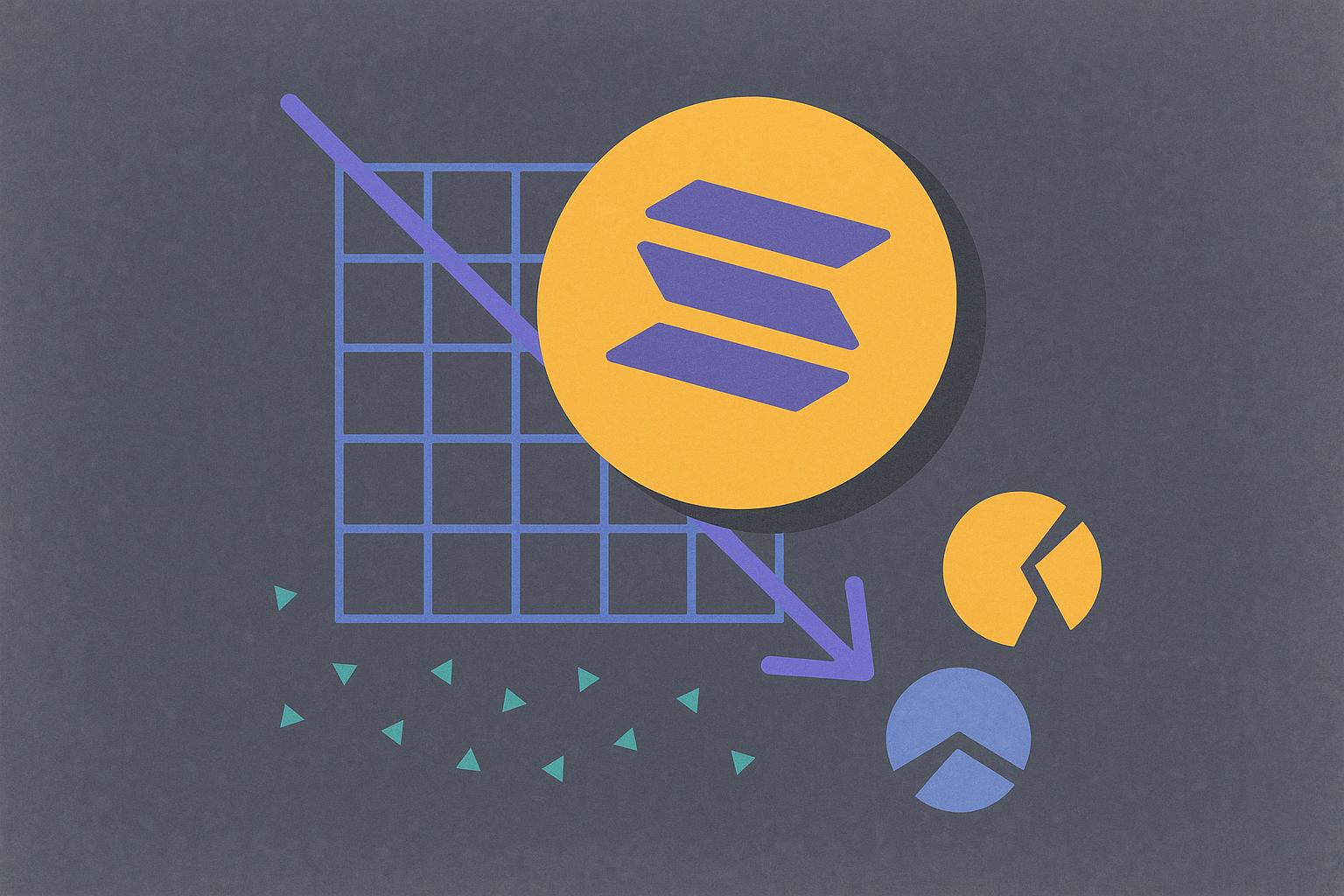
Analysis of Reasons Behind Solana's Price Decline

How to Get Invitation Code for Pi Network

Major Daily Puzzle Durov Guide

SUI Testnet Faucet
Will XRP Ever Reach $10?

Flippening