

LCP_hide_placeholder
fomox
MarketsPerpsSpotSwapMeme Referral
More
Smart Money Recruitment
Search Token/Wallet
/

Top Layer 1 Blockchain Projects for Decentralized Apps in 2022

2025-12-20 02:57:09
Bitcoin
Blockchain
Ethereum
Solana
Web 3.0
Article Rating : 3.5
half-star
80 ratings
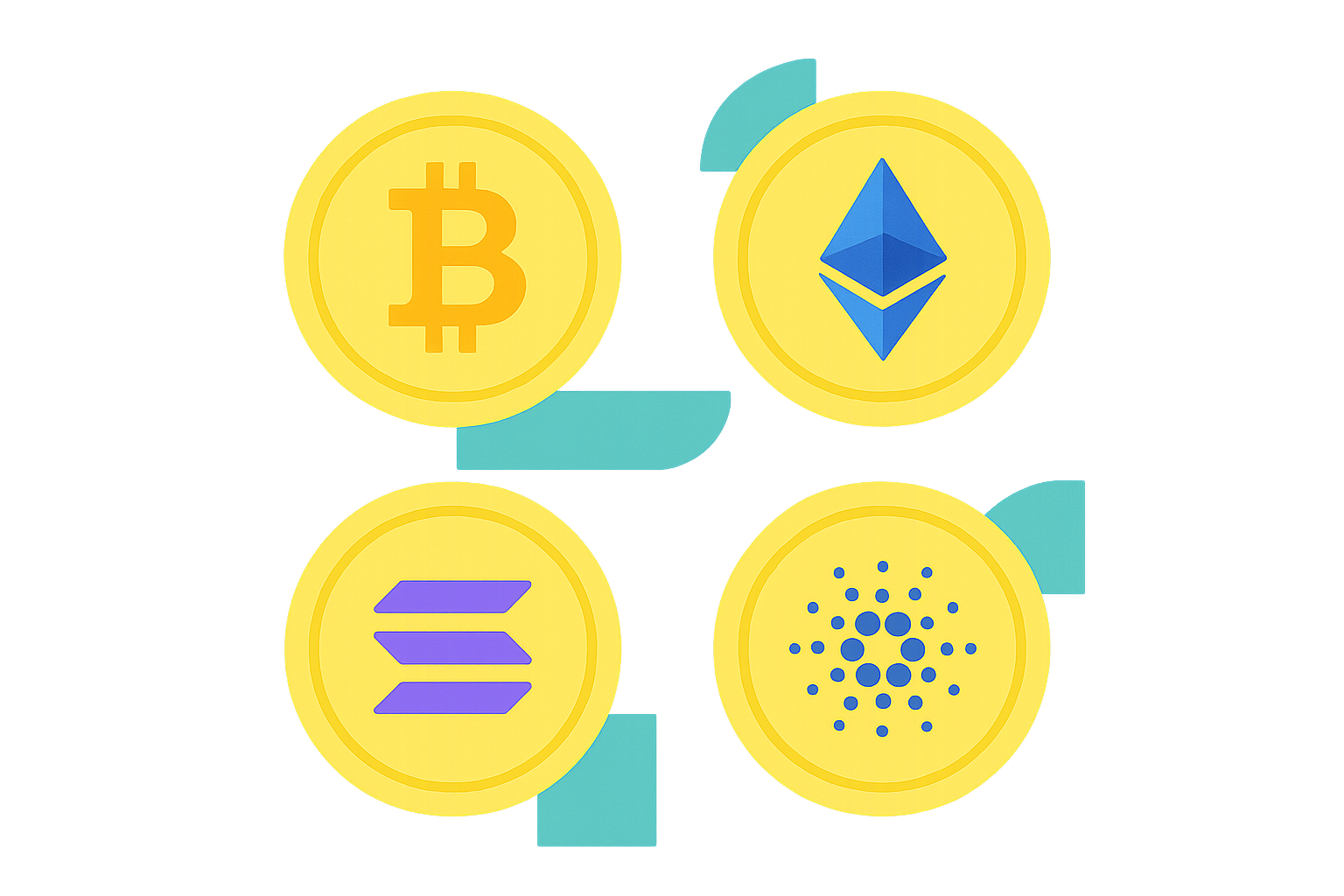
Explore the foundational role of Layer 1 blockchains in decentralized applications. The article details L1 protocols like Bitcoin, Ethereum, Solana, and Cardano, analyzing their consensus mechanisms and network operations, addressing their limitations in scalability and interoperability. Essential for developers and enthusiasts keen on understanding how decentralized networks function independently, this piece covers the technological challenges and innovations like Layer 2 solutions. Readers gain insights on the structural differences between L1 and L2, boosting their comprehension of crypto ecosystems.
Top Layer 1 Blockchain Projects for Decentralized Apps in 2022

What are Layer 1 Blockchains?

Decentralization stands as the cornerstone of cryptocurrencies, yet it operates within highly organized and sophisticated technical frameworks. Layer 1 blockchains represent the foundational infrastructure that enables secure, peer-to-peer cryptocurrency transactions without centralized control. Understanding these base-layer protocols is essential for comprehending how modern cryptocurrency networks function and evolve, particularly as layer 1 crypto projects continue to develop and mature in the blockchain ecosystem.

What is a Layer 1 Blockchain?

Layer 1 (L1) blockchains are decentralized software protocols that form the foundation of cryptocurrency networks. These protocols function as both rule-makers and enforcers within the crypto ecosystem. The code underlying an L1 blockchain establishes standards that network nodes—computers participating in the network—must follow to broadcast, verify, and publish transactions on the public ledger.

These base-layer blockchains are often referred to as the "ground floor" of cryptocurrency architecture because they contain all essential operational instructions. Developers frequently use terms like "mainnet" and L1 interchangeably, as the L1 protocol encompasses all critical specifications required for a cryptocurrency's operation. The self-sufficient nature of L1 blockchains means they don't rely on other networks for security or consensus, making them truly independent systems. This fundamental characteristic makes layer 1 crypto projects the backbone of the entire blockchain industry.

How do Layer 1 Blockchains Work in Crypto?

L1 blockchains operate through consensus mechanisms—algorithmic frameworks that establish trust among decentralized node operators. These mechanisms are fundamental to maintaining network integrity and processing transactions securely.

Two primary consensus models dominate the L1 landscape. Proof-of-Work (PoW), exemplified by Bitcoin, requires computers to compete in solving complex mathematical equations approximately every 10 minutes to validate and post new transactions. Alternatively, Proof-of-Stake (PoS), used by networks like Ethereum and Solana, requires nodes to lock cryptocurrency on the blockchain to earn validation rights.

To incentivize participation, L1 protocols reward node operators with native cryptocurrency. Bitcoin miners receive BTC rewards, while Ethereum validators earn ETH. Beyond rewards, L1 blockchains implement security measures to maintain system integrity. PoS networks employ "slashing" policies that penalize misbehaving validators by confiscating their staked cryptocurrency. Bitcoin requires six separate confirmations before finalizing transactions on the permanent ledger.

L1 blockchains also manage transaction fees (gas fees) and cryptocurrency issuance schedules. Bitcoin automatically reduces BTC issuance every four years through "halving" events, while Ethereum implements dynamic issuance and burning mechanisms. Following the EIP-1559 upgrade, Ethereum burns portions of transaction fees to manage inflation rates based on network activity.

Examples of Layer 1 Blockchains

Since Bitcoin's introduction, numerous layer 1 crypto projects have emerged, each with distinctive characteristics and purposes:

Bitcoin pioneered the L1 framework as the first successful cryptocurrency. Launched by pseudonymous creator Satoshi Nakamoto, Bitcoin's PoW consensus mechanism remains the most recognizable, though energy-intensive, approach to decentralized validation.

Ethereum ranks as a leading blockchain by market capitalization and distinguishes itself by enabling third-party developers to build decentralized applications (dApps) on its L1 protocol. Originally utilizing PoW, Ethereum has since transitioned to PoS, significantly reducing its energy consumption while maintaining network security.

Litecoin emerged as a faster, more affordable alternative to Bitcoin for peer-to-peer transactions. While employing a different algorithm, Litecoin maintains a PoW consensus mechanism similar to Bitcoin's foundational design.

Solana represents a high-performance layer 1 crypto project, offering similar functionality to Ethereum with enhanced performance characteristics. Its PoS L1 blockchain achieves remarkable transaction throughput, potentially processing tens of thousands of transactions per second.

Cardano emphasizes peer-reviewed research and welcomes third-party dApp development on its PoS L1 blockchain. This project has become one of the prominent layer 1 crypto projects known for its academic approach to blockchain development.

What are Some Limitations of Layer 1 Protocols?

Despite their critical role in cryptocurrency infrastructure, L1 blockchains face inherent limitations. Their deterministic algorithms prioritize security and predictability over flexibility, often constraining innovation and scalability.

Ethereum co-founder Vitalik Buterin articulated these challenges as the "blockchain trilemma," suggesting developers must balance three elements: decentralization, security, and scalability. Addressing this limitation has driven initiatives like "sharding," which divides the main blockchain into smaller data chunks to reduce node requirements and improve network efficiency.

Interoperability presents another significant challenge. Each L1 operates as a self-contained system with unique coding standards, making cross-chain asset transfers and multi-network application interactions difficult. This "interoperability problem" has inspired projects like Cosmos and Polkadot, which focus specifically on inter-blockchain communication (IBC) solutions. These challenges continue to shape how layer 1 crypto projects evolve and adapt.

Layer 1 Versus Layer 2 Protocols: The Key Difference Between These Blockchain Layers

The cryptocurrency landscape has evolved to include Layer 2 (L2) protocols as projects began building atop existing L1 blockchains. This development necessitated clear terminology to distinguish base-layer protocols from supplementary networks.

L2 protocols leverage L1 blockchain security while introducing new use cases or enhancing scalability. Networks like Arbitrum, Optimism, and Polygon operate on Ethereum's L1 to provide faster transactions and lower fees. Users transfer assets to L2 networks for specific services before finalizing transactions on the underlying L1 mainnet.

A key distinction exists between L2 "tokens" and L1 "coins." Tokens exist on top of L1 blockchains as supplementary features, while coins form integral components of L1 protocols serving as primary payment methods. Examples of L2 tokens include Polygon's MATIC, Arbitrum's ARB, and Optimism's OP. Understanding this distinction is crucial when evaluating different layer 1 crypto projects and their associated ecosystems.

Conclusion

Layer 1 blockchains constitute the fundamental infrastructure enabling decentralized cryptocurrency networks to function securely and independently. Through consensus mechanisms, security protocols, and native cryptocurrency management, L1s provide the essential framework for processing peer-to-peer transactions without central authority. While Bitcoin pioneered this architecture, diverse layer 1 crypto projects like Ethereum, Solana, and Cardano have expanded functionality and performance characteristics. Despite facing scalability and interoperability challenges—encapsulated in the blockchain trilemma—L1 protocols remain indispensable to the cryptocurrency ecosystem. The emergence of L2 solutions demonstrates the industry's evolution, leveraging L1 security while addressing performance limitations. Understanding layer 1 crypto projects provides crucial insight into how decentralized networks maintain integrity, process transactions, and continue evolving to meet growing demands in the blockchain space.

FAQ

What are the layer 1 coins in crypto?

Layer 1 coins are foundational cryptocurrencies that power independent blockchains. Examples include Bitcoin, Ethereum, Solana, and Cardano. These coins secure the network, enable transactions, and support smart contracts, forming the backbone of their respective blockchain ecosystems.

Which layer 1 crypto is best?

Solana leads as the top Layer 1 due to its robust ecosystem, high transaction speed, and strong developer adoption. Ethereum and Avalanche remain competitive alternatives depending on your specific needs.

Which crypto has 1000x potential?

Zano (ZANO) stands out as a penny crypto with realistic 1000x potential, followed by Nosana for AI compute solutions and Pengu. These projects show strong growth prospects driven by technological innovation and market adoption.

Is XRP a layer 1 or 2?

XRP operates on Layer 1 blockchain architecture, designed for institutional-grade scalability and efficiency. It is not a Layer 2 solution.
* The information is not intended to be and does not constitute financial advice or any other recommendation of any sort offered or endorsed by Gate.

Share

Content

What is a Layer 1 Blockchain?

How do Layer 1 Blockchains Work in Crypto?

Examples of Layer 1 Blockchains

What are Some Limitations of Layer 1 Protocols?

Layer 1 Versus Layer 2 Protocols: The Key Difference Between These Blockchain Layers

Conclusion

FAQ

Related Articles
How Does Cryptocurrency Competitive Landscape Compare in 2025: Market Share, Performance, and Key Advantages

How Does Cryptocurrency Competitive Landscape Compare in 2025: Market Share, Performance, and Key Advantages

# How Does Cryptocurrency Competitive Landscape Compare in 2025: Market Share, Performance, and Key Advantages This comprehensive analysis examines the 2025 cryptocurrency competitive landscape, where Bitcoin, Ethereum, BNB, and Solana command over 70% market dominance through established infrastructure and network effects. The article evaluates key differentiators including transaction speed, network security, and developer adoption across leading Layer-1 platforms, while revealing how emerging challengers strategically capture niche segments in DeFi and Web3 infrastructure. Designed for investors and developers, this guide clarifies market concentration dynamics, performance metrics comparison, and valuation trends shaping cryptocurrency competition. Whether trading on Gate or analyzing blockchain ecosystems, readers gain actionable insights into market share distribution, competitive advantages, and emerging opportunities in today's mature crypto market.
2025-12-30 02:47:45
How Does Solana (SOL) Compare to Ethereum and Bitcoin in 2025?

How Does Solana (SOL) Compare to Ethereum and Bitcoin in 2025?

The article offers a comprehensive comparison of Solana's performance against Ethereum and Bitcoin in 2025, highlighting its scalability, institutional adoption, and technological advantages. It addresses how Solana's high transaction speed, lower fees, and unique Proof of History consensus mechanism position it favorably in sectors like DeFi, NFTs, and prediction markets. Key issues discussed include regulatory challenges, asset tokenization, and institutional access. This analysis targets developers, investors, and industry analysts seeking insights into Solana's competitive positioning and growth trajectory. The article structure logically progresses from performance metrics to market growth, technology differentiation, and regulatory landscape.
2025-12-01 01:10:08
Guide to Cross-Chain Bridge Solutions for Seamless Blockchain Connectivity

Guide to Cross-Chain Bridge Solutions for Seamless Blockchain Connectivity

# Guide to Cross-Chain Bridge Solutions for Seamless Blockchain Connectivity This comprehensive guide explores Wormhole Bridge, a decentralized cross-chain infrastructure connecting Ethereum and Solana to enable seamless asset transfers and blockchain interoperability. Designed for developers, DeFi platforms, and institutional investors, this article addresses critical challenges including network congestion, high transaction costs, and scalability limitations that hinder cryptocurrency adoption. The guide examines how Wormhole's guardian-based architecture securely facilitates bidirectional token flows between ERC-20 and SPL standards, empowers DeFi applications with superior performance, and compares it with alternative bridge solutions. Readers will understand cross-chain mechanics, security considerations, practical implementation steps, and the strategic importance of interoperability infrastructure in building a connected blockchain ecosystem.
2025-12-26 17:15:17
Understanding Blockchain Network Infrastructure: The Role of Nodes

Understanding Blockchain Network Infrastructure: The Role of Nodes

Understanding Blockchain Network Infrastructure: The Role of Nodes explores the essential functions and types of blockchain nodes, emphasizing their significance in decentralization, security, and transaction validation. The guide addresses practical challenges in node operation, from storage and bandwidth requirements to technical expertise, catering to those interested in operating nodes or understanding blockchain systems. It provides insight into operating full, light, and masternodes, as well as validating consensus mechanisms. The article is structured to offer a comprehensive overview followed by implementation guidance, optimizing keyword density to enhance readability and facilitate quick scanning.
2025-12-04 14:23:20
Understanding Cryptographic Hash Functions in Digital Security

Understanding Cryptographic Hash Functions in Digital Security

The article "Understanding Cryptographic Hash Functions in Digital Security" explores the vital role crypto hashing plays in digital security and cryptocurrency networks. It discusses how these functions work, their purpose, differences from key encryption, and their application in cryptocurrency. The content is structured around defining cryptographic hash functions, explaining their mechanisms, and detailing their importance for data integrity and security. This article caters to anyone seeking to understand blockchain technology, cybersecurity, and data protection methods. Keywords such as cryptographic hash functions, SHA-256, data integrity, and blockchain enhance readability for quick comprehension.
2025-12-02 11:08:03
Understanding Blockchain Hashing: Essential Algorithms Explained

Understanding Blockchain Hashing: Essential Algorithms Explained

The article "Understanding Blockchain Hashing: Essential Algorithms Explained" delves into the critical role of hashing in blockchain technology, offering insights into its mechanics, applications, and significance in securing digital transactions. It addresses key questions around hashing processes, algorithm examples like SHA-256, and their applications in transaction integrity and security. Geared towards blockchain enthusiasts and professionals, it provides a structured exploration of hashing mechanisms, examples, usage in blockchain, benefits, and potential vulnerabilities, underscoring its indispensable function in blockchain's secure, decentralized operations.
2025-12-01 07:09:35
Recommended for You
Ripple (XRP) Price Prediction: Market Forecast and Analysis
Ripple (XRP) Price Prediction: Market Forecast and Analysis

This comprehensive analysis examines Ripple (XRP) price dynamics and forecasts for 2030, providing institutional and retail investors with data-driven insights. The article covers XRP's current market position trading near $2.10-$2.22, supported by robust liquidity and growing institutional adoption. Key drivers analyzed include institutional participation reaching 2021 peaks, Ripple USD (RLUSD) ecosystem expansion, and macroeconomic factors like Bitcoin halving cycles. Technical analysis identifies critical support at $2.00-$2.10 and resistance zones at $2.60. Long-term forecasts project XRP reaching $2.50-$3.20 by end-2026 under base-case scenarios, with bullish tail-risk targets reaching $6-$7 by 2030 contingent on sustained ETF inflows and favorable regulatory developments. The analysis balances optimistic adoption narratives against risks including regulatory uncertainty, competitive pressures from emerging payment protocols, and macroeconomic volatility affecting digital asset valuations across Gate and
2026-01-18 14:27:55
Ethereum (ETH) Price Prediction: Market Forecast and Analysis

Ethereum (ETH) Price Prediction: Market Forecast and Analysis
This comprehensive Ethereum price forecast article provides investors with structured analysis across multiple timeframes and scenarios. It examines ETH's current trading range ($2,800-$3,400), identifies key price drivers including ecosystem development, institutional adoption, and macroeconomic conditions, and analyzes historical performance patterns. Short-term price predictions identify resistance at $3,249-$3,400 with potential targets around $3,850, while long-term forecasts span from conservative mid-$3,000 levels to optimistic mid-five-figure projections by decade's end. The analysis incorporates risk assessment covering regulatory uncertainty, competitive pressures, and market volatility. Designed for traders and investors, this guide integrates technical levels, fundamental analysis, and scenario planning to help participants navigate Ethereum's price movements while managing portfolio risks effectively.
2026-01-18 14:23:46
What is the Maximum Supply of Dogecoin: Key Facts & Market Impact
What is the Maximum Supply of Dogecoin: Key Facts & Market Impact

This comprehensive guide explores Dogecoin's unique infinite token supply model, which sets it apart from Bitcoin's fixed cap and enables continuous mining rewards of 5.256 billion coins annually. The article examines how Dogecoin's inflationary design—currently circulating over 144 billion DOGE with no maximum supply—influences market dynamics and price performance through community demand and trading activity. It compares Dogecoin's currency-focused approach with newer meme coins like MoonBull and BullZilla that employ scarcity-driven tokenomics, highlighting the trade-offs between established network effects and innovative reward mechanisms. The guide addresses common misconceptions about unlimited supply, clarifying that Dogecoin's value derives from utility, network adoption, and community strength rather than scarcity alone. Essential for investors seeking to understand the fundamental differences between Dogecoin and alternative meme coin tokenomics in today's cryptocurrency landscape.
2026-01-18 14:20:04
Dogecoin (DOGE) Bullish Price Prediction

Dogecoin (DOGE) Bullish Price Prediction

This comprehensive guide examines Dogecoin's bullish potential through technical analysis, historical performance, and expert forecasts for cryptocurrency trading strategies. The article analyzes DOGE's current market snapshot—$22 billion market cap and $1.09 billion daily volume—alongside historical bull runs reaching $0.7376 all-time highs, providing traders with critical reference points for identifying entry opportunities. Key bullish drivers include ecosystem upgrades, expanding crypto adoption, supportive macro conditions, and whale accumulation near support zones, with expert price targets ranging from $0.30 (2025) to $3.6+ (2029) in favorable scenarios. Technical indicators such as long-term ascending support at $0.1522, falling wedge patterns, and horizontal channels offer traders reliable frameworks for positioning decisions. The guide also addresses significant risks including market corrections, regulatory tightening, competition from newer meme coins, and narrative fatigue. Whether trading on Gat
2026-01-18 14:17:55
X Empire Daily Combo, Riddle, and Rebus Guide
X Empire Daily Combo, Riddle, and Rebus Guide

X Empire's Daily Mind Puzzle Challenge system offers multiple earning opportunities through Daily Combo investments, Riddle solutions, and Rebus puzzles. The platform's Chill Phase distributes an additional 5% token supply following the Season 1 mining conclusion. Players can maximize rewards by strategically selecting investment cards, solving daily crypto-related riddles, and decoding visual puzzles through the Quests section. The airdrop criteria evaluate referrals, hourly earnings, task completion, and blockchain engagement. With 517.5 billion tokens allocated to community members and no lockup periods, participants can optimize their $X token allocations by maintaining consistent daily engagement. Trading opportunities will be available on Gate exchange following the October 2024 launch.
2026-01-18 14:12:43
Rocky Rabbit Daily SuperSet Combo and Enigma Puzzle Solutions Guide

Rocky Rabbit Daily SuperSet Combo and Enigma Puzzle Solutions Guide

This comprehensive guide covers Rocky Rabbit's daily earning opportunities through SuperSet Combo and Enigma Puzzle challenges. Players can earn 2,000,000 coins via SuperSet Combo and 2.5 million coins through Enigma Puzzle completion, plus 2.5 TON bonus for the fastest solver. The guide provides detailed solutions, strategic optimization tips, and explains the RabBitcoin token launch timeline on Gate and The Open Network. Learn daily challenge mechanics, reset schedules, upgrade strategies, and airdrop eligibility requirements. Perfect for both new and experienced players preparing for the September 23 RabBitcoin exchange listing and the new Play-to-Earn season launch on September 24.
2026-01-18 14:08:00