fomox
MarketsPerpsSpotSwap
Meme
Referral
More
Search Token/Wallet
/

Understanding Polygon in the World of Blockchain Technology

2025-11-23 13:22:56
Blockchain
DeFi
Ethereum
Layer 2
NFTs
Article Rating : 3.4
0 ratings
This article provides an in-depth understanding of Polygon, a pivotal web3 software platform enhancing the Ethereum blockchain's scalability and usability. It explains how Polygon, a layer-2 solution, addresses Ethereum's limitations through advanced technologies such as Plasma Chains and zkEVM. Key topics include the role of its cryptocurrency, MATIC, in network transactions and governance, and a comparison with Ethereum regarding speed, cost, and security. The article also explores Polygon's applications across DeFi, NFTs, and gaming, making it essential reading for developers, investors, and tech enthusiasts aiming to leverage Polygon's capabilities.
Understanding Polygon in the World of Blockchain Technology

What is Polygon?

Polygon is a prominent Web3 software platform that aims to enhance the usability and scalability of the Ethereum blockchain. With its impressive user base and partnerships with major corporations, Polygon has established itself as a leader in the cryptocurrency market. This article explores the key aspects of Polygon, its technology, and its significance in the crypto ecosystem.

Is Polygon a Blockchain?

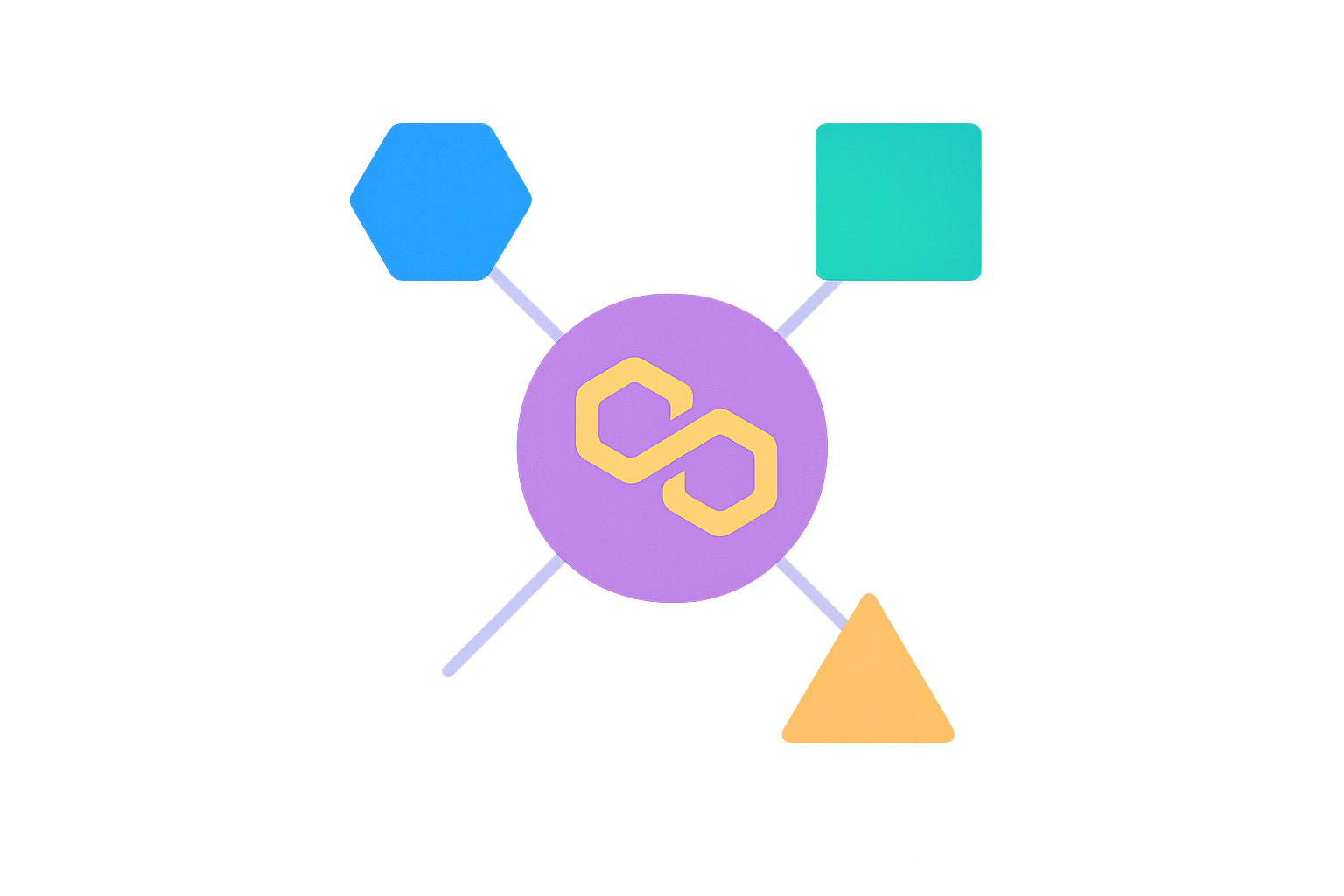
While Polygon is closely associated with blockchain technology, it is not a standalone blockchain in the traditional sense. Polygon is a layer-2 scaling solution built on top of Ethereum. It was founded in 2017 by Jaynti Kanani, Sandeep Nailwal, and Anurag Arjun in Mumbai, India. The platform's primary goal is to address Ethereum's scalability issues by offering lower transaction fees and faster confirmation speeds.

Polygon's inception was inspired by the congestion caused by popular blockchain applications on the Ethereum network. This event highlighted the need for more efficient solutions to handle increased network activity. Since its launch, Polygon has grown significantly, attracting major partnerships and a large user base.

How Does Polygon's Technology Work?

Polygon employs various technological solutions to achieve its scalability goals:

  1. Plasma Chains: These are separate blockchains that communicate with Ethereum using smart contracts, offloading transaction processing from the main chain.

  2. Sidechains: Polygon's standalone Ethereum-compatible sidechain uses a proof-of-stake (PoS) consensus mechanism and periodically sends batched transaction data to Ethereum for final confirmation.

  3. Polygon zkEVM: This innovative solution combines zero-knowledge proofs with Ethereum Virtual Machine compatibility, offering enhanced security and speed while maintaining compatibility with Ethereum's infrastructure.

These technologies work together to provide a more efficient and cost-effective experience for users and developers interacting with Ethereum-based applications.

What is MATIC?

MATIC is the native cryptocurrency of the Polygon Network. It serves several important functions within the ecosystem:

  1. Transaction fees: Users pay for network operations using MATIC tokens.
  2. Validator rewards: Node operators who secure the network receive MATIC as compensation.
  3. staking: MATIC holders can stake their tokens to participate in network security and earn rewards.
  4. Governance: MATIC holders can vote on Polygon Improvement Proposals (PIPs) through a decentralized autonomous organization (DAO).

MATIC tokens are widely available on major cryptocurrency platforms, making it accessible for users who wish to participate in the Polygon ecosystem.

Polygon Versus Ethereum

While Polygon is closely tied to Ethereum's success, there are notable differences between the two:

  1. Transaction speed and cost: Polygon offers faster and cheaper transactions compared to Ethereum's main chain.
  2. Scalability: Polygon can handle more transactions per second than Ethereum.
  3. Decentralization: Ethereum has a larger and more decentralized network of validators.
  4. Security: Ethereum's main chain provides stronger security guarantees due to its larger network and longer history.

Polygon's developers have been working to address concerns about centralization and security by implementing a DAO and planning for greater decentralization as the network grows.

What are Polygon's Use Cases?

Polygon supports a wide range of decentralized applications (dApps) across various sectors:

  1. Decentralized Finance (DeFi): Popular Ethereum-based DeFi platforms have integrated Polygon to offer faster and cheaper services.
  2. NFT Trading: Major NFT marketplaces support Polygon-based NFTs.
  3. Blockchain Games: Games utilize Polygon's infrastructure to provide blockchain-based gaming experiences with crypto rewards and NFT integration.

Conclusion

Polygon has emerged as a vital component of the Ethereum ecosystem, offering scalability solutions that address some of the main chain's limitations. While it is not a standalone blockchain, Polygon's technology complements and enhances Ethereum's capabilities. With its growing user base, diverse range of applications, and ongoing technological developments, Polygon is poised to play a significant role in the future of Web3 and decentralized finance. As the platform continues to evolve and address challenges related to security and decentralization, it will be fascinating to observe its impact on the broader cryptocurrency landscape.

FAQ

What type of blockchain is Polygon?

Polygon is a Layer 2 scaling solution for Ethereum. It's a proof-of-stake sidechain that aims to improve Ethereum's scalability and transaction speed while reducing fees.

Which coin has its own blockchain?

Polygon (MATIC) has its own blockchain. It's a Layer 2 scaling solution for Ethereum, offering faster and cheaper transactions.

What is Elon Musk's blockchain?

Elon Musk doesn't have his own blockchain. He's involved with cryptocurrencies like Dogecoin and Bitcoin, but hasn't created a blockchain. His company X (formerly Twitter) is exploring blockchain integration.

Will a Polygon reach $1 dollar?

Yes, Polygon has the potential to reach $1. With its growing adoption in DeFi and NFTs, and ongoing network upgrades, Polygon could hit this milestone by 2026, driven by increased demand and ecosystem expansion.
* The information is not intended to be and does not constitute financial advice or any other recommendation of any sort offered or endorsed by Gate.

Share

Content

Is Polygon a Blockchain?

How Does Polygon's Technology Work?

What is MATIC?

Polygon Versus Ethereum

What are Polygon's Use Cases?

Conclusion

FAQ

Related Articles
Understanding Polygon Blockchain: A Comprehensive Guide

Understanding Polygon Blockchain: A Comprehensive Guide

This article explores the Polygon blockchain network, highlighting its significance as a layer-2 scaling solution for Ethereum. It discusses Polygon's technology innovations, including plasma chains, sidechains, and the zkEVM, which improve transaction speed and reduce costs. The guide further explains the role of the MATIC token and its applications across DeFi, NFTs, and gaming sectors. Readers will gain insights into Polygon's contributions to blockchain scalability, security, and decentralized governance, making it a key player in the Web3 ecosystem.
2025-12-05 08:18:07
Understanding Polygon on the Ethereum Network
Understanding Polygon on the Ethereum Network

The article provides a comprehensive overview of the Polygon Network, a leading blockchain platform enhancing Ethereum's scalability. It highlights Polygon's core features, including reduced transaction fees and faster confirmation times, while maintaining compatibility with Ethereum's ecosystem. The guide addresses key topics like Polygon's technological innovations such as zkEVM, its role as a layer-2 scaling solution, and the importance of its native cryptocurrency, MATIC. Targeting developers, investors, and blockchain enthusiasts, it positions Polygon as an essential tool for streamlined dApp functionality, NFT trading, and blockchain gaming within the Web3 ecosystem.
2025-12-02 13:07:21
Exploring Layer 2 Scaling Solutions on Polygon Blockchain
Exploring Layer 2 Scaling Solutions on Polygon Blockchain

This article explores the transformative impact of Polygon blockchain as a Layer 2 scaling solution for Ethereum, enhancing transaction speed and reducing costs. It delves into Polygon's foundational technology, including zkEVM and sidechains, and its evolving role in the Web3 ecosystem, supporting applications like DeFi, NFT trading, and gaming. Addressing scalability, usability, and security challenges, the piece targets developers and blockchain enthusiasts seeking efficient interaction with Ethereum. Key topics include Polygon's infrastructure, the role of MATIC, and strategic complementarities with Ethereum.
2025-12-07 05:30:48
Understanding Ethereum's Polygon Network

Understanding Ethereum's Polygon Network

This article explores the Polygon Network, a prominent layer-2 scaling solution for Ethereum, and its role in enhancing blockchain scalability and efficiency. It covers Polygon's technological framework, including plasma chains, sidechains, and zkEVM, while detailing its practical applications in DeFi, NFT trading, and blockchain gaming. Readers will gain insights into the symbiotic relationship between Polygon and Ethereum, emphasizing Polygon's contributions to reduced transaction costs and improved processing speeds. Key audiences include developers, cryptocurrency enthusiasts, and businesses interested in leveraging Polygon for innovative Web3 applications.
2025-12-06 04:30:48
Understanding MATIC on the Ethereum Network
Understanding MATIC on the Ethereum Network

This article explores the significance of Polygon, or MATIC, as a pivotal layer-2 scaling solution for Ethereum, enhancing scalability, reducing costs, and improving transaction speeds while maintaining Ethereum compatibility. It delves into Polygon's technological innovations such as plasma chains and zkEVM, and the role of its native cryptocurrency MATIC. The article targets readers interested in blockchain scalability and those seeking to leverage Polygon's advantages in DeFi, NFT trading, and gaming. It logically outlines Polygon's evolution, technological aspects, and use cases, highlighting its strategic alliances and growing ecosystem.
2025-12-03 05:23:28
Enhancing Scalability on Polygon Network

Enhancing Scalability on Polygon Network

The article explores the Polygon Network's pioneering role as a layer-2 scaling solution for Ethereum, enhancing blockchain accessibility and efficiency. It addresses Ethereum's scalability issues through innovative technologies like plasma chains, sidechains, and zkEVM, offering faster and cheaper transactions. The piece analyzes the utility of Polygon across diverse Web3 applications, such as DeFi, NFT trading, and blockchain gaming, highlighting its complementary relationship with Ethereum. Additionally, it discusses MATIC's role in network security and governance, emphasizing Polygon's commitment to addressing decentralization challenges. With strategic partnerships and robust market adoption, Polygon is positioned as a crucial infrastructure layer in the Web3 ecosystem.
2025-12-07 07:07:17
Recommended for You
Dropee Question of the Day and Daily Combo Answer Guide
Dropee Question of the Day and Daily Combo Answer Guide

This comprehensive Dropee guide covers the November 8, 2025 daily crypto quiz challenge and its answer mechanisms. The article explains the Dropee Question of the Day feature, a daily multiple-choice quiz on Telegram that rewards players for correct answers while maintaining winning streaks. It details the Daily Combo Code system, where players submit strategic card combinations for bonus coins on Gate. The guide walks users through gameplay mechanics, referral systems, and leaderboard strategies to maximize rewards. Designed for crypto enthusiasts seeking consistent earnings through Telegram gaming, it addresses common questions about answer locations, retry policies, and reward structures. Perfect for players aiming to optimize their Dropee performance and prepare for upcoming token distributions.
2026-01-10 19:38:05
Does Andrew Tate Have Bitcoin?

Does Andrew Tate Have Bitcoin?

This article examines Andrew Tate's involvement in Bitcoin and cryptocurrency investments, highlighting how high-profile figures influence digital asset markets. It explores the celebrity effect—where celebrity endorsements drive significant market movements, increased adoption, and public perception shifts. The piece analyzes real-world examples including Elon Musk's impact on Dogecoin and Mike Tyson's Bitcoin ATM partnership, demonstrating how influential personalities shape cryptocurrency adoption rates. Key data reveals celebrity endorsements correlate with 15-30% price increases within 24 hours and 200-400% trading volume surges. The article concludes that while celebrity involvement creates opportunities and risks for investors trading on Gate and other platforms, successful strategies require balancing celebrity-driven volatility with fundamental analysis and disciplined investment principles for sustainable long-term value creation.
2026-01-10 19:36:16
What is Altseason and Why Everyone is Waiting for It
What is Altseason and Why Everyone is Waiting for It

This comprehensive guide explores Altseason, a cyclical crypto market phase when altcoins dramatically outperform Bitcoin, offering exponential profit opportunities. Readers discover what triggers altseason, why it captivates investors, and how to identify its onset through Bitcoin dominance metrics. The article examines historical altseason events including 2017-2018 and 2021 surges, featuring projects like Ethereum and Solana that delivered 100x+ returns. Learn key investment strategies, risk management techniques, and technical indicators for navigating volatile altcoin markets on platforms like Gate. Perfect for traders seeking to capitalize on emerging technologies in DeFi, GameFi, and Layer 2 solutions while avoiding common pitfalls through disciplined portfolio management.
2026-01-10 19:34:25
Is Trading and Stock Market Same?

Is Trading and Stock Market Same?

This article explores the critical distinctions between trading and stock market investing, essential knowledge for informed financial decision-making. The stock market focuses on equity securities from established companies, while trading encompasses a broader spectrum including bonds, commodities, currencies, and digital assets. Key differences encompass asset scope, regulatory frameworks, operational mechanisms, and risk profiles. The article illustrates practical applications through contrasting trader and investor approaches, highlights technological integration like AI and algorithmic trading, and presents updated market statistics showing daily trading volumes reaching $6.5 trillion. Whether pursuing long-term wealth accumulation or short-term gains, understanding these nuances enables better risk management, appropriate strategy selection, and optimized portfolio allocation across diverse financial instruments and platforms.
2026-01-10 19:29:25
What is CANTO?

What is CANTO?

Canto is a Layer-1 blockchain platform revolutionizing decentralized finance through community-driven innovation and true decentralization. Built on EVM compatibility, Canto launched without foundation backing, ensuring no single entity controls network governance. The ecosystem features a non-upgradable DEX offering stable fee structures, a lending market accepting LP tokens as collateral, and NOTE as an innovative over-collateralized unit of account pegged to USD. CANTO governance tokens enable participation in network decisions while serving as gas currency and staking assets. This integrated DeFi infrastructure maximizes capital efficiency by allowing liquidity providers to earn yields from both trading fees and lending simultaneously. Designed for long-term sustainability with a fixed 1-billion token supply, Canto represents a paradigm shift toward user-centric, perpetually stable financial systems accessible to all participants on Gate and other platforms.
2026-01-10 19:23:46
What Is the Solana Name Service (SNS)? A Complete Guide to the SNS Token

What Is the Solana Name Service (SNS)? A Complete Guide to the SNS Token

Discover Solana Name Service (SNS), the digital identity solution built on the Solana blockchain. Find out how to use .sol domains, understand the $SNS token and its tokenomics, compare SNS with ENS, and explore future development prospects. This detailed guide is tailored for both beginners and crypto investors.
2026-01-10 19:21:37