Understanding Polygon on the Ethereum Network


What is Polygon?
Polygon Network has emerged as one of the most prominent blockchain platforms in the Web3 ecosystem, attracting partnerships with global corporations such as the Walt Disney Company, Meta (Facebook), Starbucks, and Reddit. With an impressive user base of over 219 million active users, more than 20,000 decentralized applications (dApps), and billions of transactions processed, Polygon has established itself as a leading force in the cryptocurrency market. This comprehensive guide explores the fundamentals of Polygon Ethereum, its technological innovations, and the reasons behind its widespread adoption.
What is Polygon in Crypto?
The Polygon Network represents a sophisticated Web3 software platform designed to enhance interaction with the Ethereum blockchain. Officially classified as a "layer-2 scaling solution," Polygon operates on top of Ethereum's foundational "layer-1" blockchain infrastructure, providing crucial support for Ethereum's scalability objectives. Understanding what is Polygon Ethereum requires recognizing its primary mission: to make Ethereum more accessible and efficient by offering significantly reduced transaction fees and accelerated confirmation speeds.
The genesis of Polygon dates back to 2017 when three visionary developers—Jaynti Kanani, Sandeep Nailwal, and Anurag Arjun—founded the Matic Network in Mumbai, India. The inspiration came from observing critical inefficiencies on Ethereum's mainnet, particularly during the CryptoKitties phenomenon. This blockchain game, created by Canadian studio Dapper Labs, allowed users to collect and breed unique non-fungible tokens (NFTs) representing animated cat avatars. The overwhelming demand for these digital collectibles caused severe network congestion, driving up Ethereum's base transaction fees (gas fees) and significantly slowing payment confirmations. This event motivated the founding team to develop innovative off-chain solutions to process cryptocurrency payments more efficiently.
The evolution of the platform saw the Matic Network launch its MATIC tokens on a major cryptocurrency exchange in 2019, followed by the official debut of its Ethereum scalability services in 2020. A pivotal transformation occurred in 2021 when Matic rebranded to "Polygon Network," experiencing explosive growth in market capitalization. Today, Polygon Labs, the dedicated software development company, oversees the continued development and expansion of Polygon's online infrastructure.
How Does Polygon's Technology Work?
Polygon's technological architecture represents a multi-faceted approach to blockchain scalability, demonstrating what is Polygon Ethereum's innovative solution to network limitations. Initially, the platform concentrated on implementing plasma chains to enhance Ethereum's performance. These "child chains" function as independent decentralized networks (blockchains) that communicate transaction data with their linked "parent chain" through sophisticated smart contracts—autonomous coded programs that execute complex tasks according to pre-programmed instructions. By processing transaction data off the parent chain, plasma chains effectively reduce congestion on Ethereum's main network while delivering faster and more cost-effective cryptocurrency transactions.
Building upon this foundation, Polygon expanded its technological offerings shortly after its 2020 launch by introducing a standalone Ethereum-compatible "sidechain." While sidechains share similarities with plasma chains, they maintain a more independent relationship with the parent chain. Rather than directly transmitting every transaction to Ethereum, the Polygon sidechain captures transaction snapshots at regular intervals and transmits this aggregated data in batches for final confirmation on Ethereum via smart contracts. Additionally, sidechains employ independent "consensus algorithms" to verify their internal cryptocurrency transactions. For instance, Polygon's sidechain utilizes a proof-of-stake (PoS) consensus mechanism, requiring network participants (nodes) to lock MATIC tokens to secure the network, confirm transfers, and earn cryptocurrency rewards. This relative autonomy provides developers with greater flexibility, though it involves some trade-offs in security compared to plasma chains.
In recent years, Polygon introduced a revolutionary scalability solution called "Polygon zkEVM," representing a significant technological advancement in what is Polygon Ethereum's evolution. The "zk" designation refers to "zero-knowledge proofs," which are sophisticated cryptographic procedures enabling secure verification of batched cryptocurrency transfers off-chain before submission to the main blockchain. The "EVM" component stands for Ethereum Virtual Machine—the decentralized software infrastructure that powers the Ethereum blockchain. Polygon zkEVM synthesizes the security and speed advantages of zero-knowledge technology with Ethereum's established network, creating an enhanced version of Ethereum featuring reduced fees and substantially higher transaction throughput. This innovation enables Ethereum developers to seamlessly create or migrate their dApp code directly onto Polygon, significantly improving user engagement and overall experience.
What is MATIC?
MATIC serves as the native cryptocurrency within the Polygon Network ecosystem, fulfilling multiple critical functions including transaction payment processing, validator rewards distribution, and securing the PoS sidechain through staking mechanisms. Token holders can operate validator nodes on the Polygon sidechain by locking their MATIC tokens on the blockchain and collecting rewards for their participation. For users who prefer not to run validator nodes, Polygon offers the option to "delegate" their MATIC holdings to staking pools, enabling them to earn a proportional share of rewards through Polygon's official Staking Portal. Polygon has implemented governance features allowing MATIC holders to submit Polygon Improvement Proposals (PIPs) for community review within Polygon's decentralized autonomous organization (DAO) and exercise voting rights on future platform upgrades.
Due to Polygon's prominent position in the cryptocurrency ecosystem, MATIC tokens enjoy widespread availability across major centralized trading platforms. Users seeking current MATIC trading pairs can consult cryptocurrency price aggregator websites like CoinMarketCap or CoinGecko, where they can search for "MATIC" and navigate to the "Markets" tab to view a comprehensive list of platforms offering this cryptocurrency.
An important technical consideration: Most MATIC tokens traded on centralized platforms are Ethereum-compatible tokens following the "ERC-20" coding standard. These ERC-20 MATIC tokens operate within the Ethereum ecosystem and are primarily utilized for staking digital assets, but they cannot be used directly for paying transaction fees on Polygon-based dApps. Users holding ERC-20 MATIC who wish to access financial services on Polygon must transfer their cryptocurrency to an Ethereum Virtual Machine (EVM)-compatible wallet such as MetaMask, which facilitates seamless conversions between the two networks.
Polygon Versus Ethereum
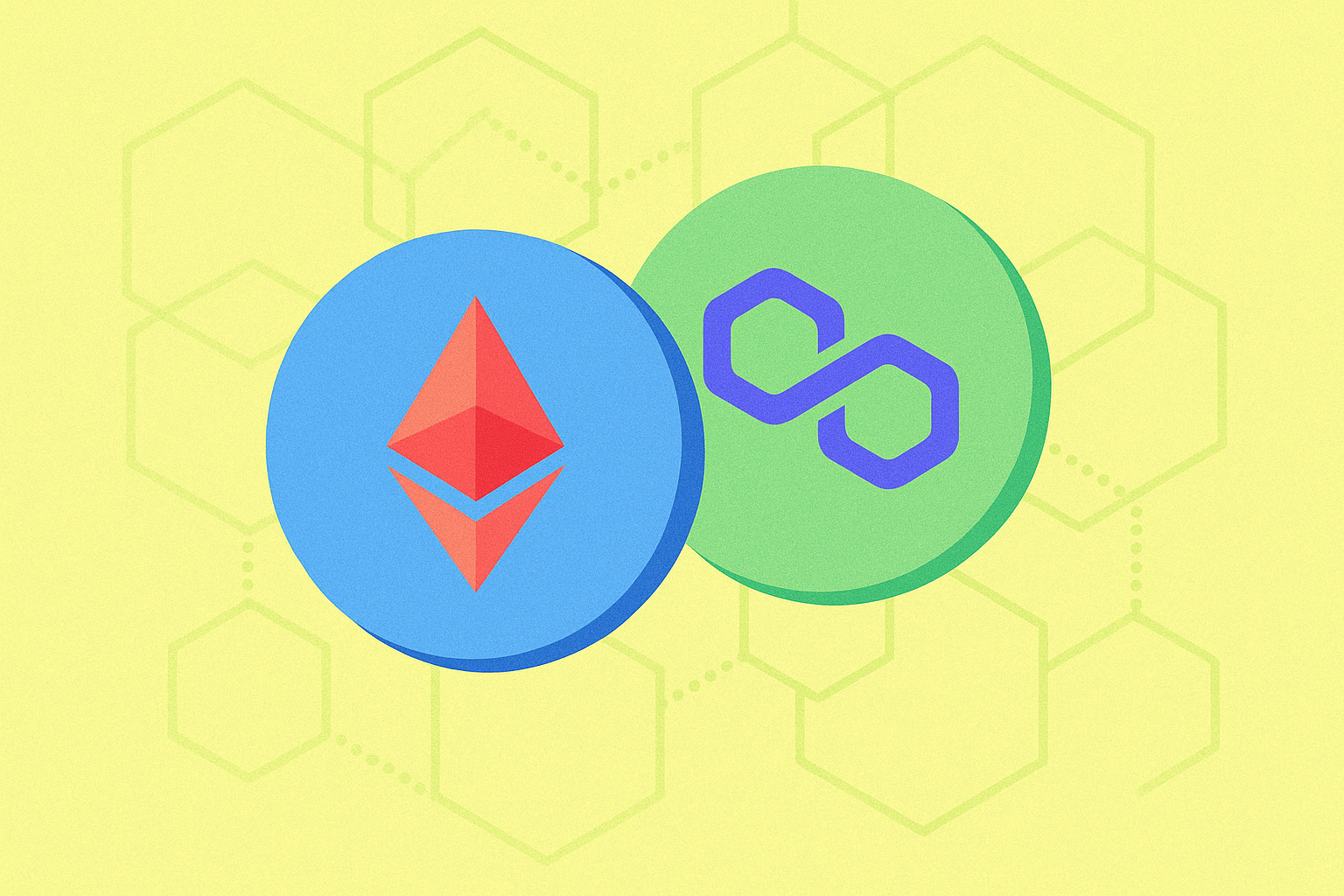
Unlike competing blockchain platforms often labeled as "Ethereum killers"—such as Solana, Cardano, and Avalanche—Polygon maintains a fundamentally complementary relationship with Ethereum rather than a competitive one. Understanding what is Polygon Ethereum means recognizing this synergistic relationship. While the Polygon PoS sidechain operates as a technically separate blockchain, all of Polygon's applications and infrastructure are designed to enhance Ethereum's convenience and efficiency. This strategic alignment means Polygon's success is intrinsically tied to Ethereum's prosperity, rather than attempting to divert users and developers to an alternative layer-1 blockchain.
Despite this interconnectedness, important distinctions exist between Polygon and Ethereum. Most notably, the Polygon Network delivers substantially faster and more economical transaction processing compared to Ethereum's main blockchain. Polygon users typically experience minimal transaction costs per transfer, while the network processes over 7,000 transactions per second (TPS). In contrast, Ethereum operates at a confirmation speed of 15 TPS with variable gas fees that fluctuate based on network congestion levels.
However, Polygon's performance advantages come with certain trade-offs regarding decentralization and security. Despite significant growth in the cryptocurrency market, Polygon maintains a smaller validator base compared to Ethereum's extensive network of hundreds of thousands of validators. Additionally, concerns have emerged regarding the concentration of control in Polygon's multi-signature (multisig) cryptocurrency wallet structures. While multisig wallets are designed to enhance security by requiring multiple passwords (private keys) for fund transfers, concentration of these keys among project leaders has historically raised concerns about potential security vulnerabilities.
To address these legitimate security and decentralization concerns, Polygon has committed to transitioning away from centralized control mechanisms. The platform has established a decentralized autonomous organization (DAO) governance structure, empowering community members to participate meaningfully in the decision-making process. As Polygon continues to mature, developers work progressively to reduce centralized control, gradually transferring authority to achieve greater network decentralization.
What are Polygon's Use Cases?
Similar to Ethereum, Polygon supports a diverse array of Web3 applications with virtually limitless potential. Understanding what is Polygon Ethereum includes exploring its practical applications. While thousands of dApps currently operate within Polygon's ecosystem, several categories have emerged as particularly popular among users:
Decentralized Finance (DeFi) represents one of the most active sectors on Polygon. DeFi dApps provide comprehensive cryptocurrency financial services—including trading, staking, and borrowing—without requiring centralized intermediaries. Polygon's EVM compatibility enables existing Ethereum DeFi applications to seamlessly integrate Polygon's infrastructure, offering users significantly faster and more affordable services. Prominent examples of Ethereum DeFi platforms now operating on Polygon include popular decentralized trading protocols and lending platforms, all of which have successfully expanded their service offerings through Polygon integration.
NFT Trading has flourished on Polygon, leveraging the platform's cost-effective transaction processing. Non-fungible tokens (NFTs) are unique cryptocurrencies with non-duplicable blockchain addresses, often compared to digital collectibles. Major NFT marketplaces now support Polygon NFT trading. Furthermore, major corporations like Reddit and Starbucks have partnered with Polygon to offer exclusive NFT collections to their community members, demonstrating the platform's mainstream appeal and practical utility.
Blockchain Gaming represents an exciting frontier combining traditional online gaming experiences with blockchain technology innovation. Beyond providing gamers with novel entertainment experiences, blockchain-based games frequently incorporate special incentives such as in-game cryptocurrency rewards and collectible NFTs that players can truly own and trade. Notable blockchain games operating within Polygon's ecosystem showcase the platform's capability to deliver engaging, interactive gaming experiences with minimal transaction costs and rapid confirmation times.
Conclusion
Polygon has established itself as an indispensable infrastructure layer for the Ethereum ecosystem, successfully addressing critical scalability challenges while maintaining compatibility with Ethereum's established developer community and user base. When asked "what is Polygon Ethereum," the answer encompasses an innovative technological solution that bridges performance gaps through plasma chains, sidechains, and the groundbreaking zkEVM implementation. Polygon has created a robust platform that balances performance, accessibility, and functionality—demonstrating what is Polygon Ethereum's true value proposition.
The platform's impressive adoption metrics—spanning partnerships with global corporations, millions of active users, thousands of dApps, and billions of processed transactions—demonstrate its significant impact on the blockchain industry. While Polygon continues to address important considerations regarding decentralization and security through ongoing governance improvements and infrastructure upgrades, its complementary relationship with Ethereum positions it uniquely in the competitive blockchain landscape.
Rather than competing as an "Ethereum killer," Polygon enhances Ethereum's capabilities, making blockchain technology more accessible and practical for mainstream adoption. This essence of what is Polygon Ethereum—a symbiotic enhancement layer—distinguishes it from alternative blockchain platforms. As the platform continues to evolve and mature, implementing enhanced governance structures and expanding its technological offerings, Polygon remains well-positioned as a cornerstone of the Web3 ecosystem, driving innovation in DeFi, NFTs, blockchain gaming, and emerging use cases that will shape the future of decentralized technology.
FAQ
Is there an ETH on a Polygon?
Yes, ETH can exist on Polygon as Wrapped ETH (WETH). It's an ERC20 token representation of Ethereum on the Polygon network.
Is Polygon crypto any good?
Yes, Polygon is promising. It enhances Ethereum's scalability, offers low fees, and supports many dApps. Its future looks bright in the Web3 ecosystem.
Who uses Polygon crypto?
Developers, users, and investors use Polygon crypto for scaling Ethereum, paying fees, and staking. MATIC facilitates transactions and governance on the network.
Is Polygon the next Ethereum?
No, Polygon isn't the next Ethereum. It's a Layer 2 solution that enhances Ethereum's scalability. Both have unique roles in the crypto ecosystem.
Understanding Polygon Blockchain: A Comprehensive Guide
Exploring Layer 2 Scaling Solutions on Polygon Blockchain

Understanding Polygon in the World of Blockchain Technology
Understanding Ethereum's Polygon Network
Understanding MATIC on the Ethereum Network
Enhancing Scalability on Polygon Network

Does Andrew Tate Have Bitcoin?
What is Altseason and Why Everyone is Waiting for It
Is Trading and Stock Market Same?

What is CANTO?
What Is the Solana Name Service (SNS)? A Complete Guide to the SNS Token