Understanding Wrapped Ether and Ether: Key Differences Explained

What is wETH and How Does it Differ From Ethereum?
Ethereum has established itself as a dominant force in the decentralized finance (DeFi) ecosystem, with hundreds of protocols managing billions of dollars in cryptocurrencies. Traders extensively utilize Ethereum's DeFi platforms such as dYdX, Curve Finance, and Aave for exchanging, borrowing, and lending digital assets. However, despite Ethereum's widespread adoption, a significant challenge exists: the native Ether (ETH) coin faces compatibility issues with Ethereum-based decentralized applications (dApps). The introduction of wrapped Ethereum (wETH) has provided an elegant solution to this problem, enabling seamless interaction with Ethereum's innovative dApp ecosystem. Understanding the difference between wrapped ether vs ether is essential for anyone navigating the DeFi landscape.
What are Wrapped Cryptocurrencies?
Wrapped cryptocurrencies represent a technological innovation that bridges the gap between different blockchain networks. When traders "wrap" a cryptocurrency, they exchange their original digital asset for an equivalent amount of synthetic tokens that maintain the same market value but feature different coding standards compatible with various blockchain networks. The "wrapper" functions as an identification mechanism that allows different blockchain networks to recognize and interact with these tokens.
A prime example is wrapped Bitcoin (wBTC), which mirrors Bitcoin's market price while being compatible with blockchains outside the Bitcoin network. DeFi traders frequently convert BTC to wBTC specifically to utilize their Bitcoin holdings on Ethereum-based platforms like Aave and decentralized trading platforms. This wrapping process addresses a fundamental limitation in blockchain technology: each blockchain operates with specific coding protocols that prevent direct communication with other chains, similar to how iOS applications cannot run on Android devices.
The wrapping process involves either depositing a compatible digital asset on a wrapping service or purchasing wrapped tokens directly from various cryptocurrency trading platforms. When creating wrapped tokens, traders lock their original cryptocurrency in a protocol, receiving the wrapped version in return. Upon returning wrapped tokens, the service automatically burns (destroys) them and releases the original deposited cryptocurrency. This burning and locking mechanism ensures that the circulating supply of wrapped tokens precisely mirrors the underlying cryptocurrency asset.
What is wETH?
Wrapped Ethereum (wETH) is a cryptocurrency token that maintains price parity with Ethereum's native Ether. Developed by 0x Labs in 2017, wETH has become widely available across numerous cryptocurrency trading platforms, dApps, and Ethereum-based wallets. While wETH shares similarities with other wrapped tokens like wBTC, it serves a unique purpose within the Ethereum ecosystem itself. The wrapped ether vs ether distinction is crucial for understanding how DeFi applications function.
The necessity for wETH stems from a technical incompatibility: although ETH is Ethereum's native coin, it does not conform to the ERC-20 token standard required for fungible tokens on the Ethereum blockchain. Smart contracts, which are blockchain programs that automatically execute preprogrammed commands and form the foundation of dApp functionality, require ERC-20 compliance to operate properly. Consequently, while ETH serves essential functions like paying transaction fees and staking, it cannot directly interact with smart contract code on popular dApps such as Aave, OpenSea, and decentralized trading platforms. wETH resolves this limitation by creating an ERC-20-compliant version of ETH, enabling full functionality across Ethereum's dApp ecosystem.
wETH Versus ETH: Understanding Wrapped Ether vs Ether
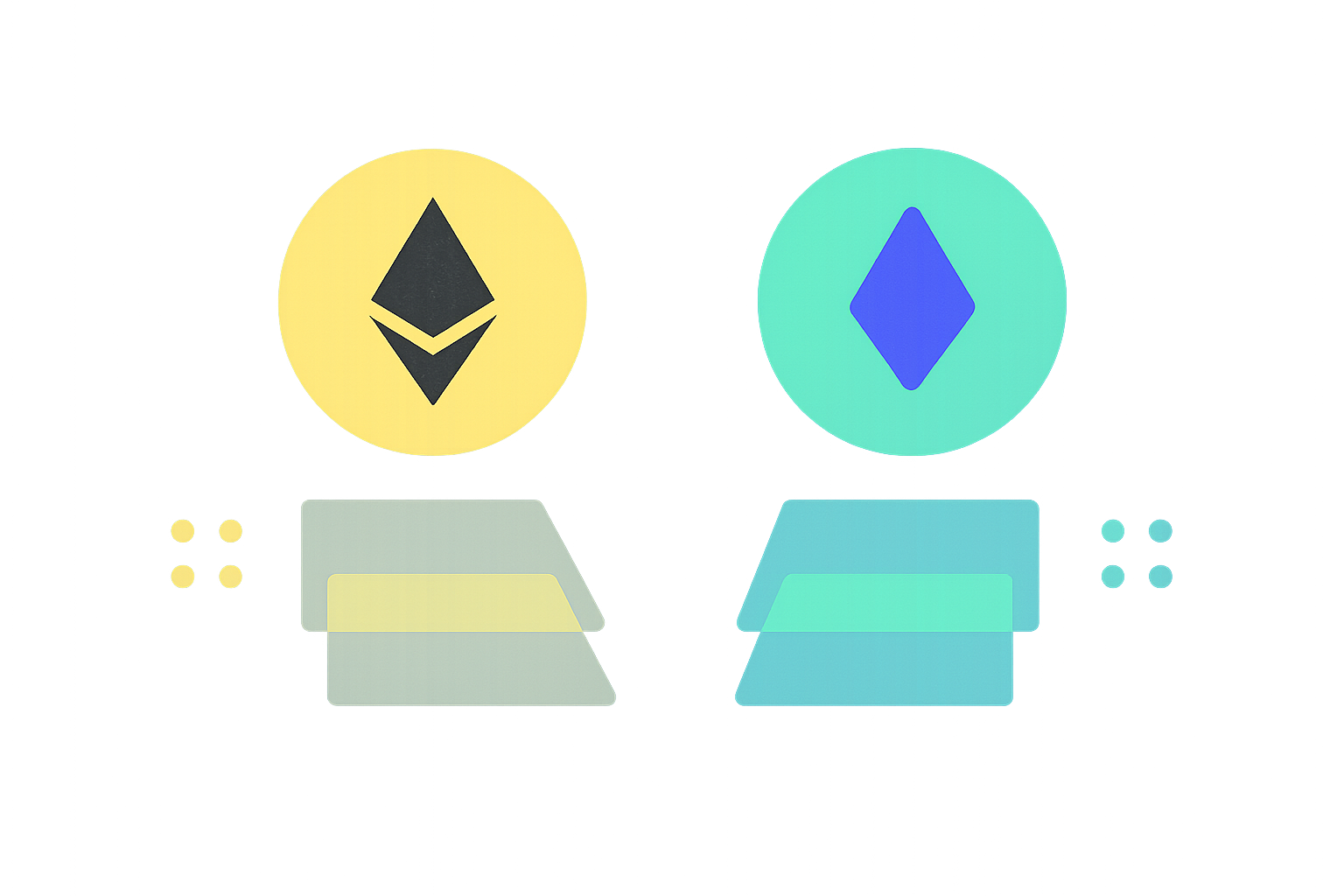
The relationship between wETH and ETH is characterized by both similarities and distinct differences. When comparing wrapped ether vs ether, understanding their market value relationship is essential: wETH and ETH maintain identical prices on cryptocurrency trading platforms. Their supplies are also equivalent, as wETH creation requires an equal amount of ETH to be locked in wrapping software, ensuring a 1:1 backing ratio.
However, the crucial distinction in the wrapped ether vs ether comparison lies in their respective use cases. ETH serves three primary functions: transferring value between addresses, securing the Ethereum blockchain through staking mechanisms, and covering transaction fees (gas fees) for network operations. In contrast, wETH offers broader functionality across multiple applications within and beyond Ethereum's ecosystem. Traders utilize wETH for diverse purposes on dApps, including lending, trading, and borrowing in DeFi protocols. Additionally, wETH finds applications in metaverse gaming platforms and non-fungible token (NFT) marketplaces, demonstrating its versatility in smart contract-based applications.
The wrapped ether vs ether distinction becomes particularly important when users attempt to interact with smart contract-based applications, as only wETH provides the ERC-20 compatibility required for seamless integration with these platforms.
How to Convert ETH to wETH
The growing adoption of wETH in DeFi has led to increased accessibility through various platforms. Multiple dApps, trading platforms, and crypto wallets now offer straightforward conversion methods. MetaMask, a popular Ethereum software wallet created by ConsenSys, provides one of the most user-friendly approaches through its built-in "Swap" function.
To convert ETH to wETH using MetaMask, users first establish an account on metamask.io and transfer ETH to their wallet address. The MetaMask interface displays a "Swap" button adjacent to the central "Send" button. By clicking "Swap," users can specify the amount of ETH they wish to exchange for wETH and proceed to review the transaction. It is important to note that Ethereum network gas fees apply to process each transaction. After confirming the swap, wETH appears in the MetaMask wallet balance.
Alternatively, decentralized trading platforms such as Curve Finance and 1Inch offer direct wETH purchasing options. The process involves connecting a compatible crypto wallet like MetaMask to the chosen platform, entering the desired ETH amount for conversion, and confirming the transaction. After paying the required gas fees, the platform deposits wETH directly into the user's wallet.
Some Ethereum-compatible NFT marketplaces, such as OpenSea, integrate wrapping functionality directly into their platforms. Users can access the wrap feature by clicking their wallet icon and selecting the "Wrap" ETH option from the menu.
Are There Risks of Wrapping ETH?
While wrapped cryptocurrencies like wETH expand opportunities for crypto traders, they introduce certain risks that warrant careful consideration when evaluating wrapped ether vs ether options. A primary concern is centralization risk, as custodians oversee the ETH deposits used to create wrapped tokens. This arrangement requires traders to trust that the protocols or institutions managing their Ethereum maintain robust security standards.
Smart contract vulnerabilities present another significant risk factor. Many wrapping systems employ automated smart contract "vaults," making coding errors a potential threat. Historical incidents have demonstrated where attackers exploited vulnerabilities to steal substantial amounts of wETH from protocols that facilitate transfers between different blockchains. This underscores the importance of understanding the security implications before engaging with wETH in DeFi applications.
Conclusion
Wrapped Ethereum (wETH) represents a crucial innovation in the Ethereum ecosystem, addressing the fundamental incompatibility between ETH and the ERC-20 token standard required for dApp functionality. Understanding wrapped ether vs ether is essential for maximizing the utility of Ethereum holdings in the DeFi space. By creating an ERC-20-compliant version of Ethereum's native coin, wETH enables seamless integration with smart contract-based applications across DeFi, NFT marketplaces, and metaverse platforms.
While wETH and ETH maintain price parity and equivalent supplies, the wrapped ether vs ether comparison reveals that their use cases differ significantly, with wETH offering broader functionality in decentralized applications. The conversion process has become increasingly accessible through platforms like MetaMask and various decentralized trading platforms, though users must remain cognizant of associated risks, including centralization concerns and smart contract vulnerabilities.
As the DeFi ecosystem continues to evolve, the wrapped ether vs ether distinction becomes increasingly important for traders seeking to maximize the utility of their Ethereum holdings across diverse blockchain applications. Whether choosing ether or wrapped ether depends on specific use case requirements, with wETH serving as an essential tool for those engaging with smart contract-based DeFi protocols.
FAQ
What is the point of wrapped Ethereum?
Wrapped Ethereum (WETH) enables Ether to function across different blockchains and decentralized applications, ensuring interoperability while preserving its value for diverse ecosystem use cases.
What is the difference between ether and wrapped ether?
Ether is the native cryptocurrency of Ethereum network. Wrapped ether is an ERC-20 token representing Ether, enabling cross-chain compatibility and use across different blockchain platforms.
How is weth different from ETH?
WETH is an ERC-20 token representing ETH, while ETH is the native cryptocurrency of the Ethereum blockchain. WETH offers enhanced liquidity and compatibility with smart contracts.
Why are there two ethereums?
A 2016 hard fork split the Ethereum community. Ethereum continued as the original chain, while Ethereum Classic became separate. They differ in blockchain governance philosophy and security approach.
Setting Up Your Web3 Wallet: A Step-by-Step Guide

Step-by-step instructions for creating a MetaMask crypto wallet
Guide to Integrating Your Virtual Wallet Account
Best Options for Safely Storing and Managing Your Ethereum Tokens

Step-by-Step Guide to Setting Up Your Account in a Digital Wallet

Comprehensive Guide to Setting Up Your Digital Wallet

What Do Derivatives Market Signals Tell Us About Future Crypto Price Movements: Futures Open Interest, Funding Rates, and Liquidation Data Analysis
What is the difference between competing cryptocurrencies in the same blockchain network by market cap and user adoption in 2026

Hana Network (HANA): Web4 Layer-1 Blockchain Infrastructure

How to Use MACD, RSI, and Bollinger Bands Technical Indicators for Crypto Trading Signals
What are the biggest cryptocurrency security risks and smart contract vulnerabilities in 2026