
fomox
MarketsPerpsSpotSwap
Meme
Referral
More
Become a Smart Money on Tracker
Search Token/Wallet
/

What are the key differences between cryptocurrency competitors in market cap, performance, and user adoption in 2026?

2026-01-04 02:31:16
Altcoins
Bitcoin
DeFi
Ethereum
Layer 2
Article Rating : 3.5
half-star
93 ratings
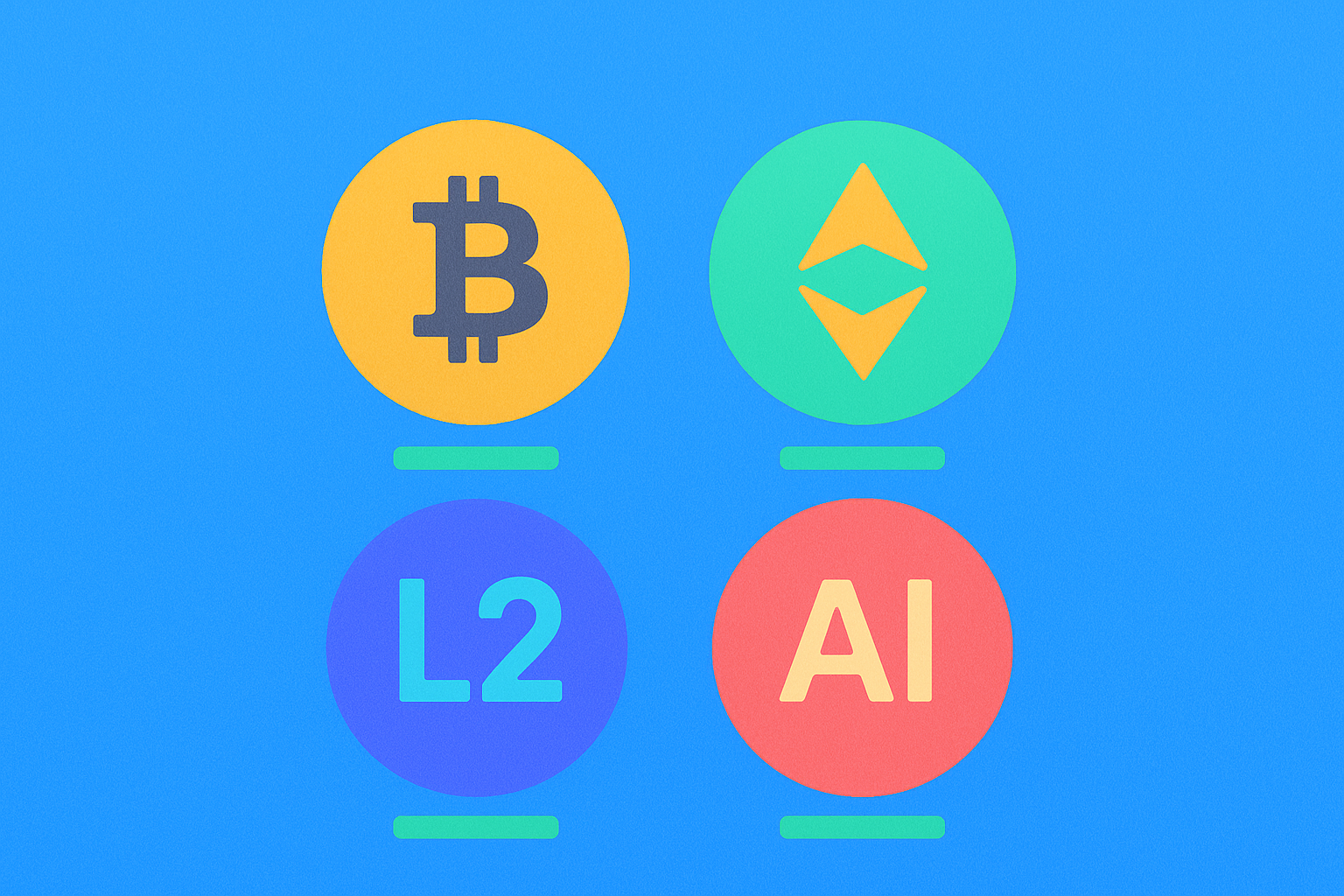
# Article Overview This comprehensive guide examines the cryptocurrency market landscape in 2026, analyzing key differences between major competitors across market capitalization, performance metrics, and user adoption trends. Bitcoin and Ethereum maintain dominance with combined valuations exceeding $1.5 trillion, while Layer-2 solutions and AI-focused tokens demonstrate 3-5x higher growth rates. The article explores how decentralized finance platforms gain 40% more monthly active users on Gate, contrasting with traditional exchange consolidation. Regulatory compliance, transaction speed, and environmental sustainability emerge as critical differentiation factors shaping competitive advantages. This analysis serves institutional investors, crypto traders, and technology enthusiasts seeking clarity on market positioning and emerging opportunities in the evolving digital asset ecosystem.
What are the key differences between cryptocurrency competitors in market cap, performance, and user adoption in 2026?

Market Cap Dominance: Bitcoin and Ethereum maintain leadership with combined valuation exceeding $1.5 trillion in 2026

In 2026, Bitcoin maintains an exceptional position with a market cap of approximately $1.751 trillion, while Ethereum commands a substantial $355 billion valuation, establishing their combined dominance over the cryptocurrency landscape. This significant market cap leadership reflects the maturation of digital assets beyond speculative cycles into institutionally-backed financial infrastructure. The cryptocurrency market of 2026 is fundamentally reshaped by structural adoption rather than retail-driven volatility, with institutional participation becoming the primary driver of valuation strength.

Bitcoin's commanding market position stems from its established role as the primary reserve asset within cryptocurrency ecosystems and its increasing recognition as institutional-grade collateral. Ethereum's substantial valuation reflects its dominance as the leading network for decentralized finance and emerging real-world asset tokenization. Despite their combined dominance exceeding $1.5 trillion, the competitive landscape shows signs of evolution. Solana, Avalanche, and BNB Chain demonstrate growing traction in specific use cases, signaling that while Bitcoin and Ethereum retain leadership through market cap, specialized altcoins are capturing meaningful market segments. This dynamic reflects a maturing industry where cryptocurrency competitors carve out distinct value propositions rather than simply competing for marginal improvements, suggesting market cap leadership will persist alongside increasingly differentiated competitor ecosystems.

Performance Metrics: Layer-2 solutions and AI-focused tokens show 3-5x higher growth rates compared to established cryptocurrencies

The divergence in performance metrics reflects fundamental technological and market adoption differences between emerging and established protocols. Layer-2 solutions demonstrate substantial throughput advantages, processing over 300 transactions per second compared to Ethereum's 15 transactions per second, enabling faster settlement and lower costs that drive user adoption. This technical superiority translates directly into valuation growth as more applications migrate to these platforms seeking improved scalability.

Institutional investment patterns amplify this performance gap significantly. Surveys indicate 76% of global investors plan increased crypto allocations by 2026, with Layer-2 networks receiving disproportionate attention due to their governance frameworks and interoperability features. Meanwhile, AI-focused tokens benefit from parallel momentum, powered by advancements in decentralized computing and machine learning infrastructure that create entirely new use cases for tokenized assets.

Established cryptocurrencies face relatively slower growth as markets mature and allocate fresh capital toward novel technologies. While Bitcoin remains the primary reference asset and Ethereum maintains core utility, newer segments capture accelerated investment flows. The 3-5x higher growth rates reflect this capital reallocation toward projects solving specific problems—Layer-2s addressing network congestion and AI tokens enabling autonomous agent economies. This performance differential will likely persist as institutional frameworks increasingly support specialized blockchain infrastructure over legacy protocols.

The divergence between decentralized finance platforms and traditional exchanges reflects fundamental differences in their value propositions and operational models. DeFi platforms' 40% growth in monthly active users stems from their inherent advantages in global accessibility and financial returns. Operating 24/7 without geographic restrictions or Know Your Customer requirements, these platforms attract users seeking barrier-free entry to cryptocurrency markets. The compelling yields—typically ranging from 5-20% APY on stablecoins through real economic operations—significantly outpace returns from traditional banking systems, driving adoption particularly in regions with limited access to conventional financial infrastructure.

Conversely, traditional exchanges are consolidating into multi-product entities driven by regulatory clarity and institutional adoption entering the market. This consolidation strategy prioritizes stability, regulatory compliance, and established infrastructure that appeals to institutional investors and risk-averse users valuing custodial protections and deposit insurance unavailable in decentralized environments. Rather than competing directly, both systems serve distinct user segments strategically. Sophisticated investors leverage both platforms—using DeFi for higher yields and innovation while maintaining traditional exchange accounts for stability and regulatory safeguards. This bifurcation reflects market maturation where user adoption preferences increasingly align with their risk tolerance, regulatory comfort, and return expectations, creating sustainable coexistence between decentralized and traditional cryptocurrency trading venues.

Differentiation Factors: Regulatory compliance, transaction speed, and environmental sustainability drive competitive advantages among top-tier competitors

Regulatory compliance stands as a fundamental differentiator among leading cryptocurrency platforms competing for market dominance in 2026. Platforms that maintain robust compliance frameworks reduce operational risk and attract institutional investors who require assurance of adherence to evolving global standards. This commitment to regulatory compliance enables top-tier competitors to operate across multiple jurisdictions without facing service disruptions, directly translating into broader user bases and increased trading volumes compared to less compliant alternatives.

Transaction speed represents another critical competitive advantage that separates market leaders from emerging platforms. The ability to execute trades and settlements in milliseconds rather than seconds determines user satisfaction and capital efficiency. High-performing cryptocurrency networks can process thousands of transactions per second, enabling scalability that attracts both retail and institutional participants seeking optimal execution speeds. This technological edge significantly influences market share distribution among competing platforms.

Environmental sustainability has emerged as a decisive factor in competitive positioning, particularly as institutional adoption accelerates. Platforms utilizing energy-efficient consensus mechanisms reduce operational costs while addressing investor concerns about environmental impact. This eco-friendly approach appeals to ESG-conscious capital allocators and differentiates compliant operators from energy-intensive competitors. Combined with regulatory adherence and technical speed, environmental credentials create a comprehensive competitive moat that positions top-tier players favorably in an increasingly scrutinized market environment.

FAQ

What is the largest cryptocurrency by market cap in 2026, and how does it compare to Bitcoin and Ethereum?

Bitcoin remains the largest cryptocurrency by market cap in 2026, followed by Ethereum. Both continue to dominate the market, with significantly higher valuations than other cryptocurrencies, strengthening their institutional adoption and market leadership.

What are the performance differences among different cryptocurrencies in transaction speed, fees, and scalability?

Bitcoin processes slower with higher fees during peak demand, while Ethereum offers faster transactions but with volatile fees. Layer 2 solutions like Arbitrum and Polygon provide superior scalability with significantly lower costs. Solana achieves high throughput at minimal fees. Bitcoin prioritizes security over speed, Ethereum supports smart contracts with moderate performance, and newer chains optimize for scalability and cost efficiency.

Which cryptocurrencies have the fastest user adoption growth in 2026, and why?

Stablecoins and Ethereum lead user adoption in 2026 due to institutional demand and asset tokenization. Layer 2 DeFi protocols and Bitcoin via spot ETFs also experience rapid growth from mainstream adoption.

What are the key technical innovation differences between Bitcoin, Ethereum, and other major cryptocurrencies?

Bitcoin focuses on decentralized payments with Proof of Work consensus. Ethereum pioneered smart contracts and dApps, transitioning to Proof of Stake in 2022 for energy efficiency. Other major cryptos like Solana emphasize scalability, while Layer-2 solutions address throughput limitations. Each innovates differently based on their core purposes.

What are the main competitors in the cryptocurrency market in 2026, and what are their respective advantages?

The main competitors in 2026 include Ethereum, Solana, and Polkadot. Ethereum leads in smart contract ecosystem and developer adoption, Solana excels in high-speed transactions and low fees, while Polkadot offers cross-chain interoperability solutions.

How may cryptocurrency market cap rankings change in the future, and which emerging projects might rise?

Market rankings will shift as emerging Layer 1s like TON gain adoption. Memecoin phenomena and innovation-driven projects will reshape the landscape. Community strength and technological breakthroughs will determine which new projects capture significant market share in 2026.

FAQ

What is XNY coin? What are its uses and value?

XNY coin is a digital asset designed for blockchain transactions and payments. It offers enhanced security and efficiency compared to traditional currency, serving as a utility token for platform operations, value transfer, and ecosystem participation within the XNY network.

How to buy and trade XNY coin? Where can I purchase it?

You can buy and trade XNY coin on major cryptocurrency exchanges. The most active trading pair is XNY/USDT with high 24-hour trading volume. Simply create an account on your preferred exchange, complete verification, and start trading XNY against USDT or other trading pairs.

What are the risks of holding XNY coin? What security issues should I pay attention to?

XNY coin holders face market volatility and regulatory changes. Key security concerns include protecting private keys, using reliable platforms, and preventing information leakage. Stay vigilant against phishing attacks and unauthorized access to your wallet.

What is the difference between XNY coin and mainstream cryptocurrencies like Bitcoin and Ethereum?

XNY coin operates on BNB Smart Chain, enabling low-cost and high-speed transactions, unlike Bitcoin and Ethereum which use independent blockchains. XNY functions as governance and utility token within its ecosystem, offering distinct use cases compared to these established cryptocurrencies.

What is the development prospect and future plan of XNY coin?

XNY coin aims to become a leading platform in AI and blockchain knowledge realization. Our ecosystem goals include promoting AI-driven digital asset development and expanding user scale. Long-term vision focuses on innovation and sustainable growth in Web3 sector.

How to safely store and manage XNY coin?

Store XNY tokens in secure wallets with strong passwords and two-factor authentication enabled. Use hardware wallets for long-term holding and enable governance participation through community mechanisms. Keep private keys secure and never share them with anyone.
* The information is not intended to be and does not constitute financial advice or any other recommendation of any sort offered or endorsed by Gate.

Share

Content

Market Cap Dominance: Bitcoin and Ethereum maintain leadership with combined valuation exceeding $1.5 trillion in 2026

Performance Metrics: Layer-2 solutions and AI-focused tokens show 3-5x higher growth rates compared to established cryptocurrencies

Differentiation Factors: Regulatory compliance, transaction speed, and environmental sustainability drive competitive advantages among top-tier competitors

FAQ

FAQ

Related Articles
How does SUI price volatility compare to Bitcoin and Ethereum in 2026?
How does SUI price volatility compare to Bitcoin and Ethereum in 2026?

# Article Overview: SUI Price Volatility vs Bitcoin and Ethereum in 2026 This comprehensive analysis examines SUI's price volatility profile compared to Bitcoin and Ethereum throughout 2026, revealing SUI's emerging stability as institutional adoption accelerates. The article addresses investor concerns about comparative risk levels, price prediction accuracy, and optimal trading strategies across Layer 1 blockchains. Structured in four key sections, it progresses from current price action and technical levels, through correlation analysis, to 2026 price trajectory forecasts. Readers will discover why SUI's contained volatility (demonstrated by its -0.83% movement despite a $78.9M token unlock) positions it as a resilient alternative to Bitcoin and Ethereum's extreme swings, supported by institutional catalysts like Bitwise's ETF filing on Gate and growing DeFi ecosystem expansion targeting the $10 price milestone.
2026-01-01 03:48:39
Rising Cryptocurrencies: What to Invest in 2025?
Rising Cryptocurrencies: What to Invest in 2025?

# Article Introduction Discover the top altcoins with genuine growth potential for 2025 investments through comprehensive analysis of market fundamentals, technology innovation, and community strength. This guide evaluates cryptocurrencies across critical criteria—blockchain technology, liquidity, ecosystem activity, and real-world utility—helping both beginners and experienced investors identify reliable assets beyond hype. Learn how to assess Bitcoin, Ethereum, Solana, and emerging low-cap altcoins through proven research methodology using Gate, CoinMarketCap, and CoinGecko. Explore strategic portfolio allocation models, risk management techniques, and market trends shaping the crypto landscape. Whether seeking stable core holdings or high-potential opportunities, this resource provides actionable insights to navigate cryptocurrency investment with confidence and informed decision-making.
2026-01-04 02:10:56
How Do Leading Cryptocurrencies Compare in 2025: Market Share, Performance, and Key Differences
How Do Leading Cryptocurrencies Compare in 2025: Market Share, Performance, and Key Differences

# Article Overview **How Do Leading Cryptocurrencies Compare in 2025: Market Share, Performance, and Key Differences** This comprehensive guide examines Bitcoin and Ethereum's market dominance, commanding over 50% combined cryptocurrency market share in 2025. The article compares critical performance metrics—transaction speed, gas fees, and network security—across major digital assets, helping investors and developers evaluate blockchain platforms objectively. It explores differentiation strategies that drive competitive advantages through real-world utility and ecosystem integration rather than speculation. Designed for traders, developers, and cryptocurrency enthusiasts, this analysis provides actionable insights for selecting cryptocurrencies aligned with specific use cases. The guide concludes with FAQs addressing 2025 cryptocurrency trends, top assets, valuations, and technical distinctions between leading blockchain networks on Gate.
2025-12-28 03:16:47
How Does Cryptocurrency Competitive Landscape Compare in 2025: Market Share, Performance, and Key Advantages

How Does Cryptocurrency Competitive Landscape Compare in 2025: Market Share, Performance, and Key Advantages

# How Does Cryptocurrency Competitive Landscape Compare in 2025: Market Share, Performance, and Key Advantages This comprehensive analysis examines the 2025 cryptocurrency competitive landscape, where Bitcoin, Ethereum, BNB, and Solana command over 70% market dominance through established infrastructure and network effects. The article evaluates key differentiators including transaction speed, network security, and developer adoption across leading Layer-1 platforms, while revealing how emerging challengers strategically capture niche segments in DeFi and Web3 infrastructure. Designed for investors and developers, this guide clarifies market concentration dynamics, performance metrics comparison, and valuation trends shaping cryptocurrency competition. Whether trading on Gate or analyzing blockchain ecosystems, readers gain actionable insights into market share distribution, competitive advantages, and emerging opportunities in today's mature crypto market.
2025-12-30 02:47:45
How Has the Price and Volatility of Crypto Evolved in 2025?
How Has the Price and Volatility of Crypto Evolved in 2025?

This article explores the evolution of cryptocurrency price and volatility in 2025, following significant milestones such as Bitcoin's surge to $150,000 driven by institutional adoption and enhanced services from Gate. Ethereum's volatility dropped to 30% due to layer 2 solutions, attracting long-term investors. Altcoin markets display strong correlations with traditional tech stocks, featuring NEAR Protocol's alignment with NASDAQ. Despite regulatory challenges, DeFi tokens show remarkable resilience with a 50% average price increase. Ideal for investors and analysts, it discusses market trends and institutional impacts, featuring keywords like Bitcoin, Ethereum, NEAR Protocol, and Gate.
2025-11-13 05:07:29
What is the difference between top cryptocurrency competitors: market cap, performance, and user adoption in 2026

What is the difference between top cryptocurrency competitors: market cap, performance, and user adoption in 2026

This article analyzes the competitive landscape of leading cryptocurrencies in 2026, examining market cap dominance, performance metrics, and user adoption trends. Bitcoin commands $2.1 trillion in market cap with 56.79% dominance, while Ethereum holds $850 billion as the second-largest asset. The article compares transaction speeds across top competitors—Solana processes 65,000+ TPS versus Bitcoin's 7 TPS—and highlights energy efficiency advantages of Proof-of-Stake systems. User adoption metrics reveal market share redistribution through active addresses and trading volume analysis. The content identifies three critical differentiation strategies: Layer 2 solutions for scalability, DeFi integration for ecosystem expansion, and regulatory compliance for institutional credibility. Essential reading for investors, traders, and stakeholders evaluating cryptocurrency competitive positioning through 2026.
2026-01-10 04:21:23
Recommended for You
Automated Market Makers (AMM)

Automated Market Makers (AMM)

This comprehensive guide explores Automated Market Makers (AMMs), a revolutionary decentralized trading mechanism powered by smart contracts and liquidity pools. AMMs eliminate the need for traditional order books by using mathematical formulas—most commonly x*y=k—to determine asset prices based on supply and demand. Unlike centralized exchanges, AMMs enable anyone to become a liquidity provider, earning passive income from transaction fees while maintaining trustless, non-custodial trading. The article covers how AMMs function through liquidity pools, their security advantages, pricing mechanisms, and their critical role in the DeFi ecosystem. It also compares AMMs with traditional order book exchanges, highlights key features like decentralization and smart contract automation, and discusses both advantages—24/7 availability, lower barriers to entry, and price stability—and challenges such as impermanent loss and smart contract vulnerabilities. Perfect for investors seeking to understand next-generation dec
2026-01-12 16:38:57
NFT 無聊猿是什麼?5 分鐘輕鬆看懂無聊猿的起源和生態!

NFT 無聊猿是什麼?5 分鐘輕鬆看懂無聊猿的起源和生態!

本文深入探討無聊猿NFT(BAYC)的獨特魅力與價值。首先介紹BAYC由Yuga Labs於2021年推出的10,000個獨特數位資產,以及其在加密文化中的重要地位。其次分析無聊猿的價值創造機制,包括稀有度系統和會員權益帶來的社群認同。隨後闡述其龐大生態體系:衍生NFT系列擴張、與知名品牌聯名合作、收購CryptoPunks和Meebits、推出ApeCoin代幣與Otherside元宇宙。最後通過FAQ解答購買流程、持有權益及風險注意事項,幫助讀者全面了解這個數位時代最具影響力的NFT項目。
2026-01-12 16:35:26
What is BlockDAG: Better Network Scalability with Directed Acyclic Graph

What is BlockDAG: Better Network Scalability with Directed Acyclic Graph

BlockDAG revolutionizes distributed ledger technology by replacing traditional linear blockchain architecture with a Directed Acyclic Graph structure, enabling parallel block processing and significantly higher transaction throughput. Unlike Bitcoin or Ethereum, BlockDAG addresses the blockchain trilemma by simultaneously improving scalability, security, and decentralization without compromising any aspect. The platform offers diverse mining options—from specialized hardware (X10, X30, X100) to mobile app mining accessible via smartphone—democratizing cryptocurrency participation. With a capped supply of 150 billion BDAG tokens and structured halving events, the tokenomics ensure scarcity and long-term value. BlockDAG's roadmap progresses from presale and mainnet development through strategic partnerships to full mainnet launch, supported by comprehensive technical infrastructure and community engagement initiatives throughout implementation.
2026-01-12 16:31:58
Understanding Decentralized Exchanges

Understanding Decentralized Exchanges

This comprehensive guide explores decentralized exchanges (DEXs) and leading DEX aggregators, demonstrating how they revolutionize cryptocurrency trading through peer-to-peer models and smart contracts. The article covers three primary DEX types—order book, automated market maker (AMM), and DEX aggregators—each offering distinct advantages for traders seeking self-custody and enhanced security. DEXs eliminate intermediaries, reduce fees, and provide diverse token access, though users must navigate risks like liquidity constraints and token verification. Leading DEX aggregators on Gate consolidate prices across 100+ platforms, offering optimal trading routes with minimal slippage, advanced security features, and user-friendly interfaces. Whether you're a beginner or experienced trader, this guide provides actionable insights on leveraging decentralized platforms while managing inherent risks effectively.
2026-01-12 16:28:46
Avalanche Integration Guide for MetaMask

Avalanche Integration Guide for MetaMask

A comprehensive guide to integrating the Avalanche network into MetaMask for AVAX asset management. Discover the steps to configure RPC settings, Chain ID, and properly set up Avalanche C-Chain on your MetaMask wallet. Enjoy low-fee trading on Gate and seamless access to DeFi apps.
2026-01-12 16:26:31
Understanding Decentralized Exchanges and DEX Aggregators

Understanding Decentralized Exchanges and DEX Aggregators

This comprehensive guide explores decentralized exchanges (DEXs) and their revolutionary impact on cryptocurrency trading. It examines three primary DEX models—order book DEXs, automated market makers (AMMs), and DEX aggregators—each offering distinct trading mechanisms. The article highlights key advantages including self-custody control, enhanced security, lower fees, and diverse trading options, while addressing challenges such as token risks, liquidity constraints, and complex interfaces. Featuring a leading DEX aggregator available on Gate, the guide demonstrates how advanced routing algorithms deliver superior pricing across 100+ platforms and 10+ blockchains, while implementing proprietary security features and charging zero platform fees. Ideal for traders seeking decentralized alternatives, this resource provides practical insights on optimizing DEX trading through aggregators while managing inherent DeFi risks effectively.
2026-01-12 16:19:49