What Does a Bitcoin Look Like: A Visual Guide

Understanding the Basics of Bitcoin
Before exploring what a bitcoin looks like, it's essential to grasp the fundamental concepts of this revolutionary digital currency. Bitcoin represents a decentralized form of currency that operates on an innovative technology known as blockchain. At its core, bitcoins function as digital tokens that can be exchanged for goods and services, similar to traditional forms of money like dollars or euros. However, the key distinction lies in bitcoin's decentralized nature—unlike conventional currencies, bitcoins are not issued, regulated, or controlled by any government, central bank, or centralized financial authority.
This decentralization is achieved through a distributed network of computers, called nodes, that collectively maintain and verify the blockchain ledger. Each transaction is recorded across thousands of computers worldwide, making the system transparent, secure, and resistant to manipulation. The blockchain technology underlying bitcoin ensures that every transaction is permanently recorded and cannot be altered retroactively, providing an unprecedented level of security and trust in digital transactions.
The concept of bitcoin was introduced in 2008 by an anonymous entity known as Satoshi Nakamoto, who envisioned a peer-to-peer electronic cash system that would eliminate the need for intermediaries in financial transactions. Since its inception, bitcoin has evolved from a niche technological experiment into a globally recognized asset class, attracting attention from individual investors, institutional players, and governments alike.
The Physical Representation of a Bitcoin
While bitcoins exist purely in the digital realm and lack a physical form like traditional coins or paper bills, they do possess a unique and essential visual representation. In essence, a bitcoin can be conceptualized as a complex string of alphanumeric characters that serves as a digital signature for each transaction. These characters form what is known as a bitcoin address, which functions similarly to a bank account number in traditional finance.
A bitcoin address typically consists of 26 to 35 alphanumeric characters, beginning with either a "1", "3", or "bc1", depending on the address format. For example, a bitcoin address might look something like: "1A1zP1eP5QGefi2DMPTfTL5SLmv7DivfNa". This seemingly random sequence of letters and numbers is actually generated through sophisticated cryptographic algorithms that ensure each address is unique and secure.
These addresses are used to track ownership and verify transactions on the blockchain network. When someone sends bitcoin to another person, they're essentially transferring ownership of a specific amount of bitcoin from one address to another. The blockchain records this transfer permanently, creating an immutable history of all bitcoin movements. This visual representation, though not physically tangible, is what makes bitcoin transactions possible and verifiable across the entire network.
Additionally, some companies have created physical representations of bitcoins, such as commemorative coins or tokens that contain embedded private keys. However, these physical items are merely novelties or collectibles—the actual bitcoin value exists only in the digital blockchain record.
How Bitcoins Are Stored
Bitcoins are stored in digital wallets, which serve as the interface between users and the blockchain network. These wallets can take various forms, including hardware devices, software applications, mobile apps, or even paper documents. Despite their name, digital wallets don't actually "store" bitcoins in the traditional sense. Instead, they store the cryptographic keys that grant access to bitcoin addresses on the blockchain.
There are two types of keys associated with bitcoin storage: public keys and private keys. The public key, which is derived from the private key through mathematical algorithms, is used to generate the bitcoin address that others can use to send you bitcoin. Think of it as your email address—it's safe to share with others. The private key, on the other hand, is like your password and must be kept absolutely secret. It's used to sign transactions and prove ownership of the bitcoins associated with a particular address.
Hardware wallets, such as physical USB-like devices, offer one of the most secure methods of storing bitcoins. These devices keep private keys offline, protecting them from online threats like hacking or malware. Software wallets, available as desktop or mobile applications, provide more convenient access but require careful security measures. Some users also employ paper wallets—physical documents with printed private and public keys—as a form of cold storage for long-term holdings.
The security of bitcoin storage cannot be overstated. If someone gains access to your private keys, they can transfer your bitcoins to their own address, and due to the irreversible nature of blockchain transactions, there's no way to recover the stolen funds. Therefore, implementing robust security practices, such as using strong passwords, enabling two-factor authentication, and regularly backing up wallet information, is crucial for anyone holding bitcoin.
The Rise of Digital Currency
Over the past decade, bitcoin and other cryptocurrencies have experienced remarkable growth, emerging as decentralized alternatives to traditional forms of currency and financial systems. The appeal of digital currencies lies in their ability to facilitate fast, low-cost transactions across international borders without the need for intermediaries like banks or payment processors. This capability offers a level of financial freedom, accessibility, and privacy that is often unmatched by conventional banking systems.
Cryptocurrencies have proven particularly valuable in regions with unstable local currencies or limited access to traditional banking infrastructure. Individuals in such areas can use bitcoin to preserve wealth, conduct international transactions, and participate in the global economy without relying on potentially unreliable local financial institutions. The borderless nature of bitcoin means that anyone with internet access can send or receive payments anywhere in the world within minutes, often at a fraction of the cost charged by traditional remittance services.
The growing acceptance of bitcoin has also been driven by increasing institutional adoption. Major corporations have begun accepting bitcoin as payment, while some have even added it to their corporate treasury reserves. Financial institutions that once dismissed cryptocurrencies are developing products and services around digital assets, including crypto trading platforms, custody solutions, and bitcoin-backed financial instruments.
Moreover, the underlying blockchain technology has inspired innovations far beyond currency, including applications in supply chain management, digital identity verification, smart contracts, and decentralized finance (DeFi). These developments demonstrate that the impact of bitcoin extends well beyond its function as a digital currency, potentially revolutionizing various aspects of how we conduct business and manage digital information.
The Future of Bitcoin
As bitcoin adoption has been growing across various sectors, the cryptocurrency ecosystem has witnessed continuous innovation and development. Developers, researchers, and entrepreneurs are constantly working to enhance the functionality, security, and usability of bitcoin and related blockchain technologies. These ongoing improvements address some of the challenges that have historically limited mainstream adoption, such as transaction speed, scalability, and energy consumption.
One significant area of development is the Lightning Network, a second-layer solution built on top of the bitcoin blockchain that enables near-instantaneous, low-cost transactions. This technology addresses bitcoin's scalability limitations by allowing transactions to occur off-chain, with only the final settlement recorded on the main blockchain. Such innovations make bitcoin more practical for everyday purchases and micropayments.
Security enhancements continue to evolve as well, with advancements in multi-signature wallets, hardware security modules, and cryptographic techniques that provide additional layers of protection for users' assets. The development of more user-friendly interfaces and educational resources is also making bitcoin more accessible to non-technical users, potentially broadening its appeal and adoption.
Regulatory frameworks around bitcoin and cryptocurrencies are gradually taking shape in various jurisdictions, providing more clarity for businesses and individuals looking to engage with digital assets. While regulatory approaches vary globally, the trend toward establishing clear guidelines suggests a maturing market that could attract more institutional participation and mainstream acceptance.
Environmental concerns regarding bitcoin mining have prompted exploration of more sustainable practices and alternative consensus mechanisms. Some mining operations are transitioning to renewable energy sources, while researchers investigate ways to reduce the overall energy footprint of blockchain networks.
While the physical representation of a bitcoin may be nothing more than a string of alphanumeric characters, its impact on the world of finance, technology, and society has been profound and continues to unfold. The concept of decentralized, programmable money has opened new possibilities for financial inclusion, value transfer, and economic organization that were previously unimaginable.
In conclusion, although bitcoins lack a physical form in the traditional sense, they possess a unique digital representation that is fundamental to their function as a revolutionary form of currency. By understanding how bitcoins are stored, exchanged, and secured through cryptographic keys and blockchain technology, individuals can better grasp the concept and potential of this innovative monetary system. The next time you wonder what a bitcoin looks like, remember that its true form exists in the realm of cryptographic data and distributed ledgers—a testament to how technology is reshaping our understanding of money and value in the digital age.
FAQ
What does Bitcoin's logo and symbol look like?
Bitcoin's symbol is a stylized lowercase 'b' with two vertical lines through it: ₿. This iconic symbol is widely recognized in the cryptocurrency community and represents the digital currency created in 2009. The design is simple yet distinctive.
Is Bitcoin a physical coin or digital currency?
Bitcoin is purely digital currency with no physical form. It exists only in digital wallets as cryptographic data, not as metal or paper coins.
Bitcoin in wallet displays as quantity and value, typically showing market cap and transaction trends. View it in the 'My Assets' section, which shows current price and 24-hour transaction amount.
Bitcoin in wallet displays as quantity and value, typically showing market cap and transaction trends. View it in the 'My Assets' section, which shows current price and 24-hour transaction amount.
What are the visual differences between Bitcoin and other cryptocurrencies?
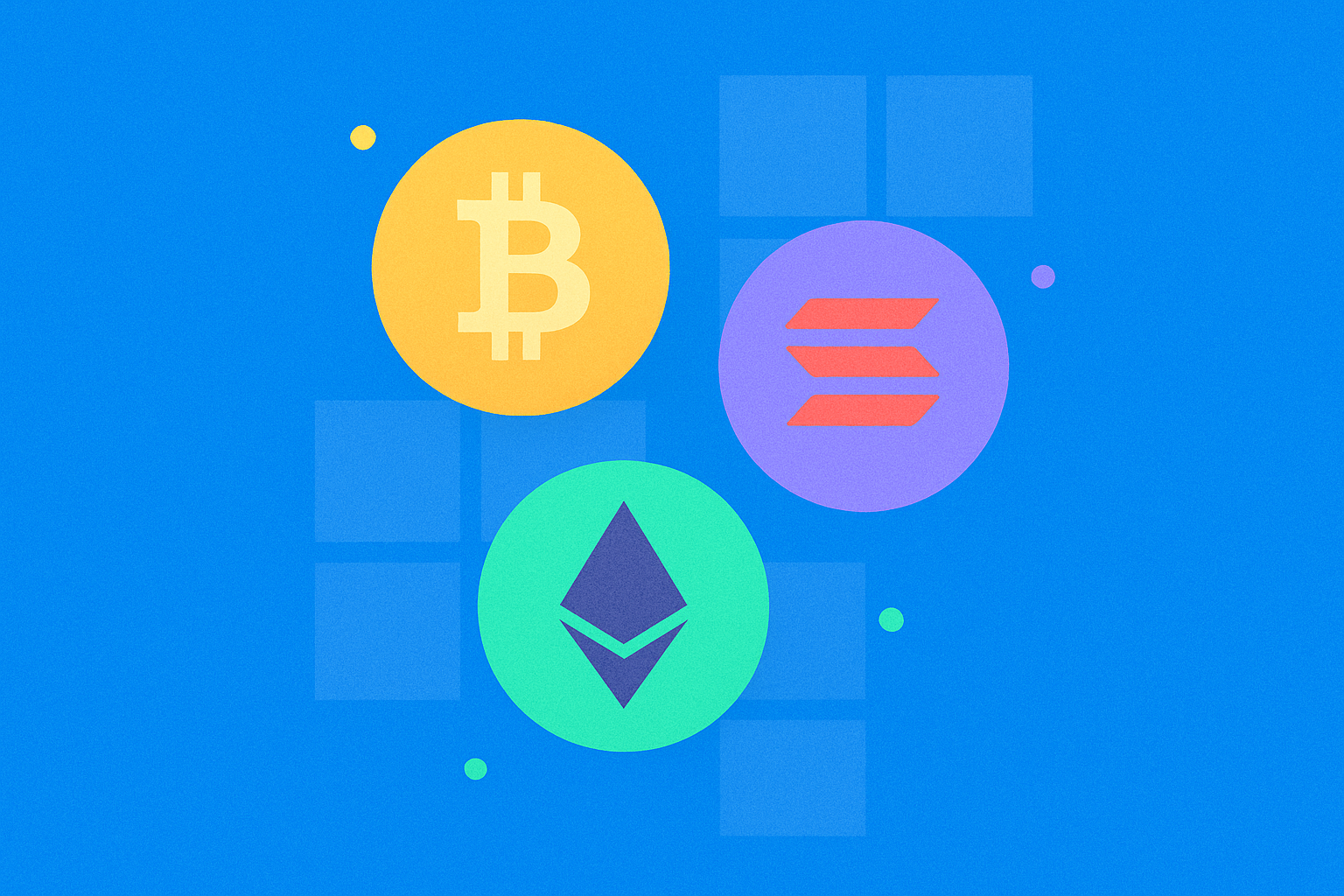
Bitcoin has no physical appearance as it exists as digital data on the blockchain. Visually, it appears as alphanumeric strings (wallet addresses, transaction IDs) or as a balance in digital wallets. Culturally, Bitcoin is symbolized by a gold coin with the ₿ symbol. Other cryptocurrencies similarly lack physical form but may have distinct logos and branding that differentiate them visually in digital interfaces.
Are Bitcoin commemorative coins/physical coins real Bitcoin?
No. Bitcoin commemorative coins and physical coins are collectibles, not actual Bitcoin. They cannot be used for transactions or payments. Real Bitcoin exists only as digital assets on the blockchain.
What do Bitcoin addresses and QR codes look like?
Bitcoin addresses are long alphanumeric character strings used to receive Bitcoin. QR codes are square images encoding these addresses, allowing quick scanning for seamless transactions without typing lengthy wallet addresses.
How is Bitcoin presented in exchanges and wallet apps?
Bitcoin appears as digital balance and transaction history in wallet apps, allowing users to send and receive it. On trading platforms, Bitcoin is displayed as price charts, order books, and tradable asset amounts for buying and selling.

Understanding Bitcoin Blockchain Addresses

Ultimate Security in Hardware Wallets: A Comprehensive Guide

Understanding Dusting Attacks in Cryptocurrency Security

Top Secure Devices for Safeguarding Your Digital Assets

Secure Solutions for Cryptocurrency Privacy: A Focus on Bitcoin Mixing Wallets
Secure Offline Solutions for Cryptocurrency Storage

What are the key differences between RENDER and its competitors in the crypto market?

How to Convert Euro to USDT: A Comprehensive Guide

What is the derivatives market and how do funding rates, open interest, and liquidation data signal market sentiment in 2026?

How does BNB compare to Ethereum and Solana in 2026: market share, performance, and competitive advantages analysis

How to Withdraw Money from MetaMask to PayPal