What is Aster DEX? A Next-Generation Perpetual Trading Protocol
Introduction to Aster DEX
The Perp DEX (perpetual decentralized exchange) landscape has experienced renewed excitement following the emergence of Aster, a derivatives-focused project that gained significant attention within hours of its token launch. The project has been positioned as a key player within the BNB Chain ecosystem and aims to challenge the current market leader in the perpetual derivatives space.
Aster is a decentralized perpetual derivatives exchange built primarily on BNB Chain and incubated by YZi Labs. The project was formed in late 2024 through the merger of Astherus and APX Finance, with the ambitious goal of creating a next-generation Perp DEX capable of competing with established platforms. The platform's mission centers on simplifying and enhancing the DeFi experience by combining yield-generating products to optimize users' capital efficiency.
The project held its Token Generation Event (TGE) on September 17, 2025, at 10:00 UTC. Within hours of launch, a prominent crypto industry figure publicly endorsed the project on social media, immediately capturing widespread attention from the crypto community and fueling the Perp DEX narrative. This endorsement contributed to ASTER's price surge of over 500% in a short period.
As of early 2025, Aster has achieved a fully diluted valuation (FDV) of approximately $12.1 billion. The protocol's trading volume reached roughly $532 billion within just one week—a milestone that took competing platforms an entire year to accomplish. At the time of analysis, Aster's Total Value Locked (TVL) exceeded $1.7 billion, with trading volume over the past 30 days reaching $27 billion. These metrics demonstrate the platform's rapid adoption and market traction.
Core Features and Product Suite
Aster's ecosystem extends beyond its core Perp DEX to encompass a comprehensive DeFi platform with multiple interconnected products. This integrated approach creates a holistic user experience that addresses various aspects of decentralized finance.
Aster Perpetual DEX
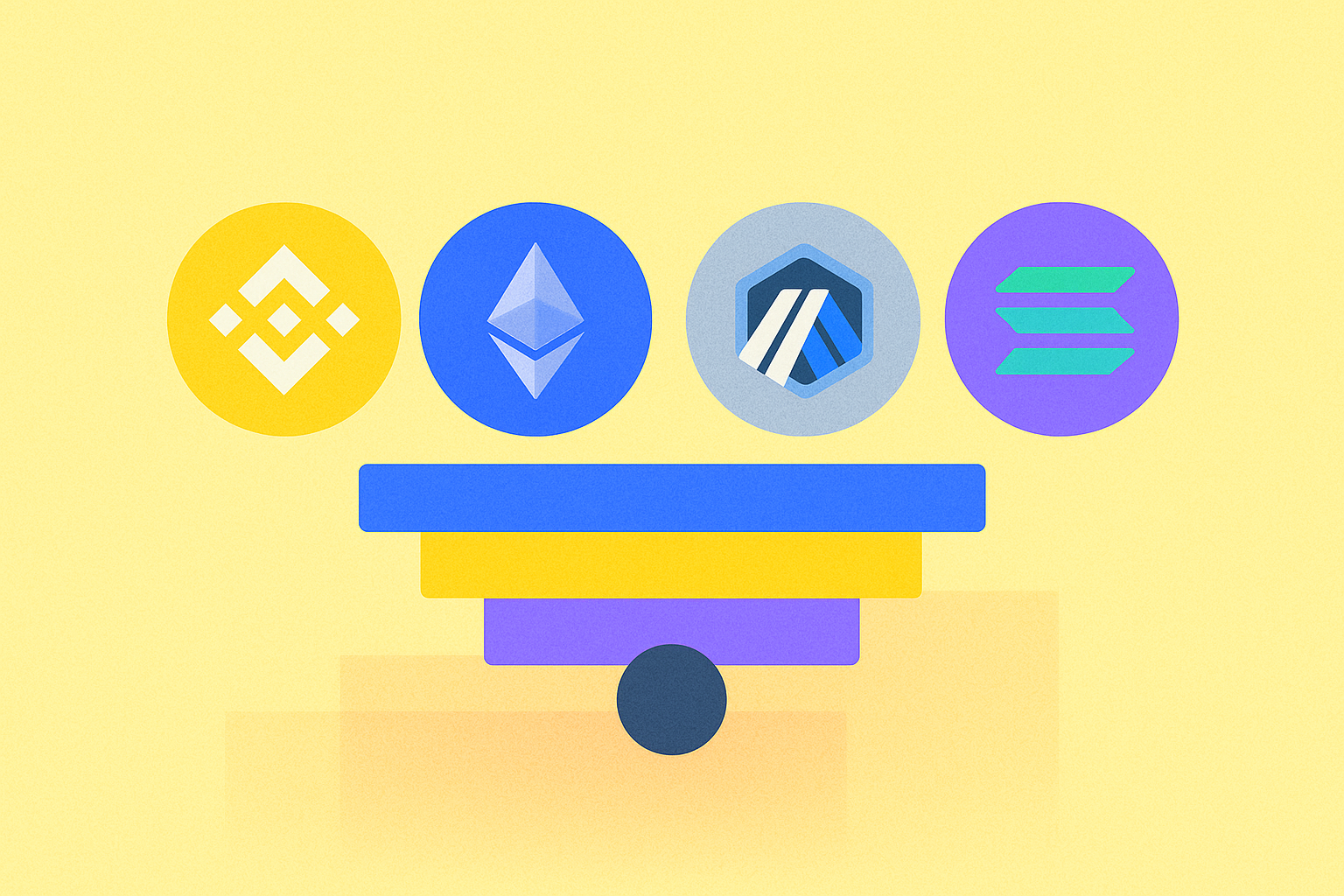
The Aster Perpetual DEX focuses on perpetual contract trading across multiple blockchain networks, including BNB Chain, Solana, Ethereum, and Arbitrum. The protocol aggregates liquidity across chains, eliminating the need for third-party bridges while supporting a diverse range of crypto assets. This cross-chain approach provides users with seamless access to liquidity pools across different ecosystems.
The DEX offers two distinct trading modes designed to cater to different user segments, ensuring accessibility for both casual traders and experienced professionals:
Easy Mode is specifically designed for casual users and features an intuitive interface that requires no initial margin. This mode offers leverage of up to 1001x and integrates MEV (Maximal Extractable Value) protection to safeguard users from front-running attacks. The system utilizes aggregated oracle feeds from multiple providers to ensure accurate pricing. A circuit breaker mechanism activates when price deviations exceed 1%, providing an additional layer of protection. Profit caps are implemented based on leverage settings: 500x leverage allows for 500% ROI, while 1001x leverage caps returns at 300% ROI. This structure balances high leverage opportunities with risk management.
Pro Mode is tailored for advanced traders and features a sophisticated order book with real-time data feeds, comprehensive technical charting tools, and advanced position management capabilities. This mode supports multi-chain execution and offers highly competitive fee structures (0.01% for makers and 0.035% for takers). Professional traders benefit from features such as limit orders, stop-loss mechanisms, and detailed analytics that enable sophisticated trading strategies.
Aster Spot Trading
Aster Spot enables users to purchase tokens directly with USDT, providing an experience similar to centralized exchanges. The current asset selection is curated and includes major cryptocurrencies such as BTC, ETH, USD1, and ASTER. This spot trading functionality complements the perpetual derivatives offering by providing users with a complete trading ecosystem within a single platform.
Aster Earn Platform
The Earn platform allows users to stake assets to generate yield, effectively transforming idle capital into passive income sources. This feature addresses a key challenge in DeFi: maximizing capital efficiency while maintaining liquidity options.
Supported assets include liquid staking tokens such as asBNB, asCAKE, asBTC, and the platform's native stablecoin USDF. The liquid staking mechanism works as follows: users can stake BNB to receive asBNB, which represents their staked position. These liquid staking tokens can then be further staked to earn additional yield or deployed in other DeFi strategies, providing flexibility and composability. This approach allows users to maintain exposure to staking rewards while retaining the ability to use their capital in other productive ways.
USDF: The Yield-Generating Stablecoin
USDF represents an innovative approach to stablecoin design as Aster's yield-generating stablecoin that maintains a 1:1 peg with USDT. Unlike traditional stablecoins that merely store value or provide liquidity, USDF is engineered to enhance capital efficiency by ensuring that the collateral backing its issuance continuously generates yield.
To achieve yield generation while maintaining its 1:1 peg with USDT, USDF implements a sophisticated delta-neutral strategy combining three key elements:
Collateralization: Users must deposit crypto assets such as USDT or BNB to mint USDF. These assets are locked as backing collateral, ensuring the stablecoin maintains its value peg.
Delta-Neutral Strategy: To minimize price volatility risk and ensure peg stability, Aster deploys delta-neutral positions. This approach involves taking offsetting positions that neutralize directional price exposure while capturing funding rate arbitrage opportunities. For example, the protocol might hold a long spot position while simultaneously maintaining a short perpetual position, allowing it to earn funding rates without taking on significant price risk.
Yield Generation: The collateral assets are actively deployed across multiple strategies to generate returns, including lending or staking within DeFi protocols, and capturing positive funding rates on perpetual DEXs. When funding rates are positive (indicating more long positions than short), the protocol can profit by taking short positions. This multi-strategy approach enables USDF to offer annual percentage yields (APY) of up to 15% while still functioning as a stable, dollar-pegged asset.
This innovative structure provides users with the stability of a traditional stablecoin combined with the yield-generating capabilities typically associated with more volatile DeFi strategies.
Aster Chain: A Privacy-Focused Blockchain
Aster is developing its own blockchain infrastructure called Aster Chain, designed to balance on-chain transparency with user privacy. Currently in an invite-only testnet phase, Aster Chain introduces a unique architectural design that separates transaction intent from execution:
All transactions are publicly recorded on-chain to ensure transparency and auditability, while transaction details are encrypted and verified off-chain through zero-knowledge proofs. This hybrid approach protects sensitive trader information and reduces the risk of order sniping—a common problem on fully transparent platforms where sophisticated actors can front-run large orders.
By implementing this privacy-preserving design, Aster Chain aims to provide institutional-grade security and privacy while maintaining the decentralization and transparency that are fundamental to blockchain technology. This infrastructure will eventually serve as the foundation for the entire Aster ecosystem, optimizing performance specifically for derivatives trading and yield generation.
Tokenomics and Distribution
ASTER Token Information
The native token of the Aster ecosystem is ASTER, deployed on BNB Chain with a total supply of 8,000,000,000 tokens. The token contract address is 0x000Ae314E2A2172a039B26378814C252734f556A. ASTER has been listed on a major centralized exchange, marking it as one of the first platforms to support the token.
Token Allocation Structure
The token distribution is designed to balance community incentives with long-term project sustainability:
Airdrop (53.5%): This substantial allocation to the community includes 8.8% unlocked at TGE, with the remaining portion vesting linearly over 80 months. This extended vesting schedule helps prevent sudden sell pressure while rewarding early supporters and active users.
Ecosystem and Community (30%): These tokens vest linearly over 20 months and are designated for ecosystem development, partnerships, grants, and community initiatives that drive platform growth and adoption.
Treasury (7%): Fully locked until governance approval, these tokens provide the project with resources for future strategic initiatives, emergency funding, or other purposes determined by the community through governance mechanisms.
Team (5%): Subject to a 1-year cliff period followed by linear vesting over 40 months, this allocation aligns team incentives with long-term project success while preventing early insider selling.
Liquidity and Listings (4.5%): Fully unlocked at TGE to ensure sufficient liquidity for trading and exchange listings, enabling healthy price discovery and market accessibility.
In addition to the initial distribution, Aster has committed to using a portion of platform revenue for token buybacks from the open market. This mechanism creates consistent buying pressure and demonstrates the project's commitment to token value appreciation.
Token Utility
ASTER serves multiple functions within the ecosystem:
Rewards and Incentives: The token is distributed to community members and active users through various reward programs, including trading competitions, liquidity provision incentives, and participation in governance.
Staking: Token holders can stake ASTER to earn yield, with staking rewards derived from protocol revenue and token emissions. Staking also provides users with enhanced platform benefits and governance rights.
Governance: ASTER holders participate in platform governance, voting on protocol upgrades, parameter adjustments, treasury allocation, and other key decisions that shape the project's future direction.
Team, Investors, and Strategic Partnerships
Project Team
While Aster has not yet publicly disclosed detailed information about its core development team, the project's strategic initiatives and product quality suggest it is built by a team with deep expertise in DeFi and derivatives trading. The successful merger of Astherus and APX Finance, combined with the rapid development of multiple sophisticated products, indicates strong technical and business capabilities.
Investment and Incubation
Aster (formerly Astherus) was selected for YZi Labs' Season 7 incubation program, a competitive process that validates the project's technical potential and business model. YZi Labs is known for supporting high-quality blockchain projects, and their backing provides Aster with resources, mentorship, and ecosystem connections that accelerate development and adoption.
Strategic Partnerships
Custody Solutions: Aster has partnered with a major custody provider to deliver secure asset custody services for Aster Earn. This partnership ensures the highest security standards for user funds in CeDeFi (Centralized-Decentralized Finance) strategies, combining the security of institutional-grade custody with the transparency and accessibility of DeFi.
Oracle Integration: Aster integrates price feeds from three leading oracle providers to ensure data accuracy and reliability. This multi-oracle approach includes integration with Pyth Network, Chainlink, and other major oracle providers. The diversified oracle strategy ensures accurate pricing, enhances transparency, and provides robust protection against price manipulation in on-chain trading. By aggregating data from multiple sources, Aster reduces single points of failure and improves overall system resilience.
Multi-Chain Deployment: Aster has launched products across several major blockchain ecosystems, including BNB Chain (its native home chain) and Arbitrum (a leading Ethereum Layer-2 scaling solution). The project plans to expand to Ethereum and Solana in the near future, emphasizing its robust multi-chain vision. This cross-chain strategy allows Aster to tap into liquidity and user bases across different ecosystems, reducing dependence on any single blockchain and providing users with flexibility in choosing their preferred network.
Development Roadmap
Aster's roadmap highlights its ambition to evolve from a Perp DEX into a comprehensive DeFi ecosystem, ultimately launching a Layer-1 blockchain optimized specifically for derivatives trading.
Q4 2024 – Merger of Astherus and APX Finance: The strategic combination of Astherus's yield products with APX's perpetual trading expertise formed the foundation of Aster. This merger brought together complementary strengths, creating a platform capable of offering both sophisticated trading infrastructure and yield optimization tools.
Q1 2025 – Launch of AsterEX Easy and Pro Modes on BNB Chain: The platform launched with two distinct trading modes to serve different user segments. Easy Mode provides on-chain trading with leverage up to 1001x, no margin requirements, multi-oracle support, and simplified operations. Pro Mode offers an order book model with low fees and advanced risk management tools, catering to professional traders who require sophisticated features.
Q2 2025 – Arbitrum Integration and Spectra Rewards Program Launch: Expansion to Arbitrum enables lower transaction fees and faster settlement times, improving the user experience for Ethereum-based traders. The Spectra Rewards Program introduced two point systems: Au Points for Earn and staking users, and Rh Points for Perp traders. These points are designed to accumulate toward future ASTER token airdrops, incentivizing early adoption and active platform usage.
Q3 2025 – AST Token Launch and Ethereum/Solana Expansion: The launch of the native ASTER token enabled payment, staking, governance, and airdrop functionalities within the ecosystem. Deployment on Ethereum and Solana provided access to broader liquidity pools and user bases across these major blockchain ecosystems, significantly expanding Aster's reach and market potential.
Q4 2025 – AsterLayer (Layer-1) Launch: The planned launch of AsterLayer represents the culmination of Aster's vision—a blockchain specifically optimized for derivatives and yield generation. Key features include zero-knowledge proof integration for scalability and security, a native blockchain explorer for enhanced transparency, and infrastructure designed to provide a smoother on-chain user experience. This custom blockchain will enable Aster to optimize performance, reduce costs, and implement features specifically tailored to the needs of derivatives traders and yield farmers.
Competitive Landscape Analysis
Aster operates in a highly competitive market with several established and emerging players. Understanding the competitive dynamics helps clarify Aster's positioning and strategic opportunities:
Hyperliquid: Currently the market leader in on-chain Perp DEX trading volume, Hyperliquid offers a high-speed order book and robust user experience for professional traders. However, its reliance on a single blockchain creates opportunities for multi-chain platforms like Aster to capture users seeking cross-chain functionality and diversified liquidity sources.
GMX: This platform dominated the market during 2022-2023 with its GLP pool model and attractive LP yields. However, market volatility exposed risks for liquidity providers and eroded yields, creating sustainability concerns. Aster has the opportunity to surpass GMX by offering more sustainable liquidity mechanisms and better risk management for liquidity providers.
Avantis: Representing a new wave of Perp DEXs, Avantis attracts retail traders with excellent user experience and interface design. While it lacks deep liquidity, its focus on accessibility has raised the bar for user experience standards. This puts pressure on Aster to decide whether to compete on simplicity or focus on serving professional traders, though Aster's dual-mode approach addresses both segments.
Orderly: Operating as an infrastructure layer that provides Perp liquidity, Orderly's B2B model has grown rapidly by embedding into numerous front-end applications. If Aster limits itself to B2C (business-to-consumer), it risks losing market share to infrastructure-focused competitors. A dual B2C and B2B strategy would be more viable for capturing both direct users and integration partners.
SynFuture: Focused on permissionless Perp listings, SynFuture allows anyone to create derivative markets, driving rapid product growth. However, this approach risks liquidity fragmentation and the proliferation of low-quality assets. Aster can differentiate by curating high-quality Perp pairs and maintaining stricter listing standards, appealing to users who prioritize quality and liquidity depth over market variety.
Aevo: Originating on Ethereum, Aevo combines options and futures trading, targeting professional traders with sophisticated products. While strong in complexity, its interface may alienate retail traders who find the platform intimidating. Aster can capture the middle ground by offering both accessibility and advanced features, serving a broader user base than specialized platforms.
Conclusion and Future Outlook
Aster is emerging as a formidable challenger in the Perp DEX space, distinguished not only by its trading infrastructure but also by its integration of yield-generating products and an innovative stablecoin. By leveraging the combined strengths of Astherus and APX Finance while progressing toward its own Layer-1 blockchain, Aster is positioning itself as more than just an exchange—it represents a next-generation DeFi ecosystem.
The platform's multi-faceted approach addresses key pain points in current DeFi: capital efficiency through yield-generating products, accessibility through Easy Mode trading, sophistication through Pro Mode features, and cross-chain functionality through multi-chain deployment. The planned Aster Chain will further differentiate the platform by providing privacy-preserving infrastructure optimized specifically for derivatives trading.
With strong initial metrics including billions in TVL and trading volume, backing from a respected incubator, and a clear roadmap toward comprehensive ecosystem development, Aster has positioned itself as a serious contender in the evolving landscape of decentralized derivatives trading. The project's success will depend on its ability to execute its ambitious roadmap, maintain security and reliability, and continue attracting both retail and institutional users in an increasingly competitive market.
FAQ
What is Aster DEX? How does it differ from traditional DEX?
Aster DEX is a trustless end-to-end trading platform offering CEX-like performance on cross-chain infrastructure. Unlike traditional DEX, it eliminates reliance on centralized institutions while delivering superior speed, liquidity, and user experience through advanced perpetual trading mechanisms.
How does Aster DEX's perpetual trading function work? What trading pairs are supported?
Aster DEX enables perpetual trading across multiple blockchains including BNB Chain, Solana, Ethereum, and Arbitrum. It aggregates cross-chain liquidity without requiring third-party bridges. The protocol supports diverse trading pairs with real-time updates available in official announcements.
How to conduct perpetual futures trading on Aster DEX? What conditions are required?
To trade perpetual futures on Aster DEX, use asBNB or USDF as margin. Your margin generates yield dynamically during trading. Meet the platform's minimum margin requirements to start trading positions with leverage.
What are the advantages of Aster DEX compared to other perpetual trading protocols such as dYdX and Hyperliquid?
Aster DEX offers superior user experience with dedicated community support, privacy features including hidden orders, native multi-chain integration, stablecoin support, and real-world asset trading. Our focus on customer service and community engagement differentiates us in the market.
What fees do I need to pay to trade on Aster DEX? What are the fee standards?
On Aster DEX, API traders enjoy zero maker fees and 0.02% taker fees. These competitive rates are designed to maximize trading activity and provide cost-efficient perpetual trading.
What is the leverage multiple of Aster DEX? How does its risk management mechanism work?
Aster DEX offers up to 300x leverage for perpetual trading. Its risk management system employs strict margin requirements and liquidity pools to protect users from excessive losses and ensure protocol stability.
What is the security of Aster DEX's smart contracts? Have they been audited?
Aster DEX smart contracts have undergone professional security audits to ensure protocol safety. The audit results demonstrate robust security measures and code quality. We continuously monitor and enhance contract security to protect user funds.
How to deposit and withdraw on Aster DEX? Which chains and assets are supported?
Aster DEX supports deposits and withdrawals across Ethereum, BNB Chain, Solana, and Arbitrum. Ensure you select the correct network and wallet address for your transactions. Multiple assets are available across these chains.
How is the liquidity of Aster DEX? Will there be slippage issues?
Aster DEX features tight spreads and minimal slippage through its advanced liquidity mechanisms. The protocol is designed to optimize trading volume and reduce price impact, ensuring smooth execution for perpetual trades even during high-demand periods.
What is Aster DEX's governance token? What rights do holders have?
Aster DEX's governance token is ASTER. Holders can vote on protocol parameters including fee rates, supported markets, and ecosystem upgrades. ASTER holders also receive fee discounts when using the token as collateral.

Token Advantages: Explore Their Functions and Benefits

Discover Polymarket: Exploring Decentralized Prediction Market Platforms

Optimal Multi-Monitor Setup for Efficient Trading

Leading Decentralized Exchange Platform for Secure Trading

Ultimate Guide to Trading on Decentralized Exchange Platforms

USDC vs USDT: A Comprehensive Stablecoin Comparison Guide

What is a token economic model and how do tokenomics affect crypto value through distribution, inflation, and governance mechanisms
How does Federal Reserve policy and inflation data affect cryptocurrency prices
What is PYUSD? The PayPal Stablecoin Going Global

What is the impact of regulatory compliance and SEC oversight on crypto market adoption in 2026
What is the difference between top crypto competitors in 2026: market cap, performance, and user adoption compared