


ZK Rollups Explained: Enhancing Blockchain Scalability Through Zero-Knowledge Solutions
What are ZK Rollups?
Since its launch in 2015, Ethereum (ETH) has been the dominant blockchain for developers interested in smart contracts and decentralized applications (dApps). However, more users are shifting their focus from Ethereum's main chain to layer-2 (L2) protocols built on top of Ethereum. L2s use new blockchain technologies to interact with Ethereum's base protocol without charging users high gas fees. And ZK rollups are one such technology driving the rapid adoption of L2 networks.
Although ZK rollups aren't the only scaling solution for the Ethereum blockchain, they're gaining traction with many of cryptocurrency's top developers. Even Ethereum's cofounder Vitalik Buterin has highlighted ZK rollups as a leading L2 scaling solution for Web3. This article explores what ZK rollups are, how they work, and how they could change the cryptocurrency landscape.
What is a Crypto Rollup?
A rollup is fundamentally a collection of cryptocurrency transactions bundled together for processing. The term evokes the image of multiple crypto transfers "rolled up" into one digital envelope. These transactions don't occur directly on a layer-1 (L1) blockchain like Ethereum. Instead, rollups use off-chain software to verify and organize crypto transfer data independently from the main blockchain.
L2 networks using rollup technology send batches of these crypto transactions to the L1 blockchain at regular intervals for final confirmation. To ensure rollup data transfer remains decentralized and trustworthy, L2s use smart contracts to communicate with their associated L1 blockchain. This creates a secure bridge between the off-chain processing environment and the main blockchain.
The benefits of using rollups are significant and multifaceted. First, since rollups take place off-chain, they reduce computational stress and congestion on the main blockchain. Second, rollup protocols compress substantial amounts of data into compact "byte-size" pieces, maximizing the available space per block on L1 networks. Both these features amplify cryptocurrency networks' efficiency by offering users faster confirmation speeds, higher transaction throughput, and lower fees. Additionally, by siphoning off user activity from the main blockchain, there's less risk for extreme bottlenecks on L1s, creating a more sustainable scaling solution.
What is a ZK Rollup?
ZK rollups derive their name from "zero-knowledge proofs," which refers to the distinctive verification process they employ before submitting bundles of crypto transactions to the main blockchain. Computers on a ZK rollup network must solve advanced off-chain computations before sending crypto payment history to the main blockchain. Whenever a ZK processor sends their rollups to the main chain, they attach a "validity proof," which serves as a certificate demonstrating that the processor has correctly organized and verified the transaction history.
In this system, the validator nodes on an L1 blockchain (such as Ethereum) have "zero knowledge" of the incoming transaction batches' specific details. However, the validity proofs demonstrate that the off-chain ZK processors used immense computational power to prove these transactions are accurate and valid. To illustrate this concept through analogy, these proofs function like a unique seal of approval from a king on a letter distributed throughout his kingdom. The royals in this hypothetical kingdom first scan the paper for the distinctive seal before accepting its contents. Similarly, L1 blockchains verify that the validity proof is authentic before accepting the payment data to the distributed ledger.
How Does a ZK Rollup Work?
ZK rollups operate similarly to the proof-of-work (PoW) consensus mechanism that powers the Bitcoin (BTC) blockchain. In the PoW model, miners use high-powered computers to solve difficult algorithmic puzzles every few minutes, preventing bad actors from cheating the system and invalidating BTC's transaction history. Similarly, processors in a ZK rollup network must perform advanced computations to publish a validity proof on their batch of transactions.
The critical difference between the ZK rollup system and a PoW blockchain like Bitcoin is that the former takes place off the primary blockchain network. Additionally, ZK rollups compress all their transaction data off-chain before sending it to the main chain through smart contracts. Despite these differences, the verification process across both ZK rollups and PoW networks is essentially the same: both require intensive computational work to prove the validity of transactions, ensuring security and preventing fraud.
ZK Rollups Versus Optimistic Rollups
Optimistic rollups represent another popular L2 protocol that processes crypto transactions off-chain and sends them to an L1 blockchain. However, the fundamental difference between ZK rollups and optimistic rollups lies in their verification approach. Unlike ZK rollups, optimistic rollups don't send validity proofs with crypto transfer data. Instead, an optimistic rollup assumes all transaction records passing through to the main chain are valid by default (hence the descriptive term "optimistic").
This raises an important question: if optimistic rollups don't pre-screen transactions, how do L1 validators know whether to trust them? Although each optimistic rollup has slightly different procedures, they all rely on "fraud proofs" rather than "validity proofs." Despite assuming every sender is innocent, optimistic rollup systems still maintain security through active monitoring. If a node suspects issues in a rollup, it flags the suspicious transaction for internal review. Crypto transaction history in a rollup won't post on the main blockchain until it clears the network with zero verifiable fraud charges.
Optimistic rollup protocols also employ incentives and punishments to discourage bad behavior. For instance, nodes often must stake cryptocurrency as collateral in a "bond" to send new transactions or request fraud proofs. If the L2's system determines a transaction is invalid, it rewards the bonded crypto from the bad actor to whoever reported the problem, creating economic disincentives for fraud.
Optimistic rollups aren't as quick as ZK rollups since each transaction bundle won't post until the "fraud-proofing" stage is complete. In some cases, crypto users need to wait extended periods for an optimistic rollup to clear on the main blockchain, even if there's no issue with their transaction history. However, optimistic rollups tend to be more adaptable in the crypto ecosystem than ZK rollups because they have lower computational requirements. Since optimistic rollups always assume transactions are valid, they don't need to expend as much time or energy generating validity proofs for every transaction, making them more accessible to developers.
Pros and Cons of ZK Rollups
ZK rollups represent a breakthrough in blockchain technology, but like any solution, they come with trade-offs. Traders and builders should understand the advantages and disadvantages of ZK rollups versus other L2 options before making strategic decisions.
Pros of ZK Rollups:
Maximum security: ZK rollups don't need to resort to "game theory" tactics like optimistic rollups to prove every set of transactions. The rigorous nature of validity proofs ensures network participants always send pre-screened, verified data to their L1 blockchain. This cryptographic verification provides a higher level of security assurance compared to fraud-proof systems, making ZK roll up technology one of the most secure scaling solutions available.
Lower network fees: ZK rollups can fit thousands of crypto transactions into a small space on an L1 blockchain. The efficient use of storage capacity on blockchains like Ethereum helps make ZK rollups cheaper to process compared to conducting transactions directly on the main chain. This compression technology represents a significant advancement in blockchain efficiency and makes ZK roll up solutions attractive for cost-conscious users.
Faster transaction throughput: ZK rollups help blockchains, such as Ethereum, process high transaction volumes in less time. They also offload computation-heavy validation processes from Ethereum's main chain, reducing network congestion risk and improving overall network performance for all users. This enhanced throughput is a key advantage of ZK roll up implementations.
Cons of ZK Rollups:
Not as cost-efficient as other solutions: Although ZK rollups are cheaper than using an L1 chain directly, they require more computation power than alternatives like optimistic rollups. Therefore, the fees on ZK rollup networks are slightly higher than some competing L2 solutions, which may impact user adoption in cost-sensitive applications.
Difficult to integrate with advanced programs: Due to their extreme technical precision and complexity, ZK rollups are less flexible than programs like optimistic rollups. Developers often find it easier to port their Ethereum dApps into optimistic rollup platforms than re-coding their projects to fit a ZK roll up system. This technical barrier can slow adoption among developers.
Requires intensive hardware from the ZK processor: Because the hardware requirements to become a ZK processor are high, fewer people join ZK rollup networks than optimistic rollups. The smaller concentration of ZK processors may raise centralization concerns, as the network becomes more dependent on a limited number of well-resourced participants.
Examples of ZK Rollup Projects
ZK roll up technology continues to evolve, and several projects have emerged as leaders in this space. When exploring how to use ZK rollups, traders and developers typically research tokens and platforms associated with L2 solutions such as:
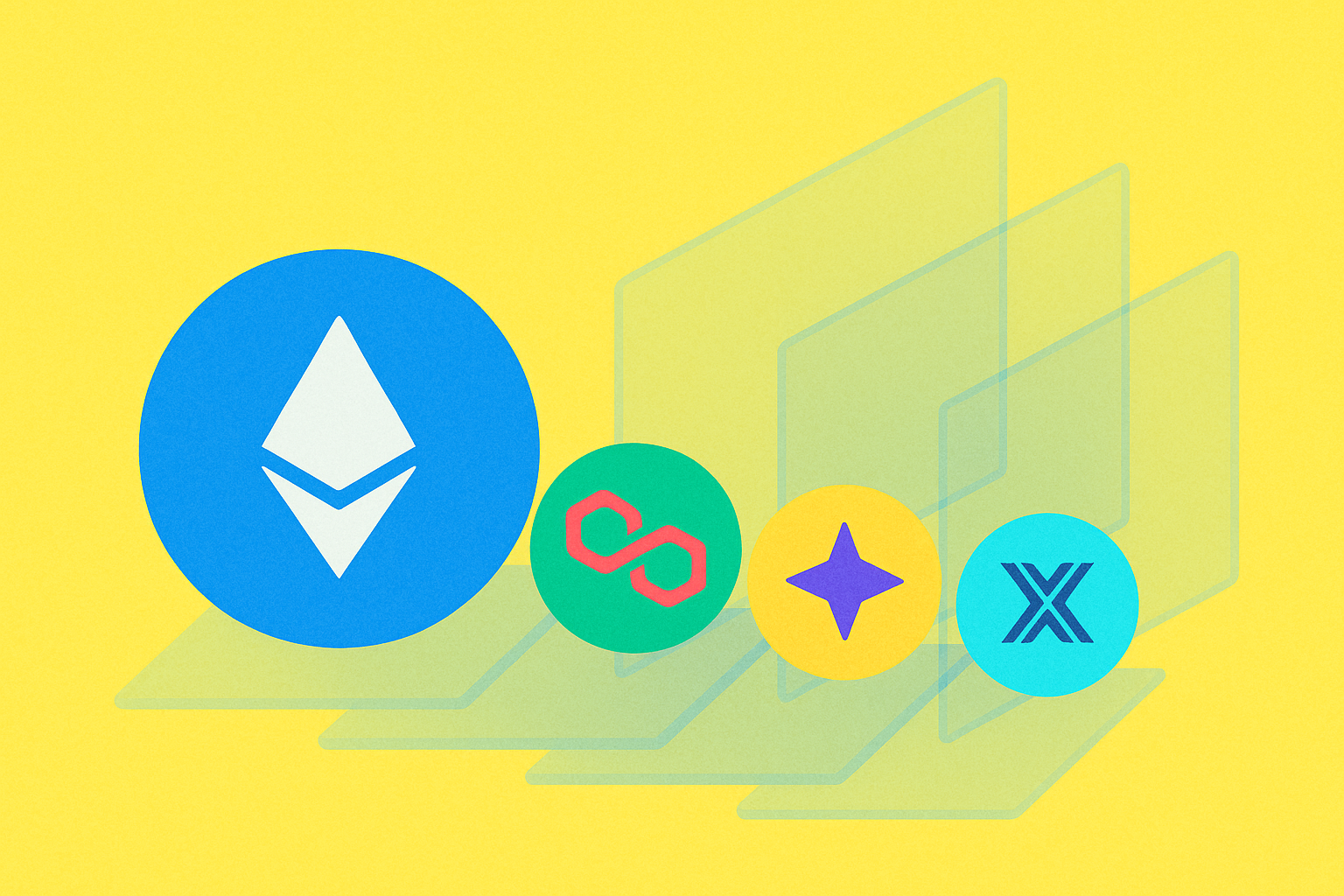
Polygon: Originally called the Matic Network, Polygon is an L2 scaling solution on Ethereum with a comprehensive suite of tools for developers. Although Polygon is well-known for its proof-of-stake sidechain, it offers a zkEVM solution to provide the security and speed of ZK roll up technology throughout Ethereum's ecosystem. This makes it accessible to developers familiar with Ethereum's Virtual Machine.
StarkWare: StarkWare Industries is a software company behind two ZK rollup solutions for Ethereum developers: StarkEx and StarkNet. While StarkEx is a permissioned software as a service (SaaS) that helps dApp creators use ZK roll up technology for specific applications, StarkNet is a permissionless software any dApp developer can use to integrate ZK rollups into their designs, providing flexibility for different use cases.
Immutable X: Immutable X is an L2 Ethereum scaling solution that uses ZK rollups specifically in blockchain gaming and non-fungible token (NFT) trading. Games such as "Gods Unchained" and "Illuvium" use Immutable X's system to provide the security of Ethereum's decentralized network with faster speeds and lower network fees, demonstrating the practical applications of ZK roll up technology in consumer-facing products.
Conclusion
ZK rollups represent a significant advancement in blockchain scaling technology, offering a compelling solution to Ethereum's scalability challenges. By combining off-chain transaction processing with cryptographic validity proofs, ZK roll up solutions provide maximum security, lower fees, and faster transaction throughput compared to processing transactions directly on the main chain. While they face challenges such as higher computational requirements and integration complexity compared to optimistic rollups, their superior security guarantees and efficiency make them increasingly attractive to developers and users alike.
As evidenced by projects like Polygon, StarkWare, and Immutable X, ZK roll up technology is moving from theoretical concept to practical implementation across various use cases, from DeFi to gaming and NFT trading. With continued development and the endorsement of industry leaders like Vitalik Buterin, ZK rollups are positioned to play a crucial role in the future of Web3 and blockchain scalability. As the technology matures and becomes more accessible, we can expect to see wider adoption and innovation in this space, ultimately contributing to a more efficient and user-friendly blockchain ecosystem. The ongoing evolution of ZK roll up implementations continues to demonstrate their potential as a foundational technology for the next generation of blockchain applications.
FAQ
What is a zk rollup?
A zk rollup is a layer-2 scaling solution that moves transactions off-chain while using zero-knowledge proofs to ensure security and reduce costs. It inherits security from the main blockchain and offers faster, cheaper transactions.
What is a zk rollup l2?
A zk rollup L2 is a scaling solution that bundles transactions off-chain and uses zero-knowledge proofs to verify them, posting only cryptographic proof to the mainnet. This improves scalability and reduces network congestion while maintaining security.
What are the benefits of ZK rollup?
ZK rollups enable high scalability by processing thousands of transactions per second off-chain while maintaining on-chain security. They reduce transaction costs through efficient batch processing and offer privacy protection via zero-knowledge proofs.
What does a zk stand for?
ZK stands for Zero-Knowledge, a cryptographic technology that allows one party to prove to another that they possess certain information without revealing the information itself. In zk rollups, it enables transactions to be verified and settled on-chain with mathematical proofs while maintaining privacy and efficiency.

Understanding Polygon Blockchain: A Comprehensive Guide

Understanding the Basics of Smart Contracts

Layer 2 Scaling Made Easy: Bridging Ethereum to Enhanced Solutions

Understanding the Functionality of Polygon Sidechain Technology
What is the global crypto market overview in 2026: market cap rankings, trading volume, and liquidity analysis?
Discover Liquid Restaking: An In-Depth Exploration of Renzo Protocol

What is BULLA coin: analyzing whitepaper logic, use cases, and team fundamentals in 2026

What is on-chain data analysis and how does it reveal whale movements and active addresses in crypto?

What is Vodra (VDR) crypto: whitepaper logic, use cases, and fundamentals analysis for 2026

How do cryptocurrency competitors compare in market share, performance, and user adoption in 2026?

What is on-chain data analysis and how does it predict crypto market trends
