Can Solana Reach $100,000: An In-Depth Analysis
Introduction
The question of whether Solana (SOL) can reach the ambitious price target of $100,000 per token has sparked considerable debate within the cryptocurrency community. While this valuation may appear extraordinarily optimistic to some market observers, it represents an intriguing possibility for blockchain enthusiasts and forward-thinking investors.
 As blockchain technology continues its rapid evolution and deeper integration across multiple sectors—from finance to gaming and supply chain management—understanding Solana's potential trajectory becomes increasingly valuable for anticipating future market dynamics.
This analysis explores the multifaceted factors that could influence Solana's path toward such a significant valuation milestone. By examining historical performance, technological capabilities, market conditions, and potential obstacles, we can develop a more nuanced understanding of what would need to occur for Solana to achieve this remarkable price point.
The Rise of Solana: A Background
Solana has established itself as a high-performance blockchain platform specifically engineered to support fast, secure, and scalable decentralized applications and cryptocurrency marketplaces. Founded in 2017 by Anatoly Yakovenko, a former Qualcomm engineer, Solana has distinguished itself through innovative technological approaches that address many limitations present in earlier blockchain generations.
The platform's revolutionary Proof of History (PoH) consensus mechanism represents a significant departure from traditional blockchain architectures. This innovative approach creates a historical record that proves events occurred at specific moments in time, enabling the network to process transactions with remarkable efficiency. By combining PoH with Proof of Stake (PoS), Solana achieves transaction speeds that can theoretically handle up to 65,000 transactions per second, far surpassing the capabilities of many competing platforms.
In recent years, Solana's market capitalization has positioned it among the leading cryptocurrencies in the global ecosystem. The platform's ability to process thousands of transactions per second while maintaining exceptionally low transaction costs has made it particularly attractive to developers building decentralized applications. This technical superiority has translated into widespread adoption across various use cases, including decentralized finance protocols, non-fungible token marketplaces, and gaming applications. The combination of speed, scalability, and cost-effectiveness has driven significant price appreciation over the past few years, establishing Solana as a formidable competitor in the blockchain space.
What Needs to Happen for Solana to Reach $100,000?
Achieving a $100,000 valuation per SOL token would require a confluence of transformative developments and favorable external conditions. This section examines the critical factors that could potentially drive such extraordinary growth.
Widespread Market Adoption and Strategic Integration
For any cryptocurrency to experience the magnitude of growth necessary to reach $100,000, achieving widespread adoption across diverse industries becomes paramount. Solana must significantly expand its footprint beyond current applications, penetrating traditional finance, enterprise solutions, government services, and emerging technological sectors.
In the financial technology sector, Solana could facilitate real-time settlement systems for international payments, reducing transaction times from days to seconds while dramatically lowering costs. Major financial institutions adopting Solana for cross-border transactions could drive substantial demand for SOL tokens. Similarly, the gaming industry presents enormous potential, as Solana's high throughput and low latency make it ideal for supporting blockchain-based gaming ecosystems with millions of active users conducting frequent microtransactions.
The decentralized finance sector represents another critical growth avenue. As DeFi protocols continue maturing and attracting institutional capital, platforms built on Solana could capture significant market share due to their superior performance characteristics. Strategic partnerships with established corporations, government entities, and international organizations would further legitimize the platform and drive adoption. Each successful integration creates network effects, attracting additional users and developers, thereby increasing the intrinsic value of the SOL token.
Continuous Technological Advancement and Innovation
Maintaining technological leadership requires relentless innovation and improvement. For Solana to justify a $100,000 valuation, the platform must continue evolving to address emerging challenges and incorporate cutting-edge features that enhance user experience and expand capabilities.
Future technological developments might include advanced privacy features that enable confidential transactions while maintaining Solana's performance advantages. Implementing zero-knowledge proof technologies could allow users to conduct private transactions without compromising the network's transparency and security. Additionally, enhanced interoperability solutions that seamlessly connect Solana with other major blockchain networks could position it as a central hub in a multi-chain ecosystem.
The platform must also invest in developer tools and infrastructure that lower barriers to entry for building on Solana. Comprehensive software development kits, intuitive programming interfaces, and robust documentation can attract talented developers who create innovative applications that drive user adoption. Furthermore, continuous security audits, bug bounty programs, and formal verification of critical smart contracts help maintain user trust and protect the ecosystem from vulnerabilities.
Innovations in consensus mechanisms, data availability solutions, and network architecture could further distinguish Solana from competitors. By staying at the forefront of blockchain research and development, Solana can maintain its competitive advantages and justify premium valuations based on superior technological capabilities.
Favorable Regulatory Environment and Institutional Acceptance
The regulatory landscape surrounding cryptocurrencies plays a crucial role in determining their long-term viability and growth potential. A supportive and clearly defined regulatory framework could significantly accelerate Solana's path toward higher valuations by reducing uncertainty and enabling institutional participation.
Should global regulators establish comprehensive yet innovation-friendly policies for blockchain technologies, this would remove significant barriers currently limiting institutional investment. Clear guidelines regarding custody, taxation, securities classification, and compliance requirements would enable pension funds, endowments, and other large institutional investors to allocate capital to SOL tokens. The entry of institutional capital could drive substantial price appreciation due to the massive scale of assets these entities manage.
Moreover, regulatory clarity could facilitate the development of Solana-based financial products such as exchange-traded funds, futures contracts, and structured products. These instruments would provide traditional investors with familiar vehicles for gaining exposure to Solana, potentially channeling billions of dollars into the ecosystem. Government recognition of Solana for official applications—such as digital identity systems, supply chain tracking, or central bank digital currency infrastructure—would further validate the platform and drive adoption.
Potential Challenges and Risk Factors
Despite Solana's impressive capabilities and growth trajectory, several significant challenges could impede its progress toward a $100,000 valuation. Understanding these obstacles is essential for developing realistic expectations.
Scalability Sustainability Under Extreme Growth
Paradoxically, Solana's success could create scalability challenges as network usage intensifies. While the platform currently handles high transaction volumes efficiently, exponential growth in users and applications could test the limits of its infrastructure. Maintaining smooth operations under dramatically increased demand requires continuous optimization of network architecture and resource allocation.
The platform must avoid the congestion issues and escalating transaction fees that have plagued other major blockchains during periods of high activity. This necessitates ongoing investment in infrastructure improvements, such as enhanced validator hardware requirements, optimized state management, and innovative solutions for data storage and retrieval. Additionally, as the blockchain grows larger over time, ensuring that validators can efficiently maintain and synchronize the entire network state becomes increasingly critical.
Solana's development team must proactively address potential bottlenecks before they impact user experience. This includes implementing sophisticated load-balancing mechanisms, optimizing transaction processing algorithms, and potentially introducing layer-two scaling solutions that can handle specific use cases without burdening the main chain. Failure to maintain performance standards could drive users and developers to competing platforms, undermining Solana's value proposition.
Security Vulnerabilities and Network Resilience
As with all blockchain platforms, Solana faces persistent security challenges that could significantly impact its reputation and valuation. The platform has experienced network outages in the past, highlighting the importance of continuous security improvements and robust incident response procedures.
A major security breach, successful exploit of smart contract vulnerabilities, or extended network downtime could trigger substantial loss of confidence among users and investors. Such incidents often result in immediate and severe price corrections as market participants reassess risk. Therefore, Solana must maintain rigorous security practices, including regular third-party audits, comprehensive testing protocols, and rapid response mechanisms for addressing discovered vulnerabilities.
The platform's security considerations extend beyond technical vulnerabilities to include governance risks, validator centralization concerns, and potential attack vectors targeting the network's consensus mechanism. Ensuring adequate decentralization of validator nodes across geographic regions and organizational entities helps protect against coordinated attacks or regulatory actions targeting specific jurisdictions. Additionally, maintaining a diverse and engaged validator community contributes to network resilience and security.
Implementing formal verification methods for critical system components, conducting regular penetration testing, and maintaining substantial bug bounty programs can help identify and address vulnerabilities before malicious actors exploit them. Building a reputation for security excellence requires sustained effort and vigilance, as a single significant security failure can undermine years of careful development and community building.
Market Volatility and Macroeconomic Factors
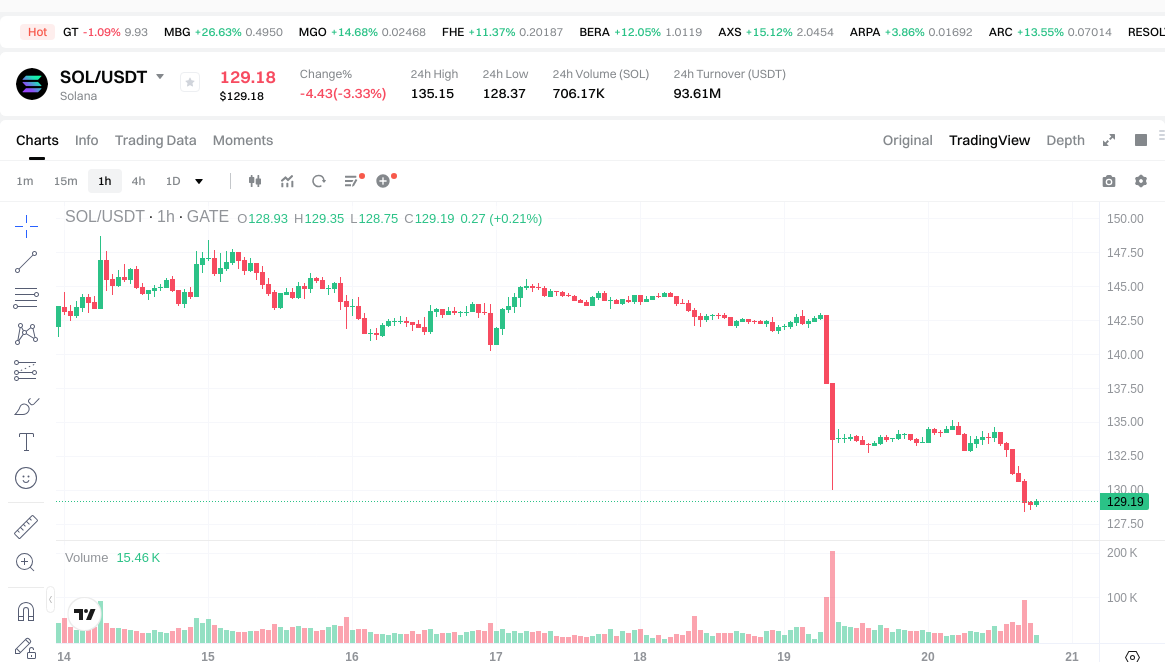
Cryptocurrency markets are characterized by extreme volatility, presenting both opportunities for substantial returns and risks of significant losses. Solana's path to $100,000 would likely involve dramatic price fluctuations that test investor conviction and market stability.
Broader macroeconomic conditions significantly influence cryptocurrency valuations. Economic recessions, changes in monetary policy, shifts in risk appetite among investors, and geopolitical events can all trigger substantial market movements. During periods of economic uncertainty, investors often reduce exposure to speculative assets, potentially causing cryptocurrency prices to decline regardless of fundamental developments.
To achieve and maintain higher valuations, Solana must establish itself as a stable and reliable digital asset that offers clear utility beyond speculative trading. This requires demonstrating consistent performance, maintaining network uptime, and delivering tangible value through real-world applications. Building a reputation for reliability and utility can help insulate SOL tokens from purely speculative market dynamics, attracting long-term investors focused on fundamental value rather than short-term price movements.
Additionally, competition from other blockchain platforms continues intensifying as new projects emerge with innovative features and established platforms upgrade their capabilities. Solana must continuously demonstrate superiority in key metrics such as transaction speed, cost, security, and developer experience to justify premium valuations relative to competitors. Market share erosion to competing platforms could significantly limit Solana's growth potential and constrain price appreciation.
Conclusion: A Transformative Journey with Substantial Potential
The prospect of Solana reaching $100,000 per token represents an ambitious but not entirely implausible scenario within the dynamic and rapidly evolving blockchain ecosystem. Achieving this milestone would require extraordinary developments across multiple dimensions: massive adoption spanning diverse industries and use cases, continuous technological innovation maintaining competitive advantages, favorable regulatory frameworks enabling institutional participation, and successful navigation of numerous technical and market challenges.
The blockchain space remains characterized by both uncertainty and tremendous potential. While predicting specific price targets involves substantial speculation, Solana's technical capabilities, growing ecosystem, and strategic positioning within the cryptocurrency landscape provide a foundation for significant future growth. The platform's ability to process transactions at unprecedented speeds while maintaining low costs addresses fundamental limitations that have constrained earlier blockchain generations.
For investors and enthusiasts, the key lies in maintaining realistic expectations while recognizing the transformative potential of blockchain technology. Rather than focusing exclusively on specific price targets, understanding the fundamental factors driving value creation—adoption, technological advancement, regulatory clarity, and network effects—provides more meaningful insights for evaluating long-term prospects.
As the blockchain industry continues maturing and integrating into mainstream economic activity, platforms like Solana that successfully balance performance, security, and scalability may indeed achieve valuations that seem extraordinary by current standards. The journey toward such milestones will likely involve significant volatility, unexpected challenges, and paradigm-shifting developments that reshape our understanding of digital assets and decentralized systems. Observers would be well-advised to monitor developments closely, as the unfolding narrative may reveal possibilities that exceed even optimistic current projections.
FAQ
What is Solana? What are its core technological features?
Solana is a high-performance blockchain platform using Proof of History consensus. It enables fast, low-cost transactions with throughput exceeding 65,000 transactions per second. Core features include parallel processing architecture, sub-second finality, and energy-efficient validation, making it ideal for decentralized applications and payments.
What is Solana's current price? What is its all-time high price?
As of January 2026, Solana trades around $195-210. Its all-time high reached approximately $260 in November 2024. Market conditions continue evolving with strong adoption momentum in the ecosystem.
Can Solana reach $100,000? What factors support this prediction?
Yes, Solana could reach $100,000 by 2030-2035. Key factors include: network scalability improvements increasing transaction volume, institutional adoption expanding use cases, ecosystem growth driving demand, and potential market expansion as crypto gains mainstream acceptance. Technical upgrades and validator participation growth strengthen long-term potential.
Solana相比以太坊和其他公链有什么优势和劣势?
Solana优势:交易速度快(每秒数万笔交易),交易费用极低,性能高效。劣势:网络稳定性曾出现问题,生态相对较小,中心化程度较高。以太坊生态更成熟,安全性更强,但交易速度和成本不如Solana。
What are the main factors affecting Solana's price?
Solana's price is driven by network activity and transaction volume, developer adoption, ecosystem growth, market sentiment, Bitcoin's performance, technological upgrades, institutional interest, and overall crypto market conditions. Strong fundamentals support long-term appreciation potential.
What are the risks to be aware of when investing in Solana?
Solana faces risks including network congestion, validator centralization concerns, and market volatility. Technical vulnerabilities and competition from other Layer-1 blockchains also pose challenges. Regulatory uncertainty in crypto markets adds additional risk factors investors should consider.

What Is Solana's Current Market Position and Price Prediction for 2030?

How Does On-Chain Data Analysis Reveal Solana's Network Health in 2025?
How Does Cryptocurrency Competitive Landscape Compare in 2025: Market Share, Performance, and Key Advantages

How Does On-Chain Data Analysis Reveal MET's Market Trends in 2025?
How Can On-Chain Data Analysis Reveal SPX Whale Movements in 2025?

Why Is Solana Pumping?

Is XRP Proof of Stake?

Lidl Blumen Gutscheincode in Crypto Payments
Where Can I Trade XRP in the US

What is 7000 Euros in US Dollars: Financial Insights
Genesis Block