


Understanding Decentralized Autonomous Organizations (DAO)

Everything You Need to Know About DAOs (Decentralized Autonomous Organizations)
What is a DAO?
DAOs are important financial instruments that support the management of decentralized finance (DeFi) applications. Operating similarly to traditional venture capital funds but with a more decentralized structure, these organizations do not require a centralized board of directors to execute legal agreements. At the core of DAO design lies the vision of eliminating human error and effectively managing investors' capital through a decentralized, crowdfunded model. DAOs operate through tokens that grant participating investors the right to vote on potential projects supported by the platform.
What Does DAO Mean?
DAOs represent the most advanced form of decentralized investment that finances and manages blockchain projects. These organizations leverage the power of smart contracts to enforce all operational rules and grant decision-making authority to participating members. DAOs possess built-in treasury mechanisms, and community members make spending decisions based on democratic voting outcomes. However, in some DAO systems, governance challenges can arise because a large proportion of governance tokens are held by a limited number of members.
Different Types of DAOs
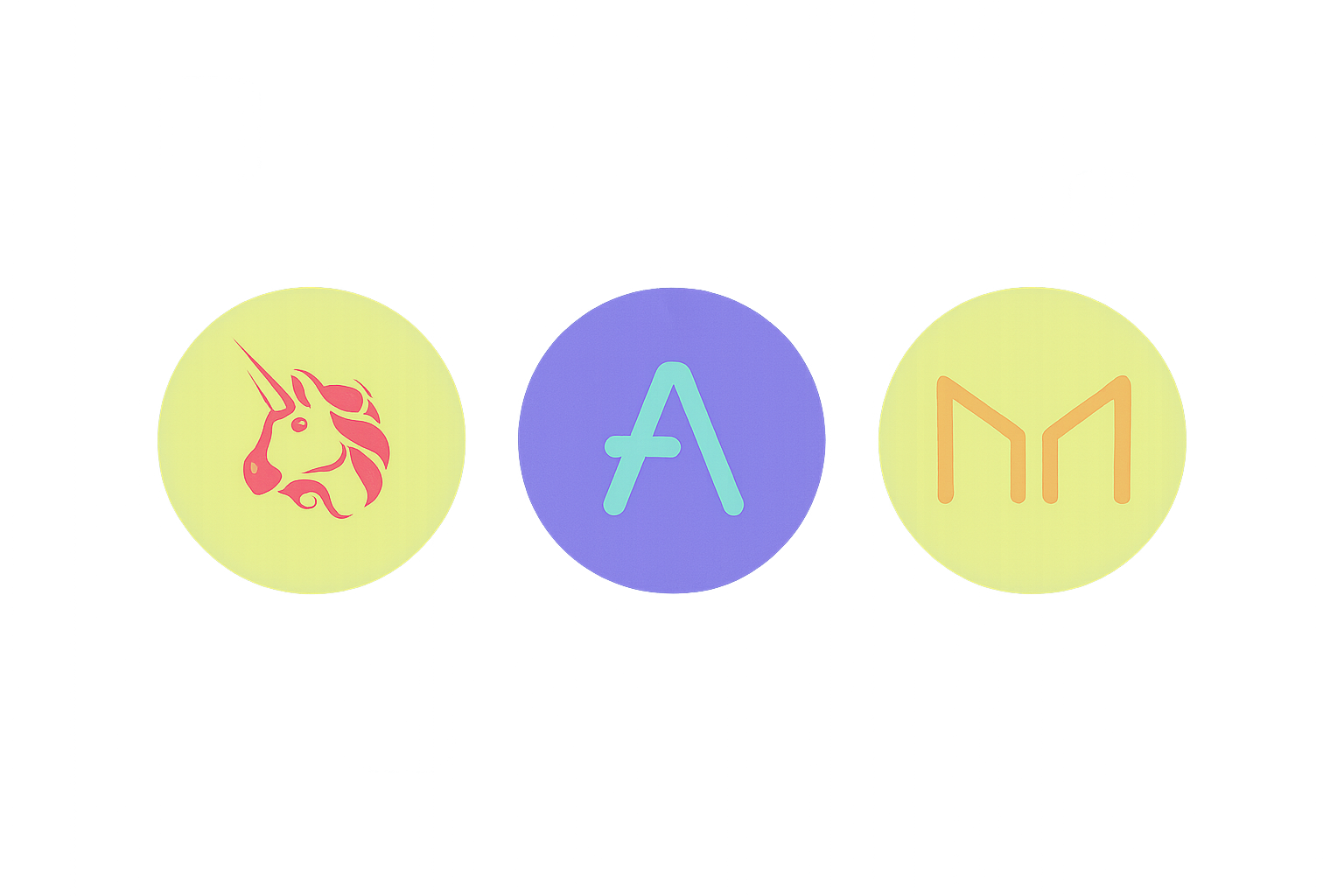
The DAO ecosystem is divided into multiple categories serving various purposes and functions. Protocol DAOs empower the DeFi market by managing lending platforms, liquidity pools, and mining operations in a fully decentralized and transparent manner. Notable examples include Uniswap, Maker, and Aave. Venture Capital DAOs gather capital from multiple users with the aim of investing in future applications in blockchain and crypto sectors. Grant DAOs provide financial support to innovative DeFi projects, helping these projects develop their ideas. Social DAOs transform the social network concept into a decentralized structure, enabling user communities to make decisions by consensus; Bored Ape Yacht Club is a popular example in this category. Collector DAOs bring together a community to purchase high-value digital assets, offering retail investors access to expensive NFTs.
Popular DAO Examples
Uniswap, the largest decentralized exchange on the Ethereum network, has decentralized the management of its operations through the UNI token. UNI token holders can participate in voting on governance proposals related to Uniswap's development and the addition of new features. Decentraland has its own DAO and owns all smart contracts and assets within its ecosystem; this DAO grants the community authority to control platform policies and manage land auctions. Aave has fully decentralized governance using the Aave Governance DAO, where AAVE token holders can propose changes to the platform and vote on these proposals. OpenDAO is a newer DAO launched in late 2021 and designed to support the NFT community; OpenSea users received free SOS tokens. ConstitutionDAO is an initiative aimed at raising funds to purchase an original copy of the U.S. Constitution and conducting crowdfunding in a decentralized manner.
How Can You Get Involved in a DAO?
Those interested in participating in a DAO should first clearly establish their own goals and motivations. Subsequently, it is important to carefully examine the chosen DAO's mission statement, operational guidelines, and community principles. Joining the relevant DAO's Discord community or other communication channels to interact with community members is essential. To be recognized as an active part of the community, one should purchase the DAO's own tokens and actively participate in governance forums. For individuals or groups wishing to establish a DAO, they should first clarify the organization's core objectives and identify other members for collaboration. Subsequently, governance tokens should be created and distributed to members, the decision-making mechanism should be approved, and a reward system should be developed to incentivize participants. If DAO tokens are perceived as attractive investment instruments, investments in these tokens can be made through digital asset exchanges.
Advantages of DAOs
DAOs represent a revolutionary step in democratizing ownership; every member can participate in DAO governance and vote in decision-making processes. From a transparency perspective, the entire decision-making process is open and visible, significantly reducing the risk of manipulation. The cryptographic security of smart contracts provides high-level transaction security. DAOs incentivize members who contribute to and develop the platform with material and non-material rewards, creating greater interaction within the community. The distribution of ownership across a broad group of members ensures that risk is also distributed in a decentralized manner, increasing system stability. Finally, DAOs offer an inclusive structure, ensuring that anyone with the economic capacity to purchase tokens has the right to participate and make decisions.
Disadvantages of DAOs
Among the most important challenges faced by DAOs is regulatory uncertainty; the decentralized governance structure makes it difficult to ensure traditional legal accountability. While a completely trustless structure may remain an ideal, in the early stages of the organization, most control may be held by the developer group. As governance increases, power can become significantly concentrated in a few members holding the most governance tokens. Weak or faulty code development work can negatively affect DAO functionality and even cause system collapse.
The Future of DAOs
With the rapid development of Web3 and decentralized technologies, demand for decentralized autonomous organizations will continue to grow. Despite various technical and legal disadvantages, increased user awareness and technological progress will encourage the development of more robust, secure, and genuinely decentralized DAO solutions. As a next-generation organizational model, DAOs have the potential to fundamentally transform the nature of law, finance, and social structures.
Conclusion
DAOs are innovative organizational structures that implement decentralized and democratic governance models by harnessing the power of blockchain technology and smart contracts. DAOs can be divided into various categories to serve different financial and social purposes. Examples such as Uniswap, Aave, Decentraland, OpenDAO, and ConstitutionDAO demonstrate the practical applications and success of DAOs. There are various paths available for those wishing to participate in, establish, or invest in a DAO. The advantages offered by DAOs—democratization of ownership, transparency, and increased community participation—are balanced by regulatory challenges and technical risks. Despite these challenges, as technology advances and legal frameworks mature, DAOs will continue to operate as a fundamental element of the Web3 ecosystem and grow stronger.
FAQ
DAO ne işe yarar?
DAO'lar merkeziyetsiz işbirliği ve kolektif karar verme platformlarıdır. Katılımcılar yönetişime katkıda bulunur, işlemleri onaylar ve ağın geleceğini şekillendirir. Küresel işbirliği sağlar ve esnek katılım imkanı sunar.
DAO açılımı nedir?
DAO, Decentralized Autonomous Organization(分散型自治組織)の略称です。スマートコントラクトにより自動実行される、中央管理者を必要としない組織構造です。トークンホルダーが投票により意思決定に参加します。
DAO ne anlama geliyor?
DAO, Decentralized Autonomous Organization anlamına gelir. Blockchain teknolojisine dayanan, merkezi olmayan bir organizasyondur. Üyeler token sahibi olarak kararları oylama yoluyla alırlar. Akıllı kontratlar aracılığıyla otomatik olarak yönetilir.
How does a DAO work?
A DAO (Decentralized Autonomous Organization) operates through smart contracts without central management. Members hold governance tokens and vote on decisions. Token holders collectively manage the organization's treasury and operations in a transparent, code-driven manner.
How can I join a DAO?
Set up a compatible crypto wallet, acquire the DAO's governance tokens, interact with its smart contract, and engage with the community. Learn about the DAO's mission and voting mechanisms to participate effectively in governance decisions.
What are the differences between a DAO and a company?
DAOs operate through decentralized decision-making where power is distributed among token holders, while companies have centralized management controlled by boards and shareholders. DAOs rely on blockchain technology and smart contracts, whereas traditional companies operate under legal and financial frameworks with hierarchical structures.
DAO'nun riskleri nelerdir?
DAO'ların temel riskleri arasında akıllı kontrat güvenlik açıkları, yönetim hatası, likidite riski ve oy kullanma saldırıları yer alır. Ayrıca, yasal belirsizlik ve pazar oynaklığı da önemli tehditler oluşturabilir.

Top Decentralized Exchange Aggregators for Optimal Trading
Understanding Crypto Slippage: A Clear Explanation
What is Avalanche (AVAX): A Complete Fundamentals Analysis of Whitepaper Logic, Use Cases, and Technical Innovation
Understanding Crypto Airdrops: A Beginner's Guide
Understanding Web3 Wallets: A Comprehensive Guide
Understanding Governance Tokens: A Comprehensive Guide

What is BULLA coin: analyzing whitepaper logic, use cases, and team fundamentals in 2026

What is on-chain data analysis and how does it reveal whale movements and active addresses in crypto?

What is Vodra (VDR) crypto: whitepaper logic, use cases, and fundamentals analysis for 2026

How do cryptocurrency competitors compare in market share, performance, and user adoption in 2026?

What is on-chain data analysis and how does it predict crypto market trends
