

LCP_hide_placeholder
fomox
MarketsPerpsSpotSwap
Meme
Referral
More
Become a Smart Money on Tracker
Search Token/Wallet
/

What is Zebec Network (ZBCN) market cap and trading volume in 2026
2026-01-13 06:40:33
Altcoins
Crypto Insights
Cryptocurrency market
Payments
Solana
Article Rating : 3
158 ratings
Zebec Network (ZBCN) maintains a market capitalization of $283-294 million, ranking approximately #140-144 globally as of January 2026. With 96.91 billion tokens circulating from a 100 billion total supply, ZBCN demonstrates mature token distribution with minimal dilution potential. The token exhibits strong trading activity, recording $6.88-10.42 million in 24-hour volume and achieving a 17.60% price increase over seven days at approximately $0.0028 USD. ZBCN is actively traded across major exchanges including Gate, Huobi, and OKX, with Huobi commanding 26.86% of total trading volume. This multi-exchange liquidity framework ensures efficient price discovery and accessibility for global traders. The article comprehensively examines ZBCN's market positioning, token economics, trading dynamics, and exchange coverage, addressing investor concerns about valuation, supply dynamics, and market liquidity within the Zebec Network ecosystem.
What is Zebec Network (ZBCN) market cap and trading volume in 2026

Market Capitalization and Ranking: ZBCN holds a market cap of approximately $283-294 million, ranking around #140-144 globally

As of January 2026, Zebec Network (ZBCN) has established itself as a mid-tier cryptocurrency with a market capitalization positioned in the $283-294 million range. This valuation places ZBCN at approximately #140-144 in global cryptocurrency rankings, indicating meaningful adoption and investor confidence in the decentralized infrastructure platform. With a current price hovering around $0.0028 USD and a circulating supply of approximately 96.9 billion tokens, the token reflects the broader market dynamics of mid-cap digital assets. The global ranking demonstrates that while ZBCN operates beyond the top 100 cryptocurrencies dominated by Bitcoin and Ethereum, it maintains substantial market presence compared to thousands of smaller projects. This positioning suggests ZBCN has gained traction as a utility token within Zebec's ecosystem, which offers decentralized services including real-time payroll, payment solutions, and infrastructure for real-world value flows. The market cap range indicates relatively stable investor interest, though cryptocurrency valuations remain subject to significant volatility. Understanding ZBCN's market capitalization in context of its global ranking provides insight into its competitive standing within the crowded digital asset landscape.

Circulating Supply and Token Economics: With 96.91 billion ZBCN tokens in circulation out of 100 billion total supply, the token maintains moderate dilution potential

Zebec Network's token supply structure reveals a relatively mature distribution stage. The 96.91 billion circulating tokens represent 96.91% of the total 100 billion ZBCN supply, indicating that the majority of tokens are already in circulation. This supply configuration presents a balanced but noteworthy profile for investors evaluating market cap dynamics.

The moderate dilution potential stems from this near-complete circulation ratio. Unlike projects in early distribution phases, ZBCN faces limited token unlock schedules, meaning future supply increases will be minimal. However, current circulating supply does create price pressure, as evidenced by the relationship between these 96.91 billion tokens and the $0.00282 price point. Market analysis indicates this supply volume directly impacts price discovery mechanisms, particularly during trading volume fluctuations.

The token economics framework has attracted significant attention, with Zebec Network announcing a comprehensive tokenomics update for January 8, 2026. This scheduled update suggests the project team is actively addressing supply dynamics and may introduce structural improvements to token utility and distribution mechanisms. Understanding these circulating supply dynamics becomes essential for grasping how ZBCN's market cap and trading volume respond to broader market movements and network developments throughout 2026.

24-Hour and 7-Day Trading Volume: ZBCN recorded $6.88-10.42 million in 24-hour trading volume with a 17.60% price increase over the past 7 days

Zebec Network demonstrates notable trading activity with its 24-hour volume fluctuating between $6.88 and $10.42 million, reflecting consistent market participation across major exchanges. This ZBCN trading volume level supports meaningful price discovery in the cryptocurrency markets. The token's recent performance shows impressive momentum, with the 7-day price increase reaching 17.60%, signaling strengthening buyer interest over the short term. At the current price of approximately $0.0028, Zebec Network maintains a market cap around $261-282 million, positioning it among actively traded digital assets. The correlation between elevated trading volume and positive price movement suggests healthy market dynamics for ZBCN. Traders monitoring Zebec Network's performance note that substantial spot trading volume combined with consistent futures activity contributes to the token's liquidity profile. This combination of metrics—robust 24-hour trading volume paired with sustained weekly gains—indicates growing confidence in the Zebec Network ecosystem and its decentralized infrastructure solutions for value transfers.

Exchange Coverage and Liquidity: ZBCN is actively traded across major exchanges including Gate, Huobi, and OKX with concentrated liquidity on Huobi representing 26.86% of volume

ZBCN's presence across multiple major cryptocurrency exchanges demonstrates strong market maturity and accessibility for traders globally. The token maintains active trading pairs on Gate, Huobi, and other leading platforms, creating multiple entry points for market participants. This distributed exchange network proves crucial for establishing healthy price discovery mechanisms and ensuring consistent liquidity during various market conditions.

Huobi stands as the primary liquidity hub for ZBCN, commanding 26.86% of total trading volume. This substantial concentration reflects the exchange's significance as a preferred trading destination, particularly for Asian markets and institutional participants. The dominance of Huobi volume demonstrates investor confidence in executing trades through this established platform while maintaining favorable slippage conditions. Simultaneously, Gate provides complementary liquidity, offering traders an alternative venue with competitive order book depth.

The multi-exchange trading structure supports ZBCN's market cap of approximately $270.30 million, enabling efficient price synchronization across venues while minimizing arbitrage spreads. With the token trading around $0.0028, the 24-hour trading volume reflects consistent investor interest and capital flow through these platforms. This liquidity framework becomes particularly important during market volatility, as distributed volume prevents price manipulation and allows large market participants to execute positions without significantly impacting token valuation.

Such robust exchange coverage enhances ZBCN's accessibility and reduces counterparty risk for traders, fostering a healthier trading ecosystem. The strategic distribution of liquidity across reputable platforms contributes directly to the token's stability and market credibility, supporting both retail and institutional participation in the Zebec Network ecosystem.

FAQ

What is Zebec Network (ZBCN)? What are its main functions and uses?

Zebec Network is a multi-chain protocol operating on Solana and Ethereum, revolutionizing real-time payments and on-chain salary distribution. Through products like Zebec Pay, it enables stablecoin-based streaming payments and continuous payouts, providing seamless financial transactions in the blockchain ecosystem.

Zebec Network的当前市场价格和交易量是多少?

Zebec Network的当前市值为293.15百万美元,过去24小时交易额为118万美元,流通供应量为96.91亿枚。

ZBCN代币的总供应量和流通量分别是多少?

ZBCN total supply is 99,998,804,736.73, with circulating supply of 96.91 billion tokens as of January 13, 2026.

What are the advantages of Zebec Network compared to other payment/streaming projects like Solana ecosystem projects?

Zebec Network leverages Zk-Rollup technology for lower transaction costs and higher scalability than Solana. It's expanding from Solana to BNB Chain, offering broader ecosystem adoption and stronger cross-chain interoperability for payment and streaming solutions.

What are the risks to pay attention to when investing in ZBCN tokens?

ZBCN investment carries market volatility risk, liquidity risk, regulatory uncertainty, and technology risk. Crypto assets are highly speculative with potential for significant losses. Market fluctuations can be dramatic, and regulatory changes may impact value.

Zebec Network在2026年的发展前景和价格预测如何?

Zebec Network展现积极发展前景。技术指标预测,ZBCN价格有望上涨,预计于2026年2月7日达到$0.003589。长期200日均线显示持续增长趋势,短期50日均线也预示市场向好。

* The information is not intended to be and does not constitute financial advice or any other recommendation of any sort offered or endorsed by Gate.

Share

Content

Market Capitalization and Ranking: ZBCN holds a market cap of approximately $283-294 million, ranking around #140-144 globally

Circulating Supply and Token Economics: With 96.91 billion ZBCN tokens in circulation out of 100 billion total supply, the token maintains moderate dilution potential

24-Hour and 7-Day Trading Volume: ZBCN recorded $6.88-10.42 million in 24-hour trading volume with a 17.60% price increase over the past 7 days

Exchange Coverage and Liquidity: ZBCN is actively traded across major exchanges including Gate, Huobi, and OKX with concentrated liquidity on Huobi representing 26.86% of volume

FAQ

Related Articles
What Is the Current Market Overview for Bonk (BONK) in 2025?

What Is the Current Market Overview for Bonk (BONK) in 2025?

The article presents a detailed overview of Bonk (BONK) in 2025, focusing on its market cap, trading volume, and price fluctuations. It highlights BONK's notable rank at #81 with a market cap of $911.58 million, emphasizing its role as a significant Solana-based meme token. The analysis covers key trading dynamics, with a 24-hour trading volume of $104.95 million across exchanges like Gate. The text also examines BONK's price trends and supply distribution, illustrating its volatility and market engagement. This comprehensive insight is ideal for investors and traders interested in meme tokens and Solana's ecosystem.
2025-11-25 03:37:33
What Is the Current State of the Crypto Market in 2025?
What Is the Current State of the Crypto Market in 2025?

The article explores the current state of the cryptocurrency market in 2025, focusing on Solana's market position and performance. It covers Solana's market cap, price volatility, and trading volumes, highlighting the token's established presence due to its high circulation ratio. The piece analyzes liquidity profiles and trading efficiency on Gate, emphasizing the exchange's comprehensive market coverage and accessibility to major cryptocurrencies. This structure offers insights into market dynamics, appealing to investors seeking informed strategies and a deeper understanding of crypto trends.
2025-11-14 01:12:54
What are the regulatory risks and compliance challenges for ZEC in 2025?

What are the regulatory risks and compliance challenges for ZEC in 2025?

The article examines the regulatory risks and compliance challenges surrounding Zcash (ZEC) in 2025. It highlights that the SEC has not classified ZEC as a security, allowing it to thrive under current fraud prevention regulations. Zcash's selective disclosure model supports privacy and compliance simultaneously, attracting institutional interest and growing Z-Address adoption. Despite this, ZEC faces exchange delisting due to intensified KYC/AML enforcement, affecting its trading volume and regulatory perception. This article is crucial for institutional investors, legal advisors, and cryptocurrency platforms seeking to understand the balance between privacy and compliance.
2025-12-22 01:59:29
What is TRUMP token fundamentals: whitepaper logic, use cases, and technology analysis?
What is TRUMP token fundamentals: whitepaper logic, use cases, and technology analysis?

The article explores the fundamentals of the TRUMP token, covering its unique whitepaper architecture tied to political identity, use cases, market performance, and technological foundation. It highlights how this Solana-based token links political sentiment to cryptocurrency mechanics, resulting in significant price volatility. The piece discusses the token's use in supporting disabled veterans and its speculative nature, driven by political events and community engagement. The article is aimed at readers interested in cryptocurrency and political economics, offering insights into the risks and dynamics of political-driven memecoins.
2025-12-24 04:08:38
What is Litecoin (LTC) vs Bitcoin: Key Differences in Performance, Market Cap, and User Adoption
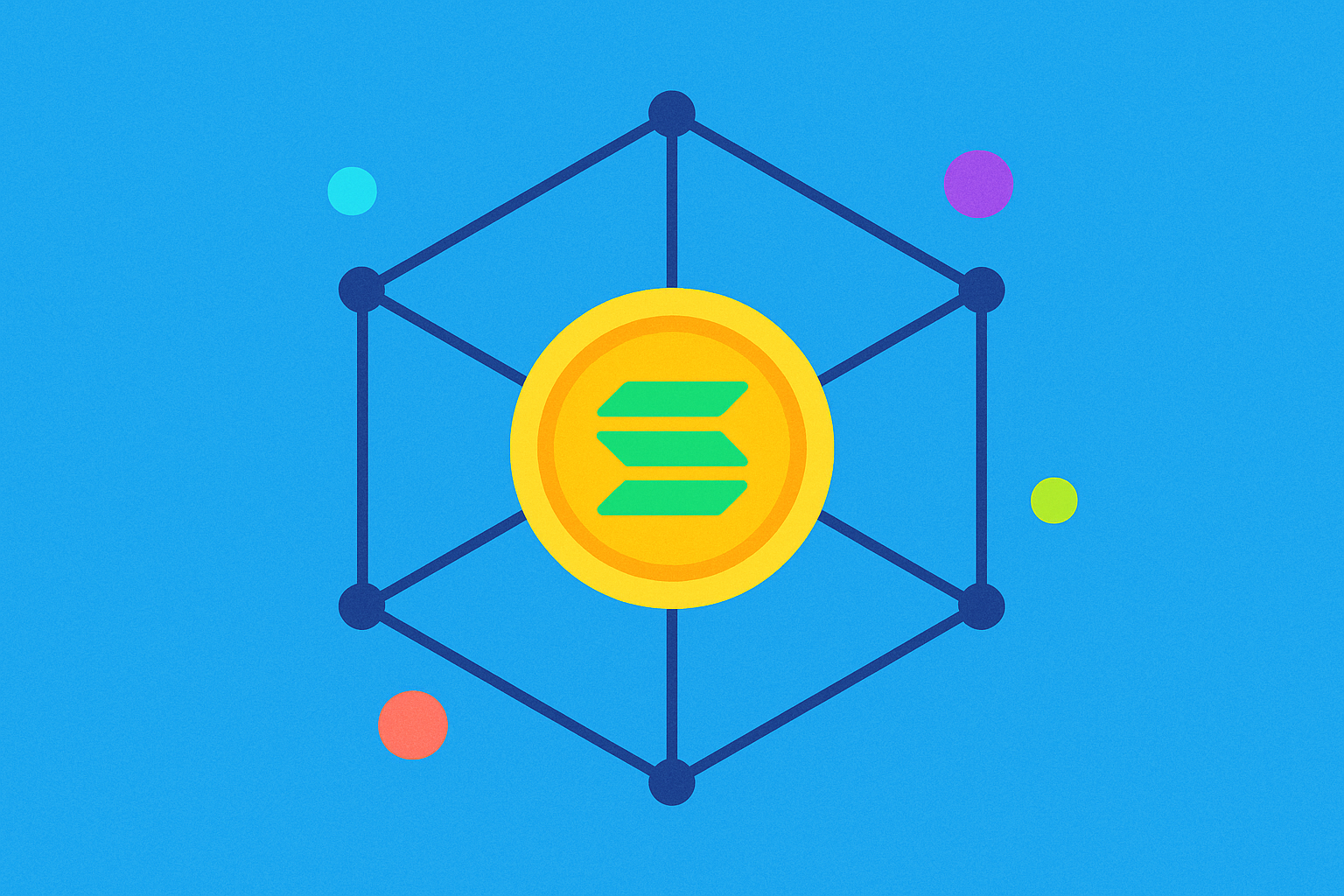
What is Litecoin (LTC) vs Bitcoin: Key Differences in Performance, Market Cap, and User Adoption

This article explores the key differences between Litecoin (LTC) and Bitcoin (BTC) in terms of performance metrics, market cap, user adoption, and strategic positioning. It addresses the demands of cryptocurrency enthusiasts and investors seeking efficient transactions and market penetration insights. The structure follows a logical sequence: comparing block time and transaction speed, analyzing market capitalization disparity, evaluating user adoption trends, and highlighting Litecoin's differentiation strategies. Keywords like "transaction speed," "market cap," and "user adoption" are optimized for rapid readability, ensuring clarity in understanding Litecoin's cost-efficiency and scalability advantages.
2025-12-21 03:40:18
What are the key differences between Hachi and its top competitors like Clodura and Demand Science?
What are the key differences between Hachi and its top competitors like Clodura and Demand Science?

The article examines the distinctive features of Hachi compared to its top B2B lead generation competitors like Clodura and Demand Science. It highlights Hachi's advanced CRM integration, precise mobile data accuracy, and robust EMEA compliance, making it ideal for mid-market enterprises prioritizing quality. The piece delves into Hachi's AI technology and Solana-based smart projections, demonstrating its competitive edge in cryptocurrency markets. Additionally, it outlines the evolving B2B sales intelligence landscape, emphasizing the significance of AI-enabled solutions for SMEs. The article is structured to provide insights into market trends, competitive analysis, and strategic differentiation.
2025-12-23 03:44:41
Recommended for You
How Do You Find Routing Number on Golden 1 App

How Do You Find Routing Number on Golden 1 App

This guide explains how to locate your routing number using the Golden 1 mobile banking app—a critical nine-digit identifier for seamless crypto transactions. Learn the straightforward process: open the Golden 1 app, navigate to account details, and find your routing number displayed with your account information. Understanding routing numbers is essential for funding trading accounts, setting up recurring crypto purchases, and ensuring transaction compliance. The article covers common mistakes like confusing routing numbers with account numbers, provides security best practices including verification steps and two-factor authentication, and demonstrates how to integrate Golden 1 with crypto exchanges on Gate for optimal trading experience. Whether you're a beginner or experienced trader, this comprehensive resource helps bridge traditional banking and digital assets while protecting your financial information through verified channels and secure practices.
2026-01-13 09:25:18
What is Biometric Authentication on iPhone: A New Era for Security
What is Biometric Authentication on iPhone: A New Era for Security

This comprehensive guide explores iPhone's biometric authentication technologies—Touch ID and Face ID—and their transformative impact on digital security. The article examines how these systems leverage unique fingerprint and facial recognition to verify identity securely, then delves into their applications across financial services, cryptocurrency wallets, and blockchain-based systems. Key sections address privacy protection mechanisms, including local data processing and encryption in the Secure Enclave, and demonstrate how biometric authentication integrates with decentralized identity solutions. The guide also covers emerging innovations, everyday life applications, and addresses common user concerns through detailed FAQs. Perfect for users seeking to understand modern security, protect digital assets on Gate exchange, and explore the future of authentication technology.
2026-01-13 09:19:32
How Long Did It Take Bitcoin To Reach $1000
How Long Did It Take Bitcoin To Reach $1000

This article traces Bitcoin's transformative journey from its 2008 inception to crossing the $1,000 threshold in November 2013. It explores pivotal price history events including Bitcoin's first real-world transaction at $0.004 per coin in 2010, the symbolic $1 milestone in February 2011, and the dramatic surge to $100 in April 2013 fueled by the Cyprus banking crisis. The narrative examines convergent factors driving this astronomical growth: technological innovations improving usability, expanding merchant adoption, regulatory validation, media coverage creating network effects, and growing institutional interest. The analysis reveals how Bitcoin evolved from a cryptographic experiment into a legitimate financial asset, demonstrating the complex interplay between technology, economics, and psychology in cryptocurrency valuations. Understanding these formative milestones provides essential insights into digital currency dynamics.
2026-01-13 09:16:55
How to Buy Bitcoin with Account and Routing Number
How to Buy Bitcoin with Account and Routing Number

This comprehensive guide walks you through purchasing Bitcoin using your bank account and routing number on Gate exchange. Starting with selecting a reliable platform, you'll learn to create a secure account, link your bank details, and fund your purchase through ACH or wire transfers. The guide covers market versus limit orders, transaction fees, and processing timelines. Crucially, it emphasizes securing your Bitcoin investment through personal wallets, whether hardware, software, or paper wallets. Perfect for beginners seeking a straightforward, secure entry into cryptocurrency investing, this resource addresses regulatory requirements, security best practices, and answers common questions about fees, limits, and identity verification.
2026-01-13 09:13:57
How Long Does Blockchain Verification Take?
How Long Does Blockchain Verification Take?

This comprehensive guide explores blockchain verification timeframes and their critical impact on transaction finality and user experience. The article examines how different consensus mechanisms—including Proof of Work, Proof of Stake, Delegated Proof of Stake, and Practical Byzantine Fault Tolerance—significantly influence verification speed across networks. Key factors analyzed include network congestion, block size, block time, and transaction fees. The guide compares verification times across major platforms: Bitcoin averages 10 minutes, Ethereum 12-14 seconds, while Solana and Algorand achieve near-instant finality through innovative architectures. Readers discover practical solutions including selecting appropriate platforms, leveraging Layer 2 solutions like Lightning Network and Rollups, and optimizing transaction fees. The article addresses distinct impacts on traders, developers, businesses, and individual users, emphasizing how verification speed determines practical blockchain applications. Essen
2026-01-13 09:09:37
How to Tell if Gold Is Real With a Lighter

How to Tell if Gold Is Real With a Lighter

This comprehensive guide explores authentic gold testing methods at home while addressing the intersection of traditional precious metals and blockchain-backed assets. Learn how to perform the lighter flame test safely—a quick preliminary screening technique for identifying counterfeit gold through heat reaction observation. Discover essential safety protocols, common misconceptions about fire testing, and why professional authentication remains crucial for high-value investments. The article bridges traditional gold verification with modern blockchain integration, highlighting how tokenized gold products have surged 15% in trading volume on platforms like Gate. Explore emerging hybrid verification systems combining physical testing with on-chain proof-of-reserves, smart contracts, and transparent asset auditing. Whether securing physical bars or gold-backed digital tokens, master both conventional and digital authentication methods to protect your investment portfolio effectively.
2026-01-13 09:05:53