Rising Cryptocurrencies: What to Invest in for 2025?

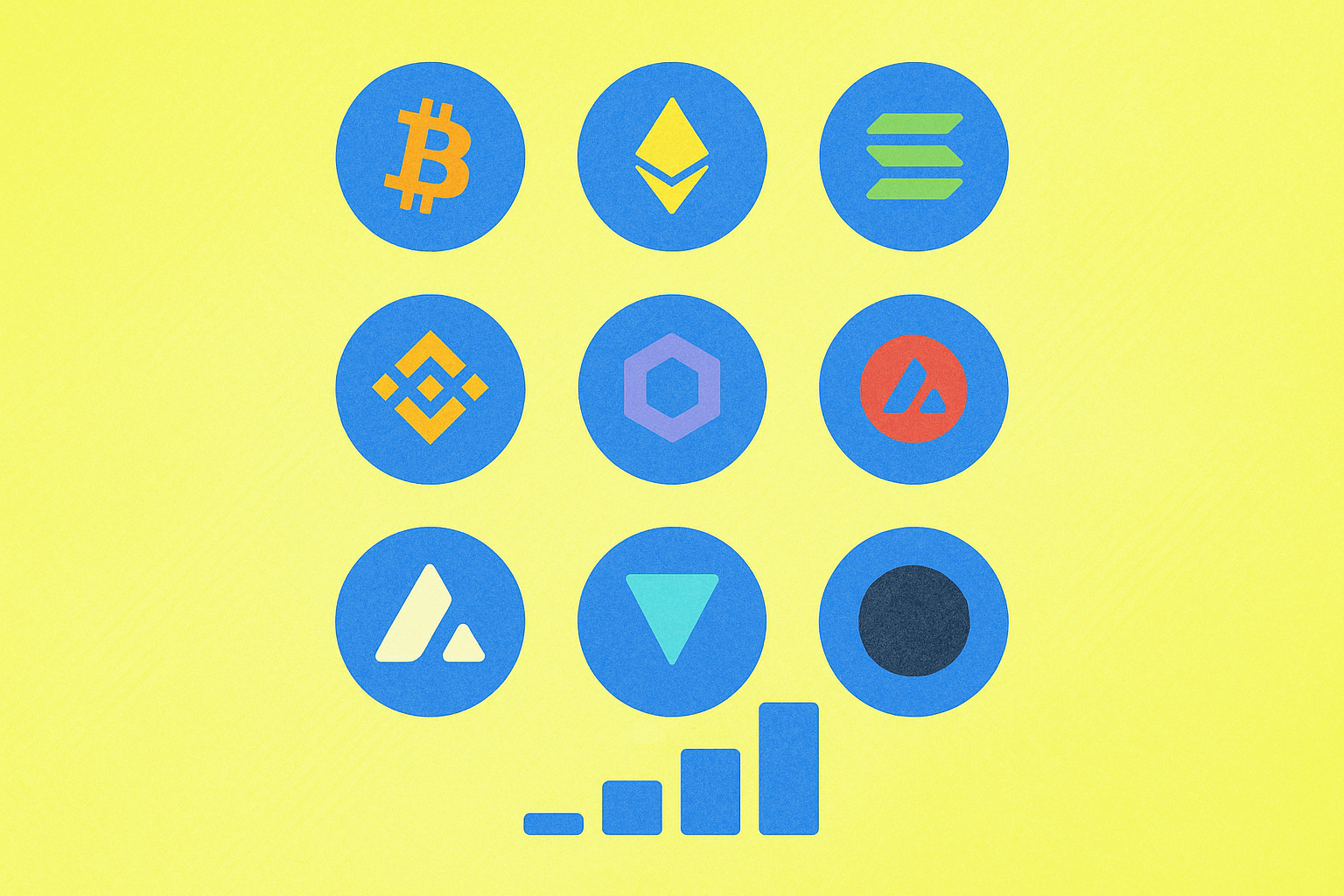
What Does 'Valuable Cryptocurrencies' Mean and How to Identify Them?
A valuable cryptocurrency represents a digital asset that possesses strong fundamental characteristics, a sustainable ecosystem, and significant growth potential over the medium to long term. Understanding which blockchain projects deserve attention requires careful evaluation across multiple critical criteria. This comprehensive assessment helps investors distinguish between genuine opportunities and speculative assets in an increasingly crowded market.
Evaluation Criteria
1. Technology Foundation
The underlying technology of any cryptocurrency is its blockchain infrastructure and functional capabilities. Valuable projects offer unique technological solutions that address real-world problems: exceptional transaction speed, robust scalability, enhanced security protocols, or innovative features such as smart contracts and decentralized applications (dApps). For instance, Ethereum has established itself as the industry standard for DeFi (Decentralized Finance) due to its flexibility and extensive developer ecosystem, while Solana attracts attention with its remarkable transaction processing speed, capable of handling thousands of transactions per second.
2. Liquidity Assessment
High liquidity indicates that a cryptocurrency can be easily bought or sold without causing significant price fluctuations. This is a crucial factor for both retail and institutional investors. Coins with substantial trading volumes on major exchanges are generally more reliable investments, as their prices are less susceptible to market manipulation and can better withstand sudden market movements. Liquidity also ensures that investors can enter or exit positions efficiently.
3. Community Engagement
An active and engaged community serves as the driving force behind any successful blockchain project. A strong community supports ongoing development, attracts talented developers, and increases investor confidence through organic growth and advocacy. Social platforms such as Telegram, Twitter (X), Reddit, and Discord are essential channels for assessing public engagement levels and community sentiment. Projects with vibrant communities often demonstrate better resilience during market downturns.
4. Growth Prospects and Market Trends
The growth potential of a cryptocurrency depends on prevailing market trends, the practical utility of the project, and its ability to adapt to rapidly changing market conditions. Coins associated with emerging sectors such as Artificial Intelligence (AI), GameFi (Gaming Finance), or Layer-2 scaling solutions have higher probability of success in 2025, as these sectors are experiencing active development and increasing adoption across the blockchain ecosystem.
Why Filtering Cryptocurrencies for Reliability Matters
The cryptocurrency market is inherently filled with various risks, ranging from outright scam projects to coins that depreciate due to lack of real-world application or sustainable business models. Implementing a rigorous filtering process helps investors:
- Significantly reduce the risk of losing funds to fraudulent schemes and rug pulls
- Focus investment capital on projects with genuine long-term potential and proven track records
- Avoid emotional decision-making based purely on market hype or fear of missing out (FOMO)
- Build a more resilient portfolio capable of weathering market volatility
By investing in reliable cryptocurrencies with strong fundamentals, investors minimize unnecessary risks while maximizing their chances of achieving substantial returns over time.
Top 10 Promising Cryptocurrencies Based on Market Capitalization and Prospects
We have compiled a comprehensive list of ten cryptocurrencies that successfully combine high market capitalization, proven reliability, and strong growth prospects. These digital assets are suitable for both beginners taking their first steps in crypto investing and experienced investors looking to diversify their portfolios with established projects.
1. Bitcoin (BTC): Digital Gold and Market Leader
Bitcoin continues to serve as the benchmark of the cryptocurrency market, functioning as 'digital gold' and a store of value that has stood the test of time.
2. Ethereum (ETH): The Foundation of DeFi and NFT
Ethereum operates as a comprehensive platform for smart contracts, hosting thousands of decentralized applications that power the DeFi and NFT ecosystems.
3. Solana (SOL): Fast and Scalable Infrastructure
Solana attracts developers with its high-speed transaction processing and low operational costs, positioning itself as a serious competitor to Ethereum.
4. BNB: A Key Component of Major Exchange Ecosystems
BNB serves as the utility token for leading cryptocurrency exchanges and their associated blockchain networks, providing various benefits to users.
5. Chainlink (LINK): Bridge Between Smart Contracts and Real-World Data
Chainlink provides reliable oracle services that deliver real-world data to DeFi protocols and other blockchain applications.
6. Polkadot (DOT): Connecting Multiple Blockchains
Polkadot connects different blockchains into a unified ecosystem, simplifying cross-chain interactions and data sharing.
7. Avalanche (AVAX): High-Performance Multi-Chain Platform
Avalanche offers exceptional performance and comprehensive support for DeFi, NFTs, and enterprise blockchain solutions.
8. Toncoin (TON): Mass Adoption Through Simple Applications
TON, originally developed with backing from major messaging platforms, focuses on achieving mass adoption through user-friendly applications.
9. Arbitrum (ARB): Ethereum Scaling Solution
Arbitrum is a Layer-2 solution designed to scale Ethereum by reducing transaction costs and increasing throughput.
10. Litecoin (LTC): Reliable and Time-Tested Asset
Litecoin remains a dependable and battle-tested cryptocurrency, ideal for fast and cost-effective transactions.
Comprehensive Overview of Each Cryptocurrency on the List
Bitcoin (BTC)
History and Purpose
Created in 2009 by the pseudonymous Satoshi Nakamoto, Bitcoin was designed as a decentralized digital currency that operates without central authority. Today, BTC has evolved beyond its original purpose to become a store of value and a globally recognized financial asset that institutional investors increasingly view as a hedge against inflation.
Key Characteristics
Bitcoin features a limited supply capped at 21 million coins, ensuring scarcity similar to precious metals. It offers high security through its proof-of-work consensus mechanism and enjoys widespread acceptance among merchants, payment processors, and financial institutions worldwide.
Forecast for 2025
Bitcoin is expected to maintain its position as market leader, particularly as institutional adoption continues to accelerate through mechanisms such as spot ETFs and corporate treasury investments. Price appreciation is anticipated in connection with the next bull run, which may be catalyzed by the 2024 halving event and subsequent supply shock.
Ethereum (ETH)
History and Purpose
Launched in 2015 by Vitalik Buterin and a team of co-founders, Ethereum introduced the concept of programmable blockchain through smart contracts. It serves as the foundational platform for DeFi protocols, NFT marketplaces, and decentralized applications across numerous sectors.
Key Characteristics
The transition to Proof-of-Stake (PoS) consensus in 2022 through "The Merge" made the network significantly more energy-efficient while maintaining security. The anticipated Pectra hard fork in 2025 is expected to further improve scalability and user experience through enhanced transaction processing capabilities.
Forecast for 2025
Ethereum is positioned to strengthen its leadership in DeFi and NFT sectors. The continued development of Layer-2 solutions such as Arbitrum and Optimism will enhance its ecosystem by providing faster and cheaper transactions. The price could reach new all-time highs as adoption increases across multiple use cases.
Solana (SOL)
History and Purpose
Founded in 2020, Solana was designed to address blockchain scalability challenges by achieving high transaction speeds of up to 65,000 transactions per second (TPS) while maintaining low transaction costs.
Key Characteristics
Solana utilizes an innovative Proof-of-History (PoH) mechanism combined with Proof-of-Stake, enabling the network to process transactions with remarkable speed and efficiency. It has gained significant popularity in GameFi and NFT sectors due to its performance advantages.
Forecast for 2025
Solana is expected to continue attracting developers, particularly for gaming and DeFi applications. However, competition with Ethereum and emerging Layer-2 solutions remains a significant challenge that the project must navigate.
BNB: A Key Component of Major Exchange Ecosystems
History and Purpose
Created in 2017, BNB was designed as a utility token for major cryptocurrency exchanges. It is used for paying trading fees, participating in staking programs, and accessing various services within leading exchange ecosystems.
Key Characteristics
BNB supports its own blockchain network designed for dApps and DeFi protocols. The token enjoys high liquidity due to the popularity of the exchanges it powers and offers multiple utility functions including fee discounts and governance rights.
Forecast for 2025
BNB is expected to remain among the top cryptocurrencies due to the continued development of major exchange ecosystems and their global influence. Integration with AI and GameFi sectors will further strengthen the ecosystem's value proposition.
Chainlink (LINK)
History and Purpose
Launched in 2017, Chainlink provides decentralized oracle networks that enable smart contracts to securely interact with real-world data, events, and payment systems.
Key Characteristics
Chainlink serves as critical infrastructure for DeFi protocols, providing reliable and tamper-proof data feeds for smart contracts. Its oracle network has become the industry standard for connecting blockchain applications with off-chain information.
Forecast for 2025
Demand for oracle services is expected to increase substantially with the continued growth of DeFi and Web3 applications. LINK could emerge as one of the leaders in price appreciation as more projects integrate Chainlink's technology.
Polkadot (DOT)
History and Purpose
Created by Ethereum co-founder Gavin Wood in 2020, Polkadot was designed to enable different blockchains to transfer messages and value in a trust-free fashion, creating an interconnected web of blockchains.
Key Characteristics
The parachain mechanism allows developers to create specialized blockchains that connect to the main relay chain, benefiting from shared security while maintaining independence. This architecture enables unprecedented interoperability between different blockchain networks.
Forecast for 2025
Polkadot is expected to strengthen its position in Web3 infrastructure and cross-chain communication. The growth in the number of active parachains will increase demand for DOT tokens and drive ecosystem value.
Avalanche (AVAX)
History and Purpose
Launched in 2020, Avalanche is a high-performance platform designed for DeFi applications, NFT marketplaces, and enterprise blockchain solutions with emphasis on speed and low transaction costs.
Key Characteristics
Avalanche supports subnet architecture, allowing organizations to create customized blockchain networks with specific rules and validators. This flexibility makes it attractive for various use cases from DeFi to institutional applications.
Forecast for 2025
Avalanche will continue competing with Ethereum and Solana in the smart contract platform space. Integration with AI technologies and enterprise solutions will strengthen its market position and drive adoption.
Toncoin (TON)
History and Purpose
Originally developed with backing from major messaging platforms, TON is designed for simplicity and mass adoption, focusing on making blockchain technology accessible to mainstream users.
Key Characteristics
Integration with popular messaging applications enables the creation of mini-apps that can reach millions of users instantly, lowering the barrier to entry for blockchain adoption.
Forecast for 2025
TON is expected to experience continued growth through GameFi applications and payment services. Network scaling improvements will make it more competitive in the broader blockchain ecosystem.
Arbitrum (ARB)
History and Purpose
Launched in 2021, Arbitrum is a Layer-2 scaling solution for Ethereum that reduces transaction costs and increases throughput while maintaining compatibility with Ethereum's security model.
Key Characteristics
Full compatibility with Ethereum's existing infrastructure makes Arbitrum popular for DeFi protocols and NFT projects seeking to reduce costs without sacrificing security or decentralization.
Forecast for 2025
Arbitrum will benefit from Ethereum's continued growth and increasing demand for scalable solutions. The ARB token could show significant appreciation as more projects migrate to Layer-2 infrastructure.
Litecoin (LTC)
History and Purpose
Created in 2011 by Charlie Lee as the 'silver' to Bitcoin's 'gold', Litecoin was designed for fast and inexpensive transactions with a focus on payment use cases.
Key Characteristics
Simplicity, reliability, and a long track record make LTC popular for everyday payment transactions. The network has proven its stability over more than a decade of operation.
Forecast for 2025
Litecoin will remain a stable asset particularly attractive to newcomers, though growth may be more moderate compared to newer projects with more advanced features.
Which Cryptocurrencies Should Beginners Buy?
For those just starting their cryptocurrency investment journey, it is crucial to choose reliable and easily understandable assets that provide a solid foundation for learning about the market. Here are our recommendations for building a beginner-friendly portfolio:
Simple and Reliable: BTC, ETH, LTC
Bitcoin (BTC)
Ideal for capital preservation and long-term wealth accumulation. Even small investments in BTC can generate substantial returns over extended periods, making it the cornerstone of any cryptocurrency portfolio.
Ethereum (ETH)
Suitable for investors who believe in the continued development of DeFi and NFT ecosystems. Ethereum serves as the foundation of the crypto ecosystem and offers exposure to numerous innovative applications.
Litecoin (LTC)
A straightforward cryptocurrency for fast transactions with minimal risk profile. Its simplicity and long track record make it an excellent entry point for beginners.
Long-Term Investment Ideas: ADA, MATIC, DOT
Cardano (ADA)
A smart contract platform emphasizing a scientific approach and sustainable development through peer-reviewed research. Cardano appeals to investors seeking projects with strong academic foundations.
Polygon (MATIC)
A Layer-2 scaling solution for Ethereum that has gained significant popularity in DeFi and NFT applications. Polygon offers exposure to Ethereum's growth while addressing scalability challenges.
Polkadot (DOT)
A promising project focused on cross-chain interoperability, enabling different blockchains to communicate and share information seamlessly.
How to Correctly Distribute Your Investments
A well-balanced portfolio allocation strategy for beginners should follow this general guideline:
60% in Reliable Assets (BTC, ETH, LTC)
This forms the stable foundation of your portfolio, providing relative security and steady growth potential.
30% in Mid-Cap Cryptocurrencies (SOL, DOT, ADA)
These assets offer higher growth potential while maintaining reasonable risk levels through established projects and active development.
10% in High-Potential Altcoins
This portion can be allocated to smaller projects with significant upside potential, though this comes with correspondingly higher risk.
Valuable Cryptocurrencies with Low Market Capitalization: Altcoins with 10x Potential
Altcoins with low market capitalization (under $1 billion) can deliver extraordinary returns, potentially multiplying investments by 10 times or more. However, these opportunities come with significantly elevated risks that investors must carefully consider. Here are some promising directions and specific examples worth researching:
Which Lesser-Known Coins Could Break Through?
1. Beam (BEAM)
Built on the Mimblewimble protocol, Beam guarantees privacy and data compactness. The project has gained traction in GameFi applications, offering confidential transactions with efficient blockchain design.
2. Gala (GALA)
The utility token for the Gala Games ecosystem, which focuses on blockchain gaming. Growing demand for GameFi applications could drive significant price appreciation as the gaming sector expands.
3. Sui (SUI)
A new Layer-1 blockchain competing directly with Solana in terms of performance. High throughput and innovative architecture attract developers seeking alternatives to established platforms.
4. Moonbeam (GLMR)
A parachain on the Polkadot network that maintains compatibility with Ethereum, making it suitable for DeFi applications and smart contracts that want to leverage Polkadot's interoperability.
Risks and Opportunities Analysis
Opportunities
Low market cap altcoins can experience exponential growth, sometimes increasing by 10x to 100x through a combination of genuine adoption, market hype, or strategic partnerships. Early investors in successful projects can achieve life-changing returns.
Risks
These investments come with high volatility, low liquidity that can make exits difficult, and increased probability of encountering fraudulent projects. Market manipulation is more common in lower cap assets. Prudent investors should limit exposure to such projects to 10-15% of their total portfolio to manage risk effectively.
Tips for Choosing Valuable Cryptocurrencies
How to Avoid Being Scammed
Verify the Team
Anonymous developers or teams without verifiable track records should be considered red flags. Legitimate projects typically have public-facing teams with professional backgrounds.
Study the Whitepaper
The project's whitepaper should clearly articulate goals, technology, use cases, and tokenomics. Vague or plagiarized whitepapers indicate potential scams.
Analyze Project Activity
Dormant social media accounts or lack of recent updates on GitHub repositories are causes for concern. Active projects demonstrate consistent development and community engagement.
Why DYOR (Do Your Own Research) Is Essential
Conducting independent research helps investors:
- Determine whether a project aligns with personal investment goals and risk tolerance
- Avoid purchasing hype-driven tokens without genuine underlying value
- Discover undervalued assets before they gain mainstream attention
- Make informed decisions based on facts rather than emotions or social pressure
Utilizing CoinMarketCap, CoinGecko, and Social Signals
CoinMarketCap and CoinGecko
These platforms provide essential data including market capitalization, trading volumes, price history, and exchange listings. Regular monitoring helps identify trends and anomalies.
Social Signals
Follow discussions on Twitter (X), Reddit, and Telegram to gauge community sentiment and project momentum. Active communities with constructive discussions often indicate healthy projects, while excessive hype or defensive behavior may signal problems.
Where to Track Valuable Cryptocurrencies
To stay informed about market trends and emerging opportunities, utilize these trusted platforms:
TradingView
Analyze price charts, create technical forecasts, and monitor key indicators such as RSI (Relative Strength Index) and MACD (Moving Average Convergence Divergence).
CoinMarketCap and CoinGecko
Track comprehensive market data, discover newly listed projects, and identify emerging trends across different market segments.
Twitter (X) and Telegram
Follow influential thought leaders, analysts, and official project channels to receive real-time updates and market insights.
How to Monitor Trends, Volumes, and News
Set Price Alerts
Configure notifications for significant price movements to react quickly to market opportunities or protect against losses.
Use News Aggregators
Platforms like CoinSpectator consolidate cryptocurrency news from multiple sources, helping you stay informed about important developments.
Pay Attention to Trading Volumes
Sudden spikes in trading volume can indicate either coordinated pump schemes or genuine interest in a project. Context is crucial for interpretation.
Forecast for 2025: Which Cryptocurrencies Remain 'Worth It'?
The cryptocurrency market in 2025 will be shaped by several key technological and economic trends that will determine which projects succeed:
Major Trends Shaping the Market
1. Artificial Intelligence Integration
Projects incorporating AI technology (such as Fetch.AI, SingularityNET, and others) will attract significant attention as the intersection of blockchain and AI creates new use cases and value propositions.
Arbitrum, Optimism, and Polygon will continue reducing Ethereum transaction costs while strengthening DeFi infrastructure. These solutions will become increasingly critical as blockchain adoption grows.
3. GameFi and Metaverse
Blockchain gaming projects like Axie Infinity, Gala Games, and others will move toward mainstream adoption as gaming experiences improve and economic models mature.
4. Real-World Utility
Cryptocurrencies with practical real-world applications (such as Chainlink for oracle services or VeChain for supply chain management) will benefit from the growth of Web3 and enterprise blockchain adoption.
How to Prepare for the Next Bull Run
Strategic Accumulation
Invest in top-tier cryptocurrencies (BTC, ETH) during market corrections and consolidation periods when prices are more favorable.
Portfolio Diversification
Allocate a portion of your portfolio to promising altcoins with strong fundamentals and growth potential across different sectors.
Monitor Macro-Economic Factors
Pay attention to factors such as Federal Reserve interest rate decisions and increasing institutional investment flows, as these can trigger bull market conditions.
Risk Management
Implement stop-loss orders, take profits at predetermined levels, and never invest more than you can afford to lose.
Conclusion
Investing in cryptocurrency in 2025 remains a promising yet inherently risky endeavor that requires careful research and strategic planning. Valuable cryptocurrencies are those that successfully combine robust technology, active communities, and genuine growth potential backed by real-world utility. Bitcoin and Ethereum continue to dominate as market leaders, providing stability and proven track records, while projects like Solana, Chainlink, Polkadot, and other coins from our top-10 list deserve serious consideration for their innovative approaches and strong fundamentals.
For beginners, starting with established assets (BTC, ETH, LTC) provides a solid foundation while learning about market dynamics and blockchain technology. More experienced investors can explore low market cap altcoins such as Beam or Sui, which offer higher potential returns in exchange for accepting greater risk.
The most critical factor for success is conducting thorough independent research (DYOR), utilizing reliable information platforms, and staying informed about emerging trends and technological developments. The cryptocurrency market is filled with opportunities for those who approach it with knowledge, discipline, and patience. Making informed decisions today, based on solid fundamentals rather than hype or fear, can lead to substantial returns in the future as the blockchain ecosystem continues to mature and gain mainstream adoption.
FAQ
What are the most promising emerging cryptocurrencies in 2025?
Top emerging cryptocurrencies include XRP, Ethereum layer-2 solutions, and decentralized finance (DeFi) projects. These assets show significant potential for substantial appreciation in the coming years.
How to Assess the Investment Value of an Emerging Cryptocurrency?
Evaluate institutional backing from major investors, verify team credentials and project history, analyze token distribution and unlock schedules, assess trading volume and market liquidity, and review the project's technological innovation and real-world utility.
What are the main risks of investing in emerging cryptocurrencies?
Emerging cryptocurrencies face extreme price volatility, frequent scams, and lack of regulatory oversight. Market manipulation, platform failures, and low trading volume create additional hazards. Liquidity risks and potential total loss of investment are significant concerns for investors.
What advantages do emerging cryptocurrencies have compared to Bitcoin and Ethereum?
Emerging cryptocurrencies offer faster transaction speeds, more flexible supply mechanisms, enhanced smart contract capabilities, and lower transaction fees, enabling greater innovation and scalability than Bitcoin and Ethereum.
What are the main development trends in the cryptocurrency market in 2025?
The main trends in 2025 include increased institutional adoption of cryptocurrencies, improved regulatory frameworks, and greater market maturity. Major financial institutions and governments now recognize digital assets as legitimate investments, leading to more stable and sophisticated market conditions.
How should beginners start investing in cryptocurrency?
Begin by setting clear investment goals and understanding your risk tolerance. Research and choose major cryptocurrencies like Bitcoin or Ethereum. Use reputable platforms for trading, diversify your portfolio, and start with small amounts while learning market dynamics continuously.
How much capital do I need to start cryptocurrency investing?
You can start cryptocurrency investing with as little as 5 USD. Most platforms offer low minimum investment requirements, allowing beginners to enter the market with small amounts. The exact minimum varies by platform, but barriers to entry are generally low.
What is an Altcoin? Top 10 Altcoins to Know in 2025 | Beginner's Guide Beyond Bitcoin
Top Cryptocurrencies: Where to Invest in 2025?
Top Cryptocurrencies for Beginners to Invest in

What Cryptocurrencies to Invest In: Strategic Investment Guide
How Does POWER Price Volatility Compare to Other Cryptocurrencies?

Top Cryptocurrency Picks for Winter Investment
Bitcoin Production Cost Rises to $112,084 as Mining Companies Face Profitability Pressure

Are NFTs Worth Anything?

Can Bonk ($BONK) Reach $1? A Comprehensive Analysis for Crypto Investors
When Did Bitcoin Launch and What Was Its Initial Value
Why Is MATIC Going Down?