Stablecoin: A Beginner's Guide to Understanding Digital Currencies with Stability
What is a Stablecoin?
A stablecoin is a type of digital currency designed to maintain a stable value by pegging itself to reserve assets such as fiat currencies (like the US dollar), commodities (such as gold), or other financial instruments. Unlike Bitcoin or Ethereum, which may experience significant price volatility, stablecoins aim to provide the benefits of blockchain technology—such as fast transactions, security, and cross-border transfers—without the inherent price fluctuations associated with other cryptocurrencies.
The stablecoin market has experienced substantial growth, with a total market value exceeding $235 billion in recent times, representing a significant increase from $152 billion in the previous period.
Types of Stablecoins
Fiat-Backed Stablecoins
The most commonly encountered type of stablecoin is the fiat-backed stablecoin, pegged to currencies such as the US dollar. These stablecoins maintain fiat currency reserves at a 1:1 ratio, meaning one unit of stablecoin can be exchanged for one unit of the corresponding fiat currency. The reserve assets are held by independent custodians and regularly audited to ensure transparency.
Examples include Tether (USDT), USD Coin (USDC), a major exchange's USD stablecoin, Pax Dollar (USDP), and PayPal USD (PYUSD).
Commodity-Backed Stablecoins
These stablecoins are backed by tangible assets such as gold, silver, or oil. The value of the stablecoin is tied to the market value of these commodities, and holders typically have the ability to redeem their stablecoins for the underlying physical commodity.
Examples include Tether Gold (XAUt) and Pax Gold (PAXG).
Crypto-Backed Stablecoins
These stablecoins use other digital currencies as collateral. Due to the volatility of cryptocurrencies, these stablecoins are typically over-collateralized, meaning the value of the cryptocurrency held in reserve exceeds the value of the stablecoins issued.
An example is DAI (DAI), which is backed by digital currencies such as Ethereum through the MakerDAO protocol.
Algorithmic Stablecoins
Algorithmic stablecoins do not rely on collateral but instead use mechanisms to control the supply of the digital currency based on demand. When the price rises above the target value, the algorithm increases the supply to bring the price down. Conversely, when the price falls, the supply is reduced.
An example is Frax (FRAX), which combines collateral backing with algorithmic adjustments.
Most Popular Stablecoins
Tether (USDT)
Tether is the largest stablecoin by market capitalization, with a value exceeding $143 billion in recent times. Launched in 2014, USDT is pegged to the US dollar and is available on multiple major blockchains, including Ethereum, Solana, and Tron.
However, Tether has faced scrutiny regarding its reserve practices. In 2021, Tether Limited was fined $41 million by US regulatory authorities for alleged misrepresentations concerning its reserves.
USD Coin (USDC)
USDC is the second-largest stablecoin by market capitalization, with a value exceeding $58 billion. Issued by Circle, USDC emphasizes transparency and regulatory compliance. Its reserves are held in cash and short-term US government securities, with weekly attestations published to verify these reserves.
Circle launched USDC in September 2018 in partnership with a major platform as part of a consortium initiative. Since its launch, USDC has grown to become one of the most trusted and widely used stablecoins in the ecosystem.
Major Exchange USD Stablecoin
This stablecoin is issued by Paxos in partnership with a leading exchange, one of the world's largest cryptocurrency trading platforms. Like USDT and USDC, it is pegged to the US dollar and backed by US dollar reserves and US government securities.
DAI
DAI is a decentralized stablecoin created through the MakerDAO protocol. DAI maintains its peg to the US dollar through a system of smart contracts and over-collateralization with other digital currencies, particularly Ethereum.
PayPal USD (PYUSD)
Launched by PayPal in partnership with Paxos, PYUSD represents the entry of traditional financial institutions into the stablecoin market. Specifically designed for payments, it is backed by reserves managed by Paxos.
Ripple USD (RLUSD)
RLUSD is a recently launched stablecoin from Ripple that has generated significant interest within the digital currency community. Designed for cross-border payments and institutional use, RLUSD is pegged to the US dollar and utilizes Ripple's payment infrastructure to facilitate fast and low-cost international money transfers.
It is important to note that while Ripple has developed XRP, a digital asset, and now RLUSD, a stablecoin, XRP itself is not a stablecoin. XRP is a separate digital asset primarily used for liquidity in cross-border transactions, whereas RLUSD is specifically designed as a stablecoin pegged to the dollar.
Euro Stablecoins
Numerous euro stablecoins have emerged to serve the European market and global users requiring digital assets denominated in euros. Notable examples include:
- EURT (Tether Euro): A euro-pegged stablecoin issued by Tether
- EURC (Circle's Euro Coin): A euro stablecoin from the issuer of USDC
- EURS (Stasis Euro): One of the oldest euro stablecoins
- EUROC (EuroCoin): A regulated euro stablecoin gaining acceptance in the European market
How Stablecoins Maintain Their Value
Reserve Assets
Fiat-backed stablecoins maintain their value through reserve assets. For every stablecoin in circulation, the issuing company must hold an equivalent amount of supporting assets in reserve.
Peg Mechanisms
The most common peg mechanism is a 1:1 ratio with a fiat currency, typically the US dollar. This means one stablecoin unit is generally worth one dollar.
Stability Maintenance
To ensure stablecoins can maintain their peg, issuers employ various methods:
- Minting and Redemption: Users can create new stablecoins by depositing equivalent value in supporting assets, or redeem their stablecoins for the underlying assets.
- Arbitrage Opportunities: If the market price of a stablecoin deviates from its peg, investors can profit by purchasing the stablecoin when it trades below the peg and redeeming it for the supporting asset.
- Over-Collateralization: For crypto-backed stablecoins like DAI, the system requires users to deposit significantly more value in cryptocurrency than the value of stablecoins they receive.
- Algorithmic Supply Adjustment: Algorithmic stablecoins use smart contracts to automatically adjust supply based on demand.
Transparency and Auditing
Many stablecoin issuers publish periodic attestations or "proof of reserves" to verify they maintain sufficient supporting assets.
Benefits of Stablecoins
Price Stability in Volatile Markets
The primary advantage of stablecoins is their price stability compared to volatile cryptocurrencies. During market downturns, cryptocurrency traders can quickly convert their assets into stablecoins to preserve value without completely exiting the cryptocurrency ecosystem.
Cross-Border Transactions and Remittances
Stablecoins enable faster and cheaper international money transfers compared to traditional banking systems. This is particularly significant for remittances, where traditional methods often involve high fees and slow processing times.
Financial Inclusion
In regions with limited access to banking services or unstable local currencies, stablecoins offer individuals a means to participate in the global economy.
DeFi Applications
Stablecoins form the backbone of many decentralized finance (DeFi) protocols. They facilitate lending, borrowing, and yield farming without the price volatility risks associated with other cryptocurrencies.
Bridge Applications
Stablecoin bridges represent an innovative category that facilitates transfers between different blockchains.
Protection Against Inflation
In countries experiencing high inflation or currency controls, stablecoins pegged to more stable currencies, such as the US dollar, provide residents with an option to protect their savings from local currency devaluation.
Risks and Challenges
Regulatory Concerns
Stablecoins continue to attract regulatory attention as they grow in importance. Different jurisdictions are developing regulatory frameworks to address potential risks to financial stability, monetary policy, and consumer protection.
Reserve Transparency Issues
The transparency of reserves supporting stablecoins remains a concern. While some issuers, such as Circle (USDC), publish regular attestations, others have faced criticism for lacking transparency.
De-Pegging Risk
The history of stablecoins includes several instances where coins have lost their peg to underlying assets. The most notable example is the collapse of TerraUSD (UST) in May 2022, which resulted in approximately $45 billion in market value being wiped out in a single week.
Security and Centralization Risks
Most stablecoins are issued by centralized entities, creating counterparty risks and single points of failure.
Uses of Stablecoins
Trading and Investment
Stablecoins serve as critical trading pairs in the digital currency market, enabling traders to move in and out of positions without converting to fiat currency.
Payments and Commerce
The stability of stablecoins makes them suitable for everyday transactions. Unlike Bitcoin or Ethereum, where price volatility could significantly alter transaction values, stablecoins provide predictable pricing.
Remittances and International Transfers
Traditional cross-border payments through banks or money transfer services can be expensive and slow. Stablecoins enable near-instantaneous international transfers at significantly lower costs.
Storing Value in High-Inflation Regions
In countries experiencing high inflation or currency controls, stablecoins offer residents an alternative to preserve purchasing power.
DeFi Applications
Stablecoins form the foundation of the decentralized finance ecosystem, enabling:
- Lending and Borrowing: Platforms facilitating these services
- Liquidity Provision: Stablecoins forming part of many trading pairs
- Yield Farming: Users earning returns from liquidity provision
- Synthetic Assets: Stablecoins serving as collateral
Stablecoin Regulation
Current Regulatory Landscape
Regulation of stablecoins varies significantly by jurisdiction. Key regulatory concerns include:
- Financial stability risks
- Consumer and investor protection
- Anti-money laundering and counter-terrorism financing (AML/CFT)
- Monetary policy impacts
- Disruption to banking systems
Regional Regulatory Approaches
United States
Both the House and Senate in the United States have made progress on stablecoin legislation. Recent years have seen proposed acts aimed at creating frameworks for stablecoin issuers.
Regulatory authorities have issued statements indicating that certain "protected stablecoins" with adequate reserves and redemption rights may not be considered securities.
European Union
The European Union has implemented the Markets in Crypto Assets Regulation (MiCA), which became effective in 2023. MiCA prohibits algorithmic stablecoins and requires other stablecoins to maintain assets deposited with third parties.
Singapore
Singapore's financial authority has outlined a regulatory framework for single-currency stablecoins (SCS) pegged to the Singapore dollar or any G10 currency.
Hong Kong
Hong Kong has developed a regulatory framework for stablecoin issuers and launched a sandbox initiative.
Future Regulatory Trends
The regulatory trajectory for stablecoins appears to be moving toward:
- Bank-like Regulation for stablecoin issuers
- Increased Transparency regarding reserve management and composition
- Consumer Protection Measures including redemption rights and disclosure requirements
- Integration with Existing Financial Systems through licensing and regulatory frameworks
Conclusion
Stablecoins bridge blockchain technology and traditional finance, offering the benefits of blockchain while maintaining price stability. Their market value of $235 billion reflects their growing importance in both digital and traditional financial systems.
Major institutions such as PayPal, Bank of America, and Stripe are entering this space as governments develop regulatory frameworks.
In the future, stablecoins may face increased regulation, greater integration with traditional financial systems, innovation in decentralized options, expanded use cases, and regional variations supporting specific economic needs.
Despite various challenges, including regulatory uncertainty, transparency concerns, and de-pegging risks, stablecoins have become essential in the digital economy. By staying informed about the different types, benefits, risks, and regulations surrounding stablecoins, users can optimize their use of these diverse digital assets while mitigating potential risks.
FAQ
What is Stablecoin (Stablecoin)? What is the difference between it and ordinary cryptocurrencies like Bitcoin and Ethereum?
Stablecoins are cryptocurrencies designed to maintain stable value, typically pegged to fiat currencies or other assets. Unlike Bitcoin and Ethereum, stablecoins experience minimal price volatility, providing price stability and predictability for users and transactions.
How do stablecoins maintain price stability? What are the different stablecoin mechanisms?
Stablecoins maintain stability through three main mechanisms: fiat-backed(reserves held in real currency), crypto-backed(over-collateralized by other cryptocurrencies), and algorithmic(supply controlled by code). Each method adjusts supply or backing to keep price pegged to one dollar.
Why are stablecoins needed? What are their practical uses in cryptocurrency trading?
Stablecoins reduce price volatility and enable seamless trading. They serve as reliable value stores, facilitate cross-border payments, support e-commerce transactions, and provide protection during market downturns by maintaining consistent value.
What are the main stablecoins? What are USDT, USDC, and DAI respectively?
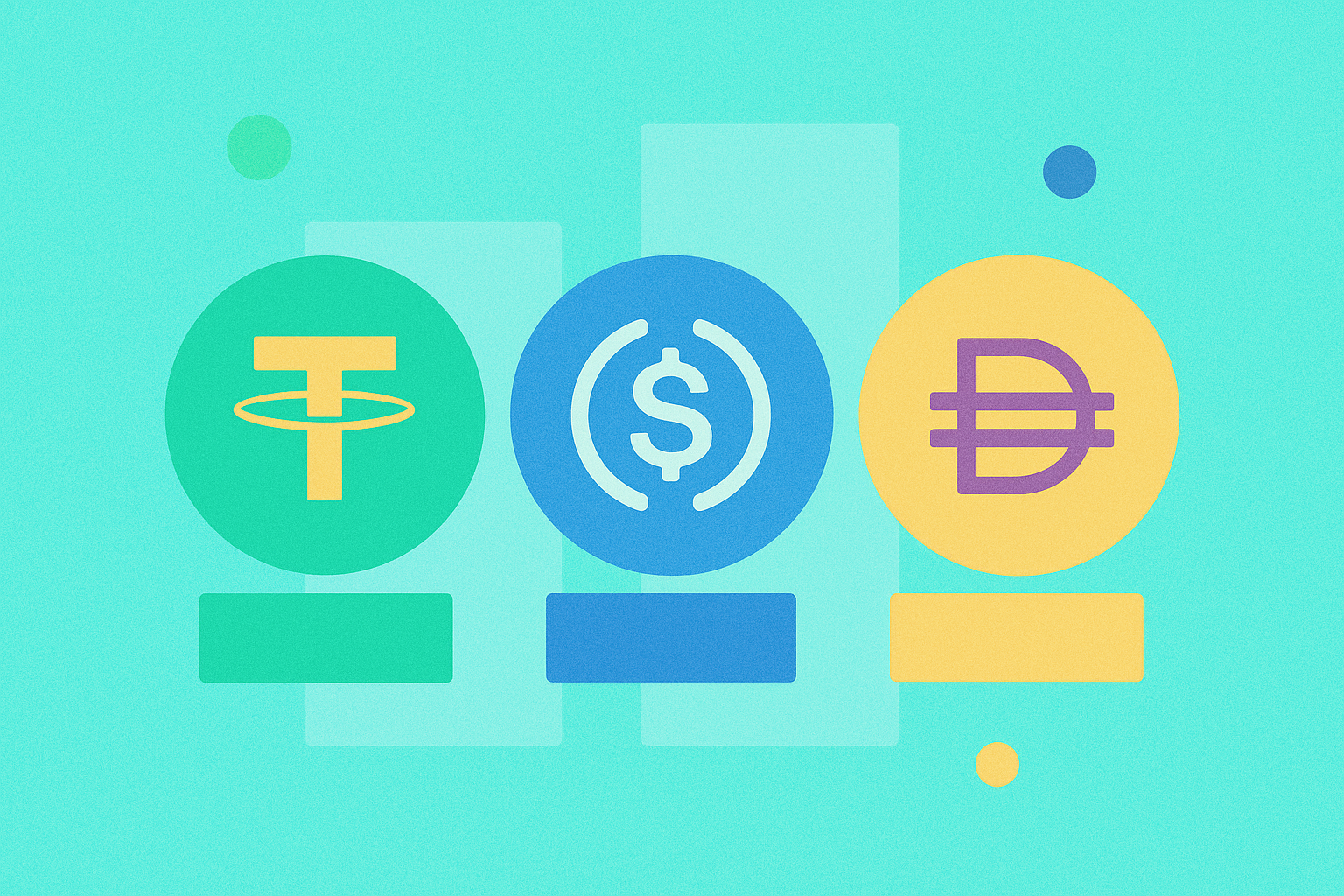
Major stablecoins include USDT, USDC, and DAI. USDT is pegged 1:1 to the US dollar with centralized reserves. USDC, issued by Circle, maintains dollar parity through regulated backing. DAI, managed by MakerDAO, is algorithmically stabilized through over-collateralized crypto assets on Ethereum smart contracts.
What are the risks of holding stablecoins? What should I be concerned about?
Main risks include smart contract vulnerabilities, issuer insolvency, and wallet security threats. Protect your private keys and seed phrases carefully. Depegging events could occur, and regulatory changes may impact stablecoin availability and value.
Are stablecoins regulated by governments? What about their legality?
Stablecoins are increasingly subject to government regulation worldwide. Many jurisdictions, including the United States and European Union, have established or are developing regulatory frameworks. Some stablecoins backed by fiat currencies like the US dollar have received regulatory approval, enhancing their legal legitimacy. However, regulatory status varies by country and specific stablecoin design.
How do I buy, hold, and use stablecoins?
Select a reputable crypto platform and complete account verification. Deposit funds via bank transfer or digital payment methods. Purchase stablecoins by selecting your desired trading pair and amount. Store them securely in your wallet for payments, transfers, or trading purposes.
Stablecoin: A Beginner's Guide to Stable Digital Currencies

Stablecoins: The Fundamentals and Advantages for Crypto Beginners
What Are Stablecoins? An In-Depth Guide to How They Work, How to Choose the Right One, and How Beginners Can Get Started
Stablecoins Explained: A Comprehensive Beginner’s Guide to How They Work, How to Choose the Right One, and How to Get Started

What is Pieverse (PIEVERSE) and How Does it Aim to Revolutionize Blockchain Payments?
Top Cryptocurrency Debit Cards for European Users

Planet IX AoC Badge Mint Giveaway
How to Pay Bills with Cryptocurrency
Metaplanet Stock Price Prediction 2025: What Bitcoin Investors Should Know?

Arbitrum Airdrop Guide: Cross-Chain Bridge Tutorial

Fhenix Airdrop Guide: How to Participate and Claim FHE Rewards