LCP_hide_placeholder
fomox
Search Token/Wallet
/

Understanding Scrypt: A Comprehensive Overview of the Cryptographic Method
2025-12-28 23:23
Altcoins
Blockchain
Crypto Tutorial
Mining
PoW
Article Rating : 4
165 ratings
# Understanding Scrypt: A Comprehensive Overview of the Cryptographic Method Scrypt is a memory-intensive cryptographic algorithm that revolutionized cryptocurrency mining by prioritizing accessibility over specialized hardware dominance. This comprehensive guide explores Scrypt's technical foundations, historical development since 2009, and widespread adoption across major cryptocurrencies like Litecoin and Dogecoin. Designed for investors, traders, and blockchain enthusiasts, this article addresses key concerns about mining decentralization, network security, and sustainable digital asset participation. Discover how Scrypt enables democratic mining ecosystems, influences market dynamics on platforms like Gate, and maintains relevance amid evolving environmental considerations. Whether you're evaluating cryptocurrency investments or understanding proof-of-work alternatives to SHA-256, this overview provides essential insights for informed decision-making in the digital financial landscape.
Understanding Scrypt: A Comprehensive Overview of the Cryptographic Method

Scrypt

Scrypt is a cryptographic algorithm that has become widely adopted as a proof-of-work scheme across various cryptocurrencies. Originally developed for Tarsnap, an online backup service, Scrypt was engineered with a distinct purpose: to be more memory-intensive than processing-intensive, thereby limiting the efficiency of large-scale hardware attacks and promoting a more distributed mining ecosystem.

Historical Context and Technological Significance

Scrypt was created by Colin Percival in 2009, marking a significant milestone in cryptographic algorithm development. The primary motivation behind its creation was to address a critical vulnerability in existing proof-of-work systems: the susceptibility to specialized hardware attacks. Unlike SHA-256, the algorithm employed by Bitcoin, which primarily demands processing power and has consequently spawned entire industries dedicated to manufacturing specialized mining hardware (ASICs), Scrypt's memory-hard requirements present a fundamentally different challenge.

This architectural difference proved to be transformative for the cryptocurrency ecosystem. By prioritizing memory consumption over raw computational speed, Scrypt made it substantially more difficult and economically unfeasible to develop custom hardware optimized solely for mining. The introduction of Scrypt represented a philosophical shift in cryptocurrency design, emphasizing accessibility and decentralization through technological choices rather than relying on widespread adoption to mitigate centralization risks.

Use Cases of Scrypt

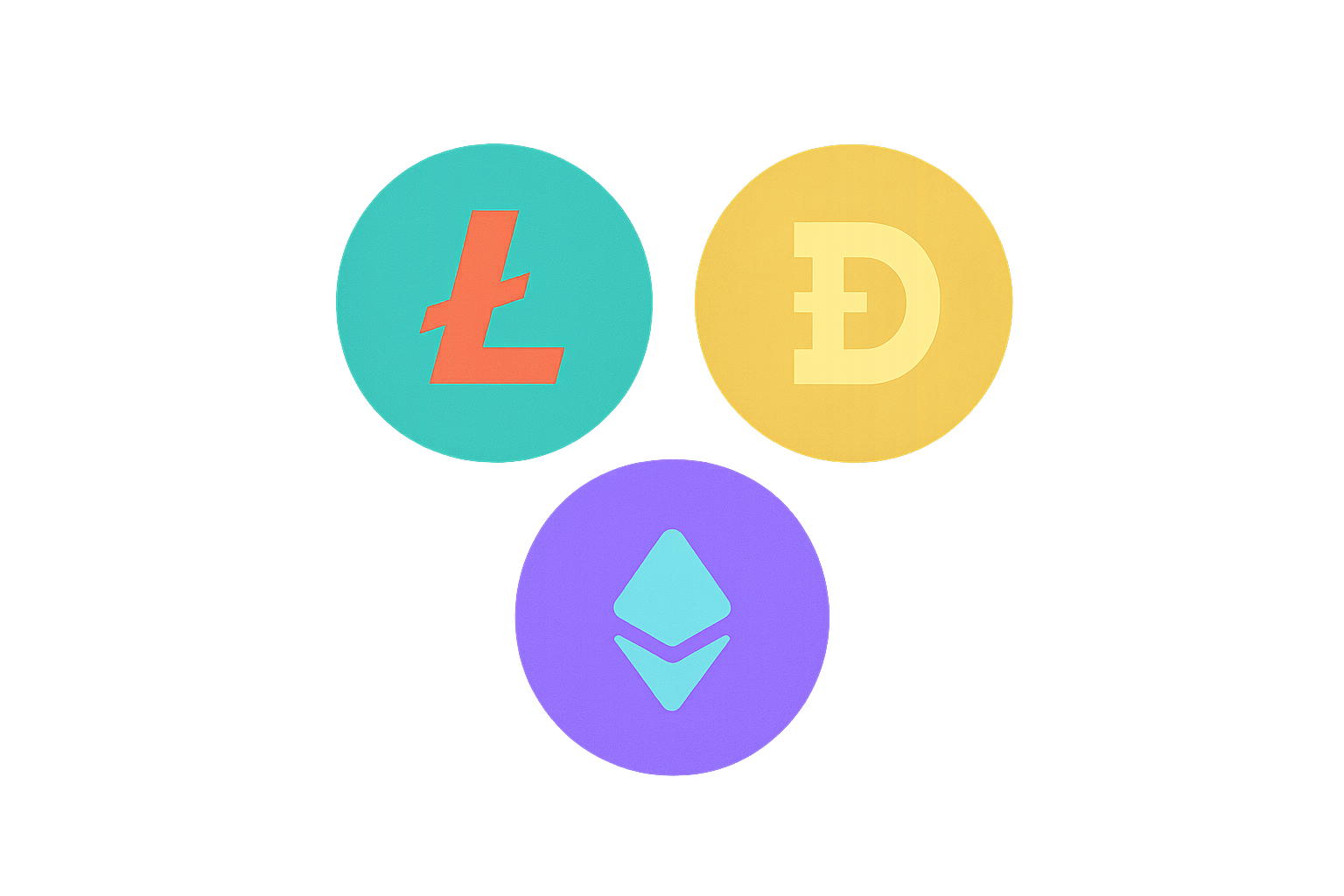
The adoption of Scrypt gained significant prominence through Litecoin, which launched in 2011 as a strategic alternative to Bitcoin. Litecoin's developers deliberately selected Scrypt to enable mining with consumer-grade hardware, including CPUs and GPUs, creating a stark contrast to Bitcoin's ASIC-dependent mining landscape. This choice democratized mining participation, allowing individual users with standard computers to participate meaningfully in network security and reward distribution.

Beyond Litecoin, Scrypt has been embraced by numerous other cryptocurrencies seeking similar benefits. Dogecoin, initially created as a humorous meme-based project, gained substantial traction partly due to its adoption of Scrypt and its accompanying user-friendly ethos. Other notable Scrypt-based cryptocurrencies include Verge, Bitmark, and PotCoin, each leveraging the algorithm to foster more equitable and accessible mining environments. This widespread adoption demonstrates the algorithm's effectiveness in achieving its core objective of reducing barriers to entry for miners.

Market Impact and Investment Landscape

The introduction and proliferation of Scrypt have profoundly influenced cryptocurrency market dynamics and investment perspectives. By substantially lowering entry barriers for miners, Scrypt-based cryptocurrencies have garnered perceptions of being more democratic and decentralized compared to Bitcoin. This characteristic appeals particularly to investors concerned about the concentration of mining power in large-scale operations and the associated risks to network security and governance.

The use of Scrypt carries important implications for network security architecture, mining reward distribution mechanisms, and overall market stability. The broader distribution of mining participants enabled by memory-hard algorithms can enhance network resilience by reducing the likelihood of coordinated attacks or monopolistic control. Furthermore, this decentralization aspect influences investor confidence and the long-term viability of Scrypt-based projects within the competitive cryptocurrency landscape.

As the cryptocurrency industry continues to evolve, Scrypt maintains its relevance through several emerging considerations. Growing environmental concerns regarding cryptocurrency mining, particularly the substantial energy consumption associated with SHA-256-based systems like Bitcoin, have renewed interest in more energy-efficient alternatives. Scrypt's relatively lower energy requirements position it as a potentially more sustainable mining approach, aligning with broader environmental consciousness in technology adoption.

However, Scrypt faces ongoing technological challenges. Continuous advancements in ASIC technology may eventually compromise Scrypt's resistance to specialized hardware development, potentially necessitating algorithm adaptations or improvements. The cryptocurrency community remains vigilant in monitoring these technological trajectories and prepared to innovate further if required.

Contemporary cryptocurrency platforms and trading environments actively support Scrypt-based cryptocurrencies. These platforms provide robust trading infrastructure, liquidity, and accessibility for coins utilizing Scrypt, enabling investors and traders to diversify their portfolios beyond mainstream cryptocurrencies and participate in a broader ecosystem of digital assets.

Conclusion

Scrypt represents a fundamental advancement in cryptocurrency technology, successfully addressing critical limitations of earlier proof-of-work algorithms through its memory-intensive design. Its adoption across diverse cryptocurrencies and its sustained impact on market dynamics, network security, and mining accessibility underscore its enduring significance in the digital asset ecosystem. For investors and stakeholders, understanding Scrypt's technical foundations and market implications provides essential context for informed decision-making regarding cryptocurrency investments, portfolio construction, and long-term strategic planning in an increasingly sophisticated and competitive digital financial environment.

FAQ

What is scrypt used for?

Scrypt is a memory-hard cryptographic hash function primarily used for password hashing and key derivation. It's designed to resist brute-force attacks by requiring significant computational resources and memory, making it ideal for securing sensitive data and cryptocurrency mining.

What is the meaning of scrypt?

Scrypt is a cryptographic hash function and key derivation algorithm designed for password-based encryption. It uses memory-hard computation to resist brute-force attacks, making it more secure than simpler hashing methods like SHA-256 for protecting sensitive data.

Is scrypt a word?

Scrypt is both a word and a cryptographic algorithm. It refers to a key derivation function designed for password hashing, known for its memory-hard properties that enhance security against brute-force attacks in blockchain and cryptocurrency applications.

Is scrypt stronger than SHA256?

Scrypt and SHA256 serve different purposes. SHA256 is faster for hashing, while scrypt is intentionally slower and memory-intensive, making it more resistant to brute-force attacks. Scrypt is generally considered stronger for password protection and proof-of-work applications.

How does scrypt protect against brute force attacks?

Scrypt uses memory-hard hashing with high computational and memory requirements, making brute force attacks extremely costly and time-consuming. Its tunable parameters increase difficulty exponentially, requiring massive resources to crack passwords or keys.

What are the practical applications of scrypt in blockchain and password storage?

Scrypt is a key derivation function used to secure passwords and cryptocurrency wallets through memory-intensive hashing, making brute-force attacks computationally expensive. In blockchain, scrypt powers proof-of-work consensus mechanisms, enabling secure and decentralized network validation while resisting ASIC mining dominance.

* The information is not intended to be and does not constitute financial advice or any other recommendation of any sort offered or endorsed by Gate.

Share

Content

Historical Context and Technological Significance

Use Cases of Scrypt

Market Impact and Investment Landscape

Conclusion

FAQ

Related Articles
Top Decentralized Exchange Aggregators for Optimal Trading

Top Decentralized Exchange Aggregators for Optimal Trading

Exploring top DEX aggregators in 2025, this article highlights their role in enhancing crypto trading efficiency. It addresses challenges faced by traders, such as finding optimal prices and reducing slippage, while ensuring security and ease of use. A practical overview of 11 leading platforms is provided, with guidance on selecting the right aggregator based on trading needs and security features. Designed for crypto traders seeking efficient and secure trading solutions, the article emphasizes the evolving benefits of using DEX aggregators in the DeFi landscape.
2025-12-24
A Comprehensive Guide to Tokenizing Real-World Assets

A Comprehensive Guide to Tokenizing Real-World Assets

A comprehensive guide to real-world asset tokenization, bridging traditional and digital finance with blockchain technology. Discover the benefits, practical use cases, and future prospects of RWAs, empowering you to invest confidently and engage in the asset tokenization market. Tailored for cryptocurrency enthusiasts and fintech professionals.
2025-12-21
Choosing Your Ideal Digital Wallet in 2025: A Starter's Guide

Choosing Your Ideal Digital Wallet in 2025: A Starter's Guide

Explore the evolving landscape of crypto wallets in 2025 with this comprehensive starter's guide. Understand the fundamental functionalities and types—hot and cold wallets—and learn to choose the best one based on user needs like trading, NFT collecting, and long-term holding. Discover key considerations in wallet selection, such as security features, multi-chain compatibility, and practical use for everyday transactions. Gain insights on setup processes and advanced wallet capabilities to optimize your digital asset management. This guide equips both beginners and seasoned users with the knowledge to make informed decisions suitable to their crypto engagement level.
2025-12-21
Exploring the Evolution and Future of Blockchain-Powered Gaming

Exploring the Evolution and Future of Blockchain-Powered Gaming

Explore the evolution and potential of blockchain-powered gaming, where distributed ledger technology meets interactive entertainment. This article demystifies crypto gaming by examining how it works, detailing investment strategies, and discussing associated risks. With a deeper understanding of mechanics like NFTs and play-to-earn models, readers can identify promising opportunities and anticipate future trends like decentralized governance and interoperable ecosystems. Perfect for gamers, developers, and investors, the content addresses key issues such as scalability and security. As blockchain gaming evolves, staying informed is essential for navigating this dynamic digital revolution.
2025-11-22
What is Avalanche (AVAX): A Complete Fundamentals Analysis of Whitepaper Logic, Use Cases, and Technical Innovation

What is Avalanche (AVAX): A Complete Fundamentals Analysis of Whitepaper Logic, Use Cases, and Technical Innovation

This article offers an in-depth analysis of Avalanche (AVAX) covering its three-chain architecture innovation, token utility, ecosystem expansion, and competitive positioning. It explores how Avalanche enables high transaction throughput, efficient governance, and diverse use cases in DeFi, RWA, and gaming sectors. Targeted at developers and blockchain enthusiasts, the article details the strategic roadmap and contrasts Avalanche's performance against rivals like Solana and Ethereum. Key themes include AVAX's versatile design and institutional adoption, providing essential insights for understanding this emerging blockchain platform.
2025-12-21
What is tokenomics and how does token distribution allocation work in crypto projects?

What is tokenomics and how does token distribution allocation work in crypto projects?

The article explores tokenomics in crypto projects, focusing on token distribution, supply control, deflationary mechanisms, and governance structure. It highlights the impact of well-architected allocation ratios on sustainability and market stability. Readers interested in how token design can influence project success and investor trust will find this analysis valuable. The piece uses the TRUMP token model to demonstrate effective token management through locked reserves, liquidity control, and burn protocols. It also addresses the balance between decentralization and centralized governance rights within crypto ecosystems, emphasizing transparent decision-making.
2025-12-20
Recommended for You
What is BULLA coin: analyzing whitepaper logic, use cases, and team fundamentals in 2026

What is BULLA coin: analyzing whitepaper logic, use cases, and team fundamentals in 2026

BULLA coin introduces decentralized accounting and on-chain data management innovation built on BNB Smart Chain, eliminating intermediaries while ensuring real-time transaction verification. The platform addresses critical gaps in cryptocurrency infrastructure by embedding accounting logic directly into smart contracts, enabling transparent audit trails and regulatory compliance. Real-world applications include seamless transaction imports across multiple exchanges, comprehensive crypto portfolio tracking, and secure record-keeping for investors. Trade import tools enhance user experience by automating data categorization and consolidation. Founded in 2021 by blockchain architect Benjamin with support from experienced fintech designers and engineers, BULLA Networks demonstrates active development momentum with continuous smart contract iterations through early 2026. The 2026-2027 strategic roadmap prioritizes network infrastructure expansion and enhanced security protocols, positioning BULLA as a robust decen
2026-02-08
How does MYX token's deflationary tokenomics model work with 100% burn mechanism and 61.57% community allocation?

How does MYX token's deflationary tokenomics model work with 100% burn mechanism and 61.57% community allocation?

This article examines MYX token's innovative deflationary tokenomics, featuring a distinctive 61.57% community allocation and 100% burn mechanism. The community-focused distribution empowers token holders through MYX DAO governance while ensuring value flows back to ecosystem participants. The 100% burn mechanism systematically removes node-generated revenue from circulation, reducing the total supply from one billion tokens and creating genuine scarcity. This supply-driven deflation counters inflation pressures and strengthens long-term holder value without requiring external demand. The combination of broad community distribution and aggressive token elimination creates sustainable deflationary economics. Ideal for investors seeking to understand how MYX Finance aligns community interests with protocol success through structural value preservation and decentralized governance mechanisms on Gate exchange.
2026-02-08
What Are Derivatives Market Signals and How Do Futures Open Interest, Funding Rates, and Liquidation Data Impact Crypto Trading in 2026?

What Are Derivatives Market Signals and How Do Futures Open Interest, Funding Rates, and Liquidation Data Impact Crypto Trading in 2026?

This comprehensive guide decodes cryptocurrency derivatives market signals essential for 2026 trading success. Learn how futures open interest, funding rates, and liquidation data—such as ENA's $17 billion contract volume and $94 million daily position closures—reveal market sentiment and institutional positioning. The article explains how long-short ratios and liquidation heatmaps identify reversal opportunities, while options imbalance signals indicate smart money accumulation strategies. Discover why exchange outflows and funding rate extremes precede major price movements. From analyzing $46.45M ENA outflows to understanding leverage risks, this resource equips traders with actionable intelligence for predicting market turning points. Perfect for beginners and experienced traders leveraging Gate's analytics tools to navigate increasingly complex derivatives markets with informed entry and exit strategies.
2026-02-08
How do futures open interest, funding rates, and liquidation data predict crypto derivatives market signals in 2026?

How do futures open interest, funding rates, and liquidation data predict crypto derivatives market signals in 2026?

This article explores how three critical derivatives metrics—open interest exceeding $20 billion, funding rates shifting positive, and liquidation volume declining 30%—predict crypto derivatives market signals in 2026. The guide reveals institutional participation driving market maturation while positive funding rates signal strengthened bullish momentum. Long-short ratio stabilization at 1.2 with put-call ratio below 0.8 demonstrates sophisticated hedging strategies on Gate and other platforms. Reduced liquidation volumes indicate improved risk management and market resilience. By analyzing how these indicators combine—measuring position sizing, sentiment extremes, and forced selling pressure—traders gain precise tools for identifying trend reversals, leverage exhaustion, and market turning points with 55-65% AI-driven accuracy for 2026.
2026-02-08
What is a token economics model and how does GALA use inflation mechanics and burn mechanisms

What is a token economics model and how does GALA use inflation mechanics and burn mechanisms

This article explores GALA's innovative token economics model, examining how inflation mechanics and burn mechanisms create sustainable ecosystem growth. The guide covers GALA token distribution through 50,000 Founder's Nodes requiring 1 million GALA for 100% daily rewards, establishing long-term community participation. A dual-mechanism approach pairs controlled inflation with strategic annual supply reduction to establish deflationary pressure. The burn mechanism, powered by 100% transaction fee burning on GalaChain combined with NFT royalty enforcement averaging 6.1%, creates continuous supply reduction while incentivizing creator participation. Governance utility empowers node holders to vote on game launches through consensus mechanisms, transforming GALA holders into active stakeholders. Perfect for investors and ecosystem participants seeking to understand how GALA balances token scarcity with ecosystem vitality through integrated economic incentives and community governance on Gate.
2026-02-08
What is on-chain data analysis and how does it reveal whale movements and active addresses in crypto?

What is on-chain data analysis and how does it reveal whale movements and active addresses in crypto?

On-chain data analysis reveals cryptocurrency market dynamics by examining active addresses and transaction metrics that expose whale movements and investor behavior. This comprehensive guide explores how blockchain data serves as a critical market indicator, demonstrating the correlation between large holder activities and price movements—such as FLOKI's 950% surge in whale transactions. The article covers whale movement tracking, holder distribution patterns showing 73.47% concentration among major stakeholders, and on-chain fee trends as cycle indicators. Essential metrics include active addresses reflecting genuine network participation, transaction volumes revealing strategic positioning, and network congestion patterns during market cycles. By tracking these interconnected indicators through platforms like Glassnode and Gate, investors and traders can identify market sentiment shifts, anticipate price movements, and distinguish institutional activity from retail participation, making on-chain analysis i
2026-02-08