When Will XRP Hit 100?

The Current Market Overview
To analyze XRP's journey towards the $100 milestone, it's essential to examine its recent standing in the cryptocurrency market and understand the various forces shaping its price movements. In recent market conditions, XRP maintains a position significantly below the $100 target, with its valuation influenced by a complex interplay of market dynamics, regulatory developments, and ecosystem evolution.
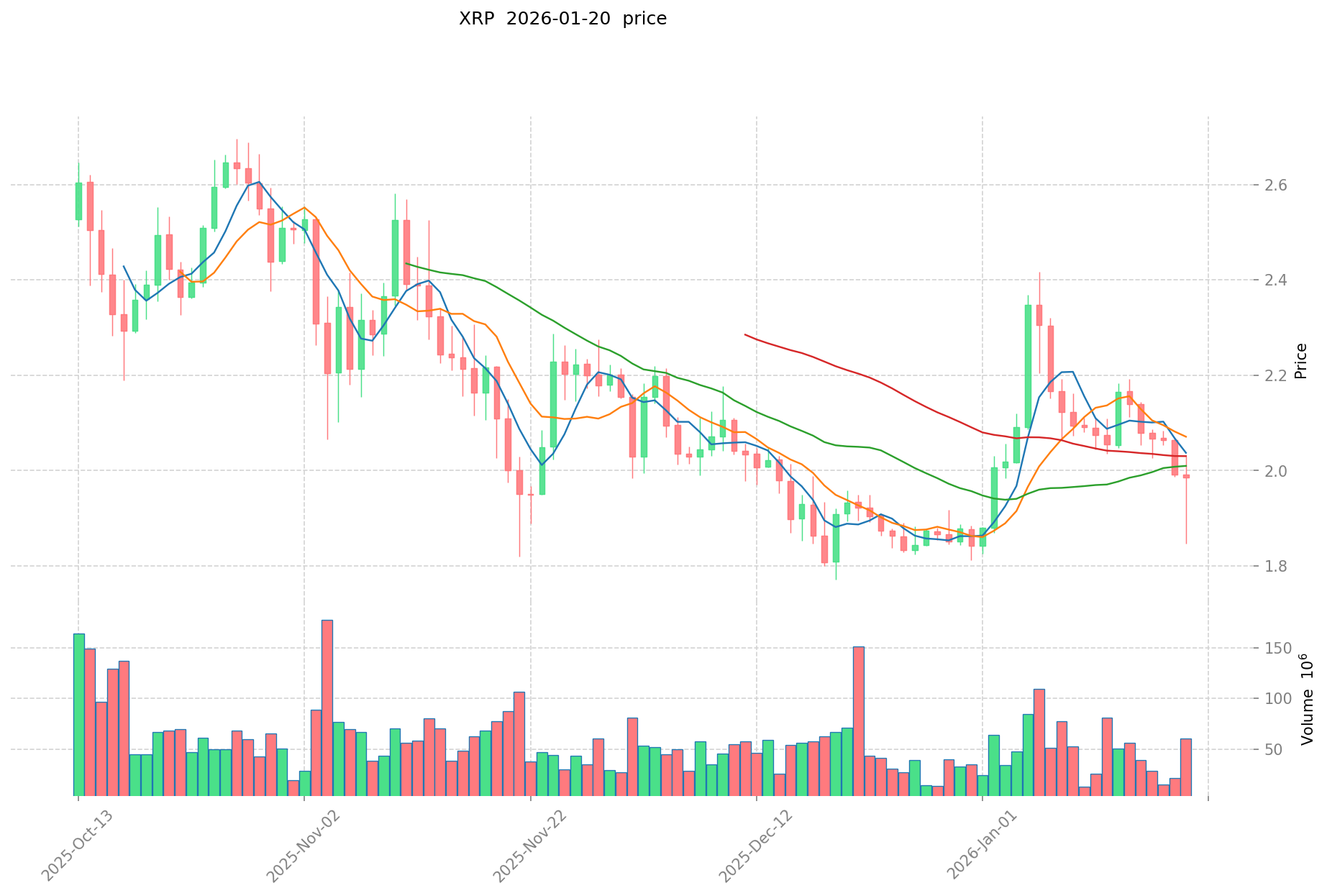
The digital asset associated with Ripple has experienced notable fluctuations driven by multiple factors. Market sentiment remains closely tied to Ripple's ongoing legal proceedings with the U.S. Securities and Exchange Commission (SEC), a case that has become a defining factor in XRP's market perception and value trajectory. This regulatory uncertainty has created both challenges and opportunities for traders and investors who are actively monitoring developments that could impact XRP's future price action.
Beyond regulatory matters, XRP's market performance is also influenced by broader cryptocurrency market trends, institutional adoption patterns, and the ongoing development of Ripple's payment solutions. The token's utility in cross-border transactions and its integration with financial institutions continue to play crucial roles in determining its market value and growth potential.
Deciphering Financial Analysis and Predictions
Financial analysts and cryptocurrency experts present a wide spectrum of predictions concerning XRP's potential to reach the $100 price point, reflecting the inherent uncertainty and complexity of cryptocurrency valuation.
Optimistic Projections
Bullish analysts base their optimistic forecasts on several key assumptions. They emphasize that a favorable resolution of regulatory challenges could unlock significant value for XRP, as it would remove a major source of uncertainty that has historically suppressed the token's price. These experts point to Ripple's strong technological foundation and its established relationships with financial institutions as indicators of long-term growth potential.
Furthermore, optimistic predictions highlight the possibility of increased adoption of Ripple's technology in the global payments industry. As more banks and financial service providers integrate RippleNet for cross-border transactions, demand for XRP could surge substantially. Strategic partnerships, technological upgrades to the XRP Ledger, and the broader acceptance of cryptocurrencies as legitimate institutional investments are all cited as potential catalysts that could drive XRP toward the $100 mark.
Conservative Perspectives
Conversely, more cautious analysts advocate for a measured approach when evaluating XRP's price potential. These experts stress the inherently volatile nature of cryptocurrency markets and the specific legal and operational challenges that Ripple continues to face. They emphasize that regulatory outcomes remain uncertain and that unfavorable decisions could significantly impact XRP's value trajectory.
Conservative voices also point to the competitive landscape of blockchain solutions and the emergence of alternative payment technologies that could limit XRP's market share. These analysts advise potential investors to carefully consider global cryptocurrency regulations, market cycles, and the broader economic environment before making investment decisions based on ambitious price targets.
Historical Insights and Lessons
Examining XRP's historical price movements provides valuable context for understanding its potential future performance and the factors that have driven its value over time.
In its earlier years, XRP demonstrated remarkable price volatility, with notable surges often coinciding with broader cryptocurrency market rallies. These price increases were frequently driven by speculative trading activity and major announcements from Ripple regarding strategic partnerships with banks and financial institutions. During peak periods of market enthusiasm, XRP reached significant price levels that captured widespread attention from both retail and institutional investors.
However, historical analysis also reveals important lessons about the corrections that typically follow major price increases. XRP has experienced several significant drawdowns, reminding investors that cryptocurrency markets are characterized by cycles of expansion and contraction. These historical patterns demonstrate that while technological advancements and improved market sentiment can contribute to substantial price appreciation, the path is rarely linear and often includes periods of significant volatility.
The token's price history also reflects the impact of external factors such as regulatory announcements, market-wide sentiment shifts, and changes in the broader financial landscape. Understanding these historical dynamics is crucial for investors attempting to assess the realistic probability and timeline for XRP reaching ambitious price targets like $100.
Catalysts and Roadblocks Toward $100
Potential Catalysts
Several factors could serve as powerful catalysts propelling XRP toward the $100 price point:
-
Regulatory Clarity: A positive resolution of ongoing legal issues, particularly the SEC case, could fundamentally transform investor confidence in XRP. Clear regulatory guidelines that classify XRP favorably would likely attract institutional investment and remove a significant barrier to adoption. This regulatory certainty could trigger substantial capital inflows and drive sustained price appreciation.
-
Widespread Adoption: Increased integration of Ripple's payment solutions by banks and financial service providers represents a major potential catalyst. As more institutions utilize XRP for cross-border transactions and liquidity management, the token's utility and demand would increase significantly. Expanded use cases in the global payments industry could create sustained buying pressure that supports higher valuations.
-
Innovations and Upgrades: Technological advancements in Ripple's network infrastructure could enhance XRP's value proposition. Improvements in scalability, transaction speed, and energy efficiency, along with new use cases for the XRP Ledger such as decentralized finance applications or tokenization platforms, could attract new users and investors. These innovations would strengthen XRP's competitive position in the blockchain ecosystem.
Possible Roadblocks
Several significant challenges could impede XRP's journey to $100:
-
Regulatory Challenges: Ongoing or future regulatory scrutiny from authorities in various jurisdictions could deter potential investors and institutional partners. Unfavorable regulatory decisions or new restrictive policies could limit XRP's adoption and suppress its price growth. The evolving regulatory landscape for cryptocurrencies remains a persistent source of uncertainty.
-
Market Competition: The emergence of competitive blockchain solutions and alternative payment technologies could limit XRP's market appeal and adoption rate. Other projects offering similar or superior functionality could capture market share that might otherwise flow to XRP. The rapidly evolving nature of blockchain technology means that maintaining a competitive advantage requires continuous innovation.
-
Macro-Economic Factors: Changes in global financial markets, economic recession scenarios, or shifts in investor risk appetite could negatively influence cryptocurrency investments broadly. During periods of economic uncertainty, investors typically reduce exposure to volatile assets like cryptocurrencies, which could limit XRP's price appreciation potential regardless of its fundamental developments.
Final Thought on XRP's Journey to $100
Anticipating when or if XRP will reach the $100 price point requires careful consideration of the complex interplay between market dynamics, legal outcomes, and technological developments. The cryptocurrency landscape is inherently uncertain, and price predictions must be understood as educated assessments based on available information rather than definitive forecasts.
The path to $100 represents a substantial increase from recent price levels, requiring a combination of favorable regulatory outcomes, widespread adoption, technological innovation, and supportive market conditions. While the prospect of XRP reaching this ambitious milestone captures the imagination of investors and enthusiasts, the reality is that numerous variables will determine the ultimate trajectory of this digital asset.
Investors considering XRP should conduct thorough research, carefully evaluate both the potential catalysts and roadblocks discussed in this analysis, and maintain realistic expectations about the timeline and probability of reaching specific price targets. Staying informed about regulatory developments, adoption trends, and technological advancements in the Ripple ecosystem will be crucial for making well-informed investment decisions. As with all cryptocurrency investments, exercising caution and implementing appropriate risk management strategies remains essential in navigating this dynamic and evolving market.
FAQ
What is XRP? What are its core use cases and value propositions?
XRP is Ripple's native digital asset designed for fast, low-cost international payments. Core use case: enabling real-time cross-border settlements for financial institutions. Value proposition: sub-second transaction speed, minimal fees, and liquidity provision for global remittances and institutional transfers.
Based on historical price data and market analysis, how long will it take for XRP to reach $100?
Based on current market dynamics and adoption trends, XRP could potentially reach $100 within 3-5 years, contingent on increased institutional adoption, regulatory clarity, and favorable market conditions driving significant volume growth.
What are the main factors affecting XRP price? (Regulation, technical progress, market sentiment, etc.)
XRP price is influenced by regulatory developments, Ripple's technology upgrades, Bitcoin market trends, institutional adoption, trading volume, and overall crypto market sentiment. These factors collectively drive price movements and long-term valuation.
What are the advantages and disadvantages of XRP compared to mainstream cryptocurrencies like BTC and ETH?
XRP offers faster transaction speeds and lower costs than BTC and ETH, with settlement in seconds. However, BTC dominates as digital gold with broader adoption, while ETH leads in smart contract functionality. XRP's centralized nature differs from BTC's decentralization, limiting developer ecosystem compared to ETH.
What are the main risks and opportunities of investing in XRP?
Risks include regulatory uncertainty and market volatility. Opportunities lie in XRP's potential adoption in cross-border payments, institutional partnerships, and blockchain integration. The token could reach significant valuations as use cases expand and liquidity improves.
Ripple公司的最新进展和合作伙伴关系如何?
Ripple继续扩展全球支付网络,与多家金融机构建立战略合作。公司专注于区块链技术创新,推进跨境支付解决方案。通过与央行和金融机构合作,Ripple生态不断完善,XRP应用场景持续拓展。

What Factors Are Driving Cryptocurrency Price Volatility in 2025?

How Does Macroeconomic Factors Influence Crypto Prices in 2025?
How Does Crypto Market Share Evolve: A Comparative Analysis of Competitors?
What is XRP vs SWIFT: How does Ripple's cross-border payment solution compare to legacy financial systems?
How Will XRP's Market Cap Evolve by 2030 Compared to Other Top Cryptocurrencies?

How Much Is XRP Worth in 2025 and What's Driving Its Price Volatility?

Anatomy of a Telegram Scam

What Do Hollow Candles Mean in Crypto?

ARI Wallet Daily Quiz Answer Guide

Asynchronous

Is Trading XAU/USD Halal or Haram?