Solana vs Emerging Layer-1 Blockchains: A Deep Dive into the Competitive Landscape

Introduction: Solana's Position in the Blockchain Ecosystem
Solana has established itself as a leading high-performance blockchain platform, renowned for its exceptional speed, scalability, and remarkably low transaction costs. These characteristics have positioned Solana as a compelling alternative in the competitive landscape of smart contract platforms. However, the blockchain industry is evolving at an unprecedented pace, with innovative competitors continuously emerging to challenge Solana's market position.
The competitive landscape now includes a diverse array of blockchain solutions, ranging from established Ethereum alternatives to cutting-edge Layer-1 blockchains such as Sui, Aptos, Avalanche, and Base. Each of these platforms brings unique technological innovations and ecosystem strategies that intensify the competition for developer mindshare and user adoption. This article provides a comprehensive analysis of Solana's primary competitors, examining their technical capabilities, ecosystem development trajectories, and the innovations that are fundamentally shaping the future of blockchain technology and decentralized applications.
Solana vs Ethereum: Speed, Scalability, and Cost Efficiency
Ethereum, widely recognized as the pioneer of smart contract functionality, represents the most significant point of comparison for Solana due to its extensive adoption and robust developer ecosystem. While Ethereum continues to dominate in terms of network effects, total value locked, and developer activity, Solana has carved out a distinctive position by offering superior transaction throughput and significantly reduced fees. This differentiation makes Solana an increasingly attractive option for developers building high-frequency applications and users seeking cost-effective blockchain interactions.
Key Metrics Comparison
Transaction Speed (TPS): Solana demonstrates remarkable performance with a theoretical throughput of 65,000 transactions per second, substantially outperforming Ethereum's reported capacity of approximately 30 TPS on its base layer. Although Ethereum has implemented various Layer-2 scaling solutions, including Optimism and Arbitrum, to address scalability limitations, these solutions still fall short of matching Solana's native performance capabilities. This performance advantage is particularly relevant for applications requiring high-frequency transactions, such as decentralized exchanges and gaming platforms.
Transaction Costs: One of Solana's most compelling advantages lies in its fee structure. Transaction costs on the Solana network are consistently measured in fractions of a cent, typically ranging from $0.00025 to $0.001 per transaction. In contrast, Ethereum's gas fees can fluctuate significantly based on network congestion, sometimes reaching tens of dollars during peak usage periods. This cost efficiency makes Solana particularly attractive for microtransactions and applications where fee predictability is crucial for user experience.
Ecosystem Growth and Development
Ethereum maintains its leadership position in decentralized finance (DeFi) protocols and non-fungible token (NFT) marketplaces, benefiting from years of ecosystem development and a mature developer community. The Ethereum ecosystem encompasses thousands of decentralized applications, extensive tooling infrastructure, and deep liquidity across various protocols. However, Solana has achieved significant progress in specific verticals, particularly in blockchain gaming and high-performance decentralized applications.
Solana's ecosystem has attracted notable gaming projects and NFT platforms that leverage its high throughput and low latency. Projects in these sectors benefit from Solana's ability to handle complex on-chain interactions without prohibitive costs. Despite these advancements and growing developer interest, Ethereum's established network effects, extensive documentation, and large developer community continue to present formidable challenges for Solana's ecosystem expansion. The competition between these platforms ultimately drives innovation across the entire blockchain industry, benefiting developers and users alike.
Emerging Competitors: Sui, Aptos, Avalanche, and Base
Sui and Aptos: Leveraging the Move Programming Language
Sui and Aptos have garnered significant attention within the blockchain development community for their adoption of the Move programming language, originally developed for the Diem project. Move is designed with a focus on resource-oriented programming and enhanced security features, which many developers consider superior to Solana's Rust-based development environment and Ethereum's Solidity language. This language design enables more efficient resource management, potentially resulting in lower transaction fees and higher theoretical throughput, making these blockchain platforms particularly attractive to developers prioritizing performance and security.
Sui's Innovations: Sui demonstrates impressive technical specifications with a theoretical throughput of 297,000 transactions per second, significantly exceeding most competing platforms. The platform is gaining market traction through strategic initiatives, including the development of a blockchain-integrated gaming console and native stablecoin functionality. These innovations aim to bridge the gap between blockchain technology and mainstream consumer applications. However, Sui faces challenges related to its token economics, particularly concerning its relatively low circulating supply compared to total token allocation. This tokenomics structure introduces potential risks regarding price volatility and could impact long-term adoption by institutional participants and developers concerned about economic sustainability.
Aptos' Focus: Aptos has positioned itself strategically by emphasizing developer experience through user-friendly development tools, comprehensive documentation, and enhanced scalability features. The platform's architecture is designed to support parallel transaction execution, enabling higher throughput without compromising security. Aptos is establishing itself as a formidable competitor in the DeFi and gaming sectors, attracting projects that require both high performance and developer-friendly infrastructure. The platform's focus on accessibility and performance creates a compelling value proposition for developers evaluating Layer-1 blockchain alternatives.
Avalanche: Interoperability and Speed
Avalanche distinguishes itself through its unique architectural approach, featuring a subnet-based design that enables remarkable interoperability and exceptional transaction speeds. The platform's innovative consensus mechanism allows for near-instant transaction finality, typically achieving confirmation in under two seconds. Avalanche's architecture supports the creation of custom blockchain networks (subnets) that can be tailored to specific application requirements while maintaining interoperability with the broader Avalanche ecosystem.
This flexibility has made Avalanche particularly popular among DeFi protocol developers who require customizable blockchain environments without sacrificing performance or security. The platform has also established a strong presence in the NFT marketplace and decentralized finance sectors, hosting numerous high-profile projects. Avalanche's combination of speed, customizability, and interoperability positions it as a significant competitor to Solana, particularly for applications requiring specialized blockchain configurations or cross-chain functionality.
Base: Memecoin Activity and Network Engagement
Base, developed as an Ethereum Layer-2 scaling solution, has emerged as an unexpected major competitor to Solana, primarily driven by substantial network activity related to memecoin adoption and speculative trading. While Solana experienced a cooling period in memecoin-related activity following initial market enthusiasm, Base has maintained strong user engagement through its focus on accessible token launches and community-driven projects.
Base benefits from Ethereum's established security guarantees while offering significantly reduced transaction costs and improved throughput compared to Ethereum's base layer. This combination has attracted developers and users seeking Ethereum compatibility without the associated high fees. Base's emphasis on user engagement and community building provides a distinctive competitive angle in the broader blockchain landscape, demonstrating that ecosystem growth can be driven by diverse use cases beyond traditional DeFi applications.
Tokenomics: Risks and Opportunities
Tokenomics—the economic design and distribution mechanisms of blockchain native tokens—play a fundamental role in determining the adoption trajectory and long-term sustainability of blockchain ecosystems. The token economic models employed by Solana's competitors, particularly emerging platforms like Sui and Aptos, present both opportunities for rapid growth and potential challenges that could impact their competitive positioning.
Sui's Tokenomics Risks
Sui's token distribution model has raised concerns among analysts and potential adopters due to its relatively low circulating supply compared to the total token allocation. This structure creates potential risks related to price volatility, as large token unlocks could significantly impact market dynamics. The concentration of tokens among early investors and team members introduces uncertainty regarding future selling pressure and price stability.
While Sui's technical capabilities and performance metrics are undeniably impressive, the tokenomics structure could hinder widespread institutional adoption and long-term ecosystem stability. Projects and developers evaluating blockchain platforms often consider token economics as a critical factor, as sustainable tokenomics contribute to predictable economic environments for building applications. Sui will need to address these concerns through transparent communication and potentially adjusted vesting schedules to build confidence among developers and institutional participants.
Solana's Approach
Solana's token economic model has demonstrated relative stability over time, contributing positively to its ecosystem growth and developer confidence. The platform has implemented various mechanisms to ensure sustainable token distribution and network security through staking incentives. However, Solana's ecosystem has faced questions regarding its previous reliance on memecoin-driven activity for transaction volume and network engagement.
As memecoin enthusiasm has moderated, Solana faces the strategic challenge of diversifying its ecosystem to ensure sustainable growth beyond speculative trading activity. This diversification requires attracting high-quality projects across various sectors, including enterprise applications, gaming, DeFi protocols, and real-world asset tokenization. Solana's ability to evolve its ecosystem beyond initial use cases will be crucial for maintaining its competitive position against emerging Layer-1 alternatives with different value propositions.
Innovations Driving Blockchain Growth
Sui's Gaming Console and Stablecoin Integration
Sui is pioneering an innovative approach to blockchain adoption through the development of a dedicated gaming console that integrates blockchain functionality at the hardware level. This initiative represents a significant step toward mainstream blockchain adoption by removing technical barriers that typically prevent casual users from engaging with blockchain applications. The gaming console is designed to provide seamless blockchain integration, enabling players to truly own in-game assets, participate in decentralized gaming economies, and experience blockchain benefits without requiring technical expertise.
Additionally, Sui's native integration with major stablecoins, including USDC, creates a more accessible economic environment for both developers and users. Stablecoin integration facilitates predictable pricing for in-game economies, reduces volatility concerns for mainstream users, and enables seamless value transfer between traditional finance and blockchain applications. These innovations collectively aim to attract both game developers seeking new monetization models and players interested in digital asset ownership, potentially creating new use cases that extend blockchain technology beyond financial applications into entertainment and digital experiences.
Solana's Mobile Device: Saga
Solana's mobile device initiative, represented by the Saga smartphone, demonstrates a bold strategic approach toward achieving mainstream blockchain adoption. The Saga device integrates blockchain functionality directly into mobile hardware, including secure key storage, native decentralized application support, and seamless cryptocurrency transactions. This integration aims to bridge the significant gap between Web3 technologies and everyday consumer experiences.
By embedding blockchain capabilities into a device that users interact with daily, Solana is attempting to normalize blockchain usage and reduce the technical complexity that often prevents mainstream adoption. The Saga device includes features such as a secure Seed Vault for private key management, optimized mobile wallets, and a curated dApp store featuring mobile-optimized blockchain applications. This hardware-software integration approach represents a long-term investment in ecosystem growth, potentially creating a new category of blockchain-native mobile experiences that could differentiate Solana from competitors focused primarily on protocol-level innovations.
Real-World Asset Tokenization: Rexas Finance
Rexas Finance represents an emerging category of blockchain applications focused on tokenizing real-world assets, including real estate properties, commodities, artwork, and other traditionally illiquid assets. This approach enables fractional ownership models that democratize access to investment opportunities previously available only to institutional investors or high-net-worth individuals. By tokenizing real-world assets, Rexas Finance and similar platforms create liquid markets for traditionally illiquid assets, potentially unlocking trillions of dollars in value.
The platform's multi-chain compatibility strategy positions it as a potential competitor to Solana in the expanding DeFi space, particularly in sectors requiring regulatory compliance and institutional participation. Real-world asset tokenization requires robust infrastructure for legal compliance, asset verification, and regulatory reporting—areas where specialized platforms may offer advantages over general-purpose smart contract platforms. This unique approach demonstrates how blockchain competition extends beyond pure performance metrics to encompass specialized use cases and regulatory considerations that will shape the industry's evolution.
Layer-2 Solutions: A New Frontier for Competition
Layer-2 scaling solutions represent an evolving frontier in blockchain competition, with platforms like Eclipse introducing innovative approaches that blur traditional boundaries between blockchain ecosystems. Eclipse has developed a unique architecture that runs Solana's Virtual Machine on top of Ethereum's settlement layer, effectively combining Ethereum's established security guarantees with Solana's high-performance execution environment. This hybrid approach offers developers compelling advantages by enabling them to leverage Solana's speed and developer experience while benefiting from Ethereum's security and liquidity.
The emergence of such cross-ecosystem solutions demonstrates the increasing sophistication of blockchain architecture and the recognition that different platforms offer complementary strengths. Eclipse and similar Layer-2 solutions enable developers to optimize for specific requirements—such as security, speed, or cost—without being constrained by the limitations of any single blockchain platform. This architectural flexibility creates new possibilities for application design and deployment strategies.
Implications for Solana
While Layer-2 solutions that incorporate Solana's technology provide validation of its technical approach and expand its potential user base, they also present strategic challenges for Solana's ecosystem. These solutions offer developers alternatives that might reduce the incentive to build directly on Solana's Layer-1 network, potentially fragmenting the ecosystem and diluting network effects.
The proliferation of Layer-2 alternatives highlights the imperative for Solana to continue innovating and expanding its native ecosystem to maintain its competitive differentiation. Solana must focus on unique value propositions that cannot be easily replicated by Layer-2 solutions, such as composability across the entire ecosystem, unified liquidity, and native integration of emerging technologies. The platform's ability to evolve beyond pure performance metrics to offer comprehensive ecosystem advantages will determine its long-term competitive position as Layer-2 solutions become increasingly sophisticated and widely adopted.
DeFi Ecosystem Growth: TVL and Active Wallets
Solana's decentralized finance ecosystem has experienced substantial growth across multiple key metrics, including total value locked (TVL), active wallet addresses, and daily transaction volumes. These metrics indicate strong user engagement and developer activity, suggesting a healthy and expanding ecosystem. Solana has attracted numerous DeFi protocols spanning various categories, including decentralized exchanges, lending platforms, yield aggregators, and derivatives protocols.
The platform's high throughput and low transaction costs create an ideal environment for DeFi applications, particularly those requiring frequent user interactions or complex multi-step transactions. Solana's DeFi ecosystem has benefited from innovations in automated market makers, concentrated liquidity protocols, and cross-chain bridge infrastructure that connects Solana to other blockchain networks. However, analysis of Solana's growth trajectory reveals that a significant portion of historical activity was driven by memecoin trading and speculative token launches, which have since moderated.
Diversification Strategies
To ensure sustainable long-term growth and maintain competitive positioning against emerging Layer-1 alternatives, Solana must implement strategic diversification initiatives that extend its ecosystem beyond speculative trading activities. This diversification requires attracting high-quality projects across multiple sectors, including institutional DeFi applications, blockchain gaming, social applications, and real-world asset tokenization platforms.
Solana's ecosystem development efforts should focus on creating infrastructure and incentives that support sustainable, utility-driven applications rather than purely speculative projects. This includes developing robust oracle networks for reliable external data feeds, enhanced privacy solutions for institutional adoption, improved developer tooling and documentation, and partnerships with traditional enterprises exploring blockchain integration. By cultivating a diverse ecosystem that serves multiple use cases and user segments, Solana can build resilience against market cycles and establish sustainable competitive advantages that transcend short-term trends in blockchain adoption.
Conclusion: Navigating the Competitive Landscape
Solana maintains its position as a formidable player in the increasingly competitive blockchain landscape, distinguished by its exceptional transaction speed, proven scalability, and consistently low transaction costs. These technical advantages have enabled Solana to attract a vibrant developer community and establish itself as a preferred platform for high-performance decentralized applications across gaming, DeFi, and NFT sectors.
However, emerging competitors including Sui, Aptos, Avalanche, and Base are actively challenging Solana's market position through innovative technological approaches and distinctive ecosystem strategies. Sui and Aptos leverage the Move programming language to offer enhanced security and performance characteristics. Avalanche provides unparalleled customizability through its subnet architecture. Base demonstrates the potential of Layer-2 solutions to capture significant user engagement and transaction volume.
To maintain and strengthen its competitive position, Solana must address several strategic imperatives. First, the platform needs to reduce its historical dependence on memecoin-driven activity by cultivating sustainable, utility-focused applications across diverse sectors. Second, Solana must continue innovating in areas that provide unique competitive advantages, such as mobile integration through the Saga device, real-world asset tokenization infrastructure, and enhanced developer tooling.
Third, the platform should focus on building robust partnerships with traditional enterprises and institutional participants who can bring substantial resources and use cases to the ecosystem. Finally, Solana must maintain its technical edge by continuing to optimize performance, enhance security, and improve user experience across all ecosystem touchpoints.
As the blockchain industry continues its rapid evolution, competition will intensify further, with new platforms and scaling solutions continuously emerging. Success in this dynamic environment requires not only technical excellence but also strategic ecosystem development, effective community engagement, and the ability to adapt to changing market demands. Solana's ability to execute on these strategic priorities while maintaining its core technical advantages will determine its long-term success in the competitive landscape of Layer-1 blockchain platforms. The coming years will be crucial for Solana to demonstrate that it can evolve beyond its initial success to become a foundational infrastructure layer for the decentralized internet.
FAQ
What are Solana's core technological advantages compared to emerging Layer-1 blockchains like Ethereum, Avalanche, and Polygon?
Solana's core advantages include: Proof of History (PoH) consensus mechanism enabling higher throughput, sub-second finality, and lower transaction costs. Its parallel processing capability through Sealevel runtime handles thousands of transactions simultaneously, delivering superior scalability and transaction volume compared to competitors while maintaining network decentralization.
How does Solana's TPS (transactions per second) and transaction costs compare with other Layer-1 blockchains?
Solana offers superior TPS performance at 65,000+ transactions per second with transaction costs below $0.00025, significantly outperforming most Layer-1 blockchains like Ethereum and Avalanche in both speed and affordability.
Why is Solana's Proof of History consensus mechanism different from other Layer-1 blockchains?
Proof of History creates a verifiable sequence of events by timestamping transactions cryptographically before consensus. Unlike traditional PoS or PoW, PoH enables Solana to achieve high throughput and lower latency by allowing validators to verify transaction ordering independently without extensive consensus rounds.
What are the differences between Solana and emerging Layer-1 blockchains like Aptos and Sui in terms of ecosystem development and application scenarios?
Solana features mature DeFi ecosystem and high throughput (65,000 TPS). Aptos and Sui emphasize Move language security and better developer experience. Solana dominates NFTs and gaming, while Aptos/Sui focus on Web3 infrastructure and payment solutions with lower fees and faster finality.
How do Solana's historical network outages compare to the stability of other Layer-1 blockchains?
Solana experienced notable outages in 2022, primarily due to network congestion and validator issues. Compared to other Layer-1s like Ethereum and Polygon, Solana had higher downtime incidents. However, recent infrastructure upgrades have significantly improved stability, making its current performance competitive with established Layer-1 networks.
From the perspective of developers and users, what are Solana's advantages and disadvantages compared to emerging Layer-1 blockchains?
Solana excels with high throughput (65,000 TPS), low fees, and mature developer tools, offering superior user experience. However, emerging Layer-1s provide better decentralization, innovative features, and lower barriers to entry for new projects, though with less ecosystem maturity and smaller user bases.
What are the differences between Solana and Layer-1 blockchains in the Cosmos ecosystem in terms of interoperability?
Solana operates as an independent Layer-1 with limited cross-chain communication. Cosmos uses IBC protocol enabling seamless interoperability between connected blockchains. Solana focuses on high-speed performance, while Cosmos prioritizes ecosystem interconnectivity and modularity across diverse chains.
How should investors evaluate the long-term competitiveness between Solana and emerging Layer-1 blockchains?
Evaluate transaction throughput, finality speed, developer ecosystem maturity, and total value locked. Solana's proven scalability competes against emerging chains' innovation. Compare network security, decentralization levels, and real adoption metrics. Long-term winners will balance performance, adoption, and sustainable economics.
What is Solana's market share compared to other Layer-1 blockchains across DeFi, NFTs, and gaming applications?
Solana maintains strong market presence in high-throughput applications. In gaming and NFTs, Solana captures significant share through lower fees. In DeFi, Ethereum leads, but Solana ranks among top Layer-1s. Market dynamics continue shifting as emerging Layer-1s expand capabilities and user adoption grows across ecosystems.
What are the main challenges Solana faces in the future Layer-1 blockchain competitive landscape?
Solana faces network scalability limits, competition from faster emerging chains, security concerns, validator centralization risks, and ecosystem fragmentation as new Layer-1s gain adoption with enhanced features and lower costs.
What is Avalanche (AVAX): A Complete Fundamentals Analysis of Whitepaper Logic, Use Cases, and Technical Innovation

How does MON compare to its competitors in performance and market share?
What is Monad (MON)? A Deep Dive Into the Layer 1 Blockchain's Whitepaper Logic, Use Cases, and 10,000 TPS Technology
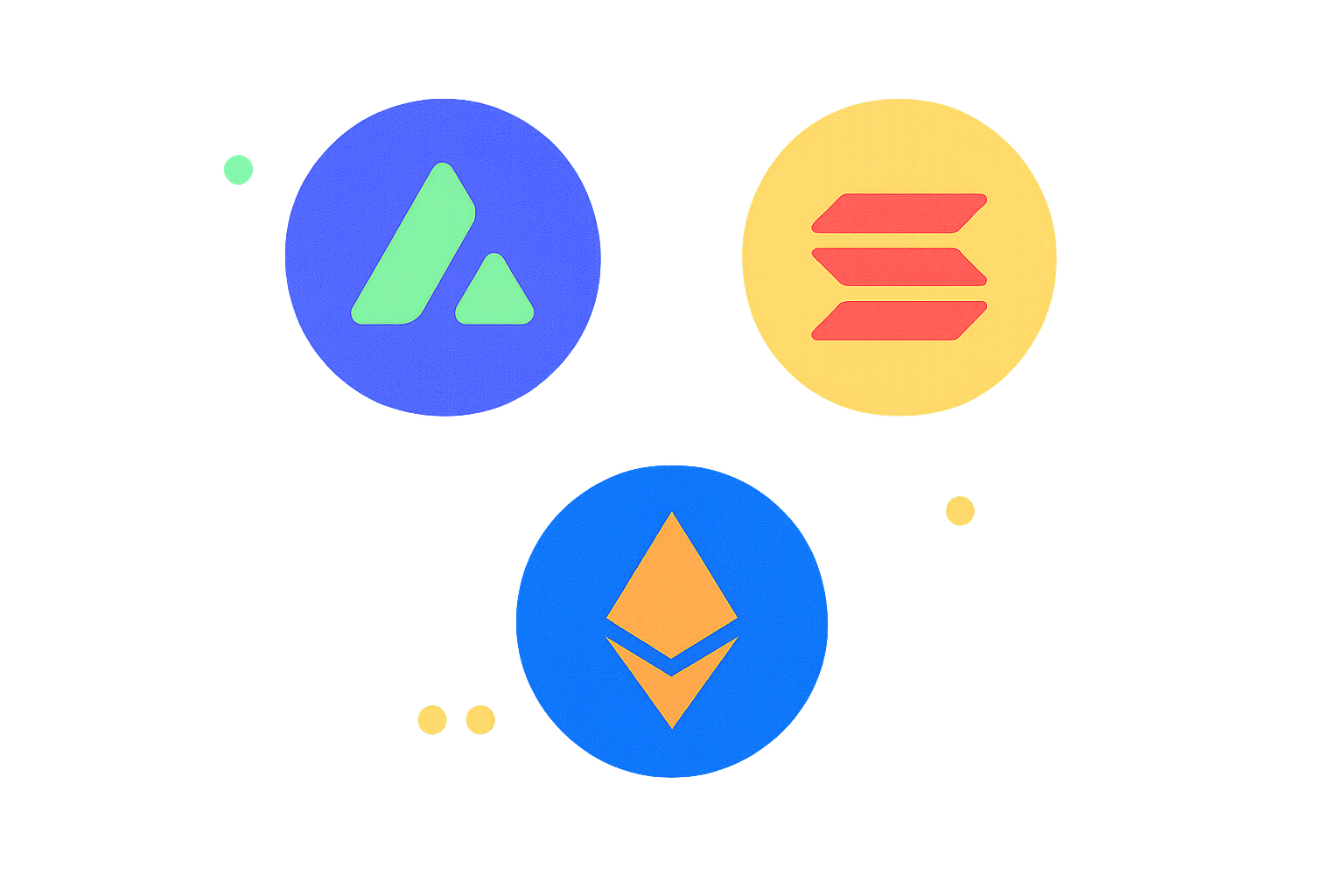
How Does Avalanche (AVAX) Compare to Solana and Ethereum in Market Cap and Performance in 2025?
How Does Cryptocurrency Competitive Landscape Compare in 2025: Market Share, Performance, and Key Advantages
What are the key differences between SUI and its competitors in the blockchain market by 2026
How to Mine ApeCoin: A Comprehensive Guide

Will GRT Reach $100: Exploring the Potential
Ethereum Mining Rig Guide: Best Hardware, Profitability, and Future
What is Fidelity Crypto ETF: Key Facts and Market Impact
Best Crypto Signals Telegram Groups Explained