DAG vs. Blockchain: Comparison and Benefits
What Is a Directed Acyclic Graph (DAG)?
Since the introduction of blockchain, it's been clear that the technology delivers numerous advantages over those used in traditional banking systems. Although financial institutions took years to catch on, they have now started to pay attention. Still, blockchain isn't the only evolutionary technology to emerge from fintech. Many in the crypto industry view the Directed Acyclic Graph (DAG) as another groundbreaking innovation, providing a promising alternative for structuring data and processing transactions.
DAG vs. Blockchain Technology
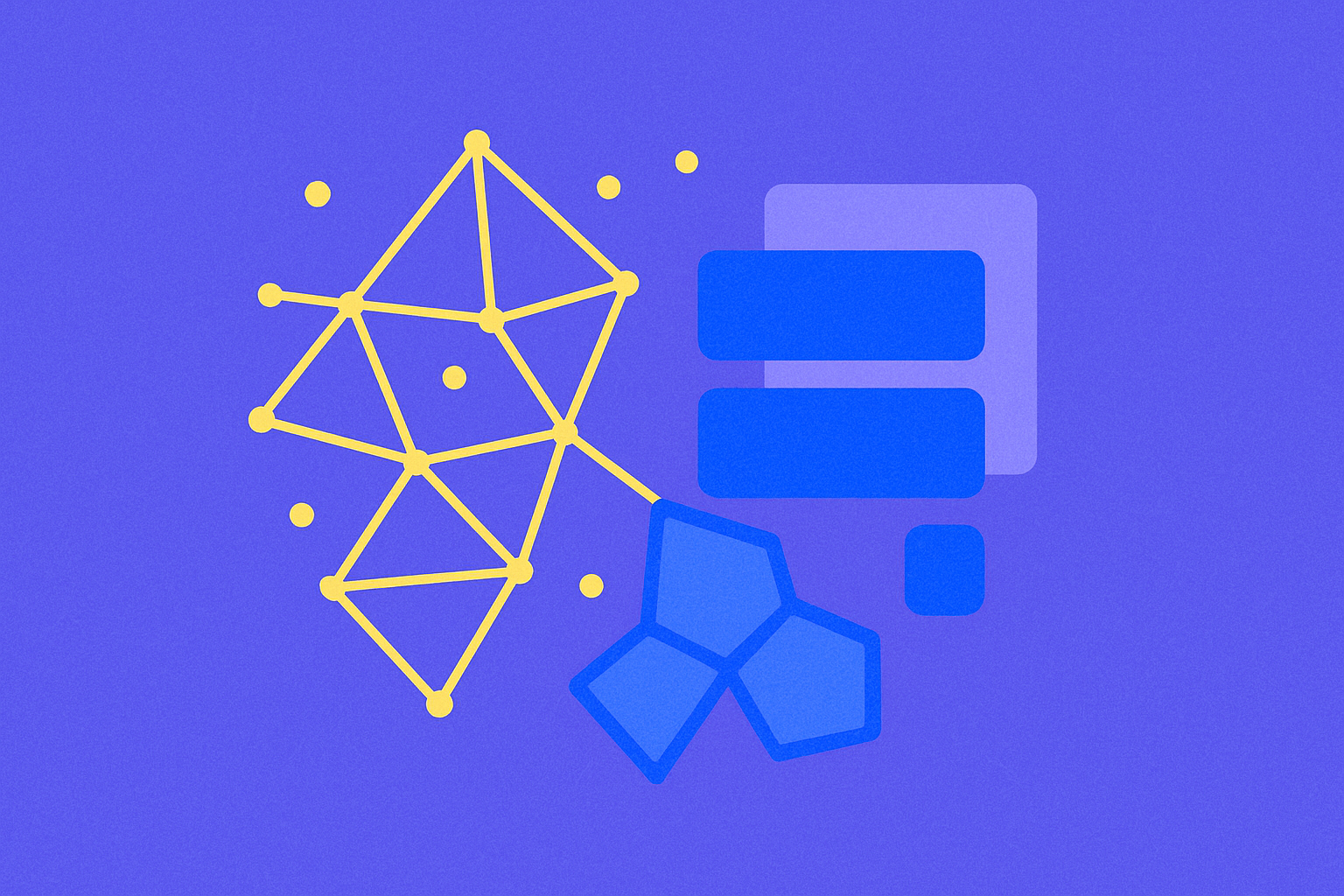
A Directed Acyclic Graph, or DAG, is a data modeling framework some cryptocurrencies use instead of a blockchain. In the DAG vs. blockchain discussion, DAG is often labeled a "blockchain killer," as some believe this technology could eventually supersede blockchain. The structure of a DAG features circles and lines—each circle (vertex) symbolizes an action to be added to the network, while each line (edge) shows the order in which transactions are approved. These lines move in only one direction, which gives the Directed Acyclic Graph its name. DAGs are directed because they move one way and acyclic because vertices never loop back to themselves. This structure is commonly leveraged for data modeling, letting users visualize relationships among multiple variables and assess how they influence each other.
What Is the Difference Between a DAG and a Blockchain?
When comparing DAG and blockchain, both technologies serve essentially the same function in crypto, but they have crucial differences. For instance, DAGs don't create blocks like blockchains do; instead, they build transactions directly atop previous transactions. DAGs consist of circles and lines, unlike the blocks that make up blockchains. That's why a blockchain looks like a chain of blocks, while a DAG resembles a graph. Additionally, in a DAG, transactions aren't batched into blocks—they're built on top of one another, which greatly boosts transaction speed compared to blockchain.
How Does DAG Technology Work?
DAG-based systems are constructed from circles and lines, where each circle (vertex) represents a transaction, and every transaction builds on top of earlier ones. When a user wants to submit a transaction, they must first confirm a transaction that was submitted before theirs. These earlier transactions are called "tips." Tips are unconfirmed transactions, but to add your own, you first need to confirm the tips. Your transaction then becomes the new tip and waits for someone else to confirm it before they can proceed with theirs. This process builds successive transaction layers, allowing the system to continuously expand. DAG technology also has built-in defenses against double-spending. When nodes confirm past transactions, they validate the entire chain back to the first transaction, checking that balances are sufficient and all is in order.
What Is DAG Used For?
DAGs are primarily designed to process transactions more efficiently than blockchains can. In the DAG vs. blockchain comparison, because there are no blocks, users don't wait for block times—they can submit as many transactions as they wish, as long as they confirm previous ones first. DAGs are also energy efficient since they don't depend on traditional mining. Blockchains using the Proof of Work (PoW) consensus mechanism require significant energy, but cryptocurrencies that operate on DAGs still use PoW while consuming only a fraction of the energy. DAGs are also well-suited for micropayments. Distributed ledgers like blockchains often struggle with micropayments, since transaction fees may surpass the payment itself. With DAGs, there's no processing fee—only a small node fee—and even during network congestion, this fee stays flat.
Which Cryptocurrencies Use DAG?
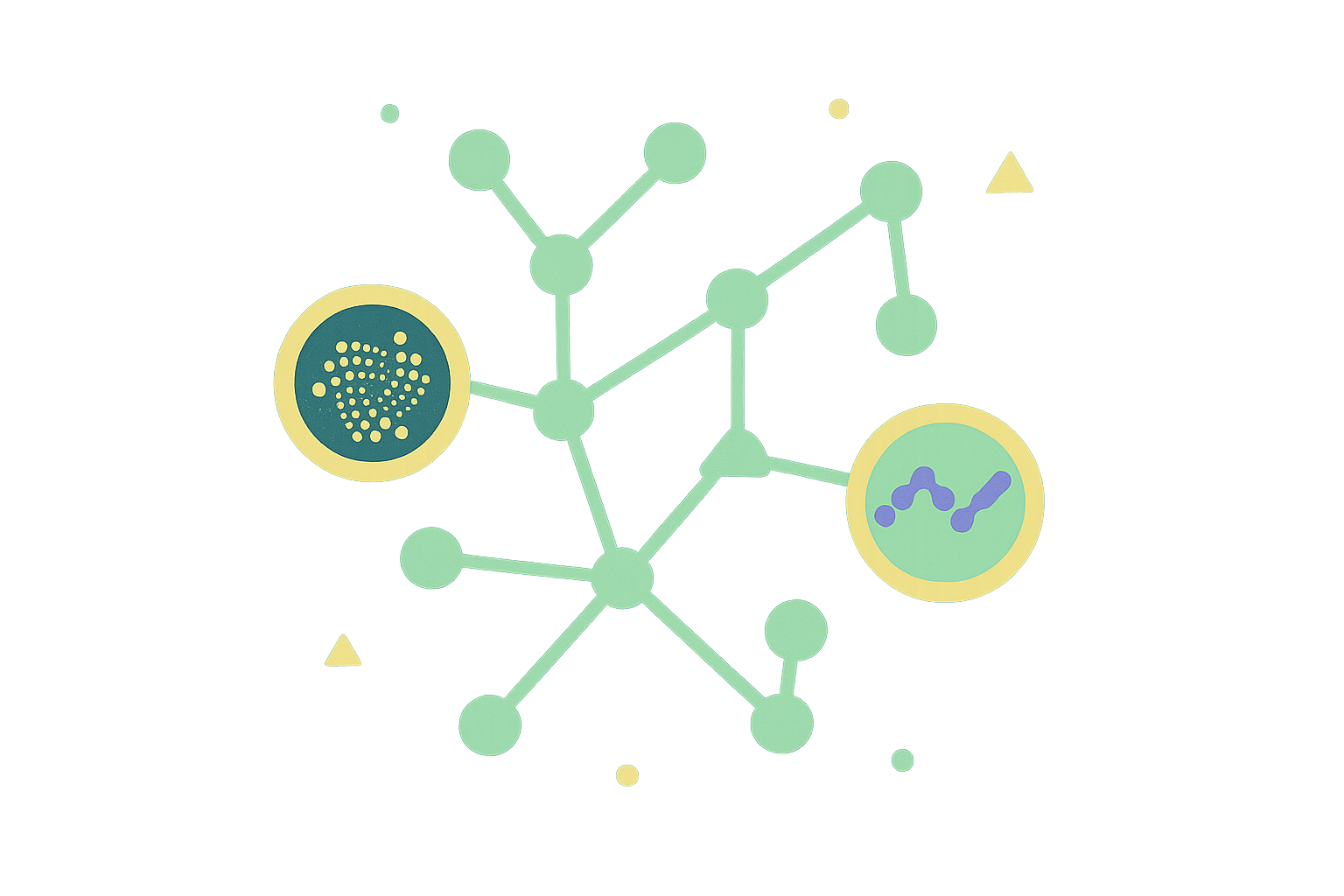
Despite the argument that DAGs are more efficient than blockchains, only a few projects have adopted them. One example is IOTA—short for Internet of Things Application. Launched early on, IOTA (MIOTA) gained recognition for its fast transactions, scalability, security, privacy, and data integrity. It uses nodes and tangles (structures of interconnected nodes) to validate transactions. To approve a transaction, users must verify two others, so all participants engage in consensus, making the network entirely decentralized. Nano is another project leveraging DAGs instead of blockchain, though it's not a pure DAG project; it combines DAG and blockchain technology. All data is routed through nodes, and each user has a wallet—integrating blockchain principles. For transactions, both sender and receiver must verify the payment. BlockDAG also employs DAGs, offering energy-efficient hardware and a mobile app for mining BDAG.
Pros and Cons of DAG
Like blockchain, DAG presents its own strengths and weaknesses. Among its main advantages: speed (since DAGs aren't limited by block time, transactions can be processed at any moment); little to no fees (no mining means no miner rewards to pay for); no mining, so energy use and carbon footprint are minimal; and scalability, since the absence of block times eliminates long waits. However, DAGs also face notable downsides: decentralization issues, as some DAG-based protocols contain centralized elements—often accepted as temporary solutions to jumpstart the network. Moreover, DAGs remain untested at large scale and have yet to gain the same traction as other blockchain protocols, like Layer 2 solutions.
Conclusion
Directed Acyclic Graphs represent an intriguing technology with considerable promise in the crypto sector. In the DAG vs. blockchain debate, DAGs offer clear advantages—such as lower fees and greater scalability—but remain in the early stages of development and face hurdles that keep them from rivaling established blockchain solutions. The technology is still maturing, with its limits and full potential yet to be realized. Nonetheless, its promising features keep many in crypto eager to see how DAG evolves as new applications emerge. In the DAG vs. blockchain discussion, DAGs aren't meant to replace blockchain entirely but provide a viable alternative for projects that can benefit from faster, more efficient transaction processing.
FAQ
What Are the Disadvantages of DAG Cryptocurrency?
DAG-based cryptocurrencies have several drawbacks: they're not always fully decentralized, often rely on third-party validation, and can be more vulnerable to network attacks than traditional blockchains.
Is BlockDAG Better Than Blockchain?
BlockDAG delivers greater scalability and flexibility than standard blockchain, making it a superior option for certain use cases. Nonetheless, blockchain remains the established standard for many applications.
What Is the Benefit of Using DAG Instead of Traditional Blockchains?
DAG technology enables faster transactions, better scalability, and reduced energy consumption compared to conventional blockchains.
Is There Anything Better Than Blockchain?
DAGs (Directed Acyclic Graphs) provide significantly faster data writing and superior scalability compared to blockchain. Some experts see DAGs as the better solution for certain applications.

Understanding Directed Acyclic Graphs in Blockchain Technology

Exploring DAG Technology in Blockchain Networks

Understanding Directed Acyclic Graph in Blockchain Technology

Exploring Directed Acyclic Graph in Blockchain Networks

Exploring Directed Acyclic Graphs in Blockchain Technology
Innovative Blockchain Solutions with Directed Acyclic Graph Technology
Bitcoin vs. Ethereum: Which Crypto is the Better Long-Term Investment?

Aptos Mainnet Launch and Noteworthy Ecosystem Projects
Decentralized Perpetual Exchange GMX Integrates Leading Multi-Chain Wallet for Enhanced Trading Access
How can I access my wallet’s private key or mnemonic phrase?
What is TON PUNKS?